
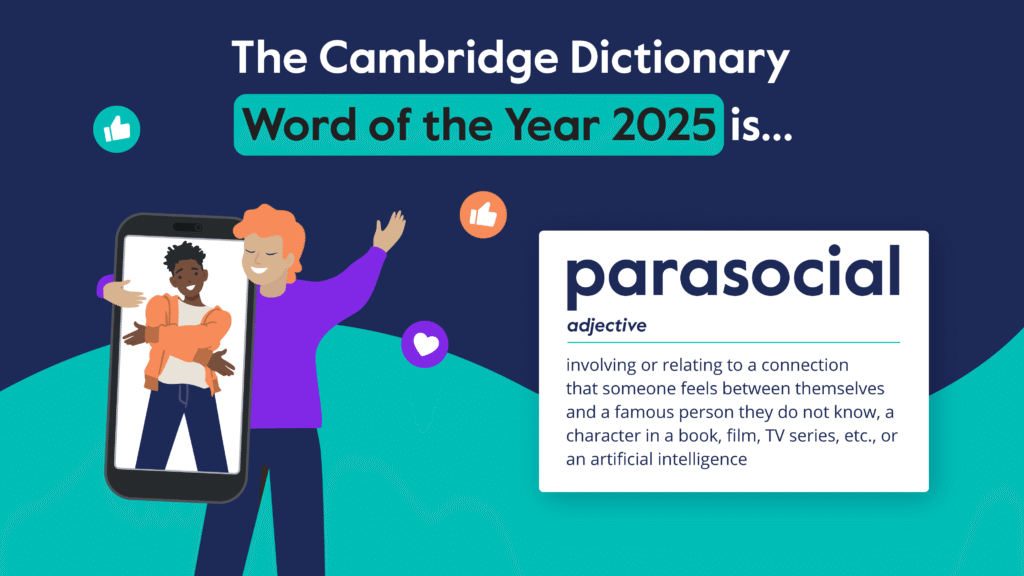
The Cambridge Dictionary has officially selected “parasocial” as its Word of the Year for 2025, reflecting a major cultural shift in how people form emotional connections in the digital age. As social media creators, influencers, streamers, and AI companions continue to shape modern communication, the term captures one of the most defining relationship patterns of the 21st century.
The choice of “parasocial” highlights the complex, often one-sided emotional bonds people form with public figures — including celebrities, digital creators, virtual influencers, and even AI personas. These relationships, although not reciprocated, feel deeply real to many, influencing behaviour, identity, loyalty, and mental well-being.
⭐ What “Parasocial” Means
A parasocial relationship describes a one-way emotional connection where a person becomes attached to someone who does not actually know them. Originally used in psychology to describe fan–celebrity dynamics, the term has expanded to include interactions with:
- social media influencers
- YouTubers and streamers
- podcasters
- fictional characters
- digital personalities
- AI companions
- virtual idols
In 2025, the term has entered mainstream vocabulary as online communities have grown stronger, more interactive, and more emotionally engaging.
⭐ Why Cambridge Chose “Parasocial”
The Cambridge Dictionary typically chooses its Word of the Year based on searches, cultural relevance, and how language evolves. “Parasocial” stood out in 2025 for several reasons:
1. Growth of Influencer Culture
Millions of people interact daily with content creators who share their lives, stories, and emotions online. This creates a sense of closeness, even without direct communication.
2. AI Companions Rising
2025 has seen a massive rise in conversational AI friends, virtual partners, and digital avatars — many of which users connect with on an emotional level.
3. Streaming & Online Fandoms
Gamers and fans form intense bonds with streamers who entertain and support them during live sessions.
4. Mental Health Awareness
Therapists and psychologists are increasingly discussing the impact of parasocial attachment on anxiety, loneliness, and self-esteem.
5. Cultural Shift Toward Digital Intimacy
People now socialize, learn, relax, and heal through digital personalities, making parasociality not just common — but a defining part of modern life.
⭐ Examples of Parasocial Relationships in 2025

1. Influencers & Vloggers
Millions feel connected to YouTubers or lifestyle vloggers who share daily routines and personal challenges.
2. Streamers
Twitch-style live streaming allows for real-time engagement, strengthening emotional bonds.
3. AI Companions
New AI chatbots and avatars simulate companionship, support, and affection.
4. Fictional Characters
Popular shows, animations, K-dramas, and fantasy universes create communities that emotionally invest in characters.
5. Virtual Celebrities
Digital idols, virtual models, and CGI performers have become mainstream.
⭐ 2025: The Year Parasocial Relationships Became Normalized
Parasocial interactions were once seen as unusual or obsessive. Now, they are recognized as a normal and widespread phenomenon, shaped by:
- hybrid digital lifestyles
- online entertainment
- emotional openness on social media
- technology-driven companionship
- the decline of in-person social circles
The selection of “parasocial” reflects how pervasive and socially accepted these relationships have become.
⭐ How Parasocial Bonds Affect Society
1. Emotional Support
For many, parasocial connections offer comfort, entertainment, guidance, and consistency.
2. Consumer Behavior
Influencers can shape purchasing decisions through authenticity and relatability.
3. Identity & Belonging
Fans build communities around creators, fostering friendships and shared identities.
4. Mental Health Challenges
Strong parasocial attachment can sometimes lead to:
- unrealistic expectations
- dependency
- loneliness
- emotional distress
5. Public Figure Accountability
Because followers feel connected to creators, expectations around transparency and responsibility have risen.
⭐ The Role of AI in Expanding Parasociality
2025 marks a turning point where AI-driven companionship has expanded parasocial experiences dramatically.
AI tools now offer:
- personalised conversations
- emotional memory
- empathy simulations
- virtual interactions
- realistic humanoid avatars
This has led to new forms of digital intimacy where the “other person” may not be a human at all. Cambridge’s choice acknowledges that relationships in 2025 extend far beyond traditional concepts.
⭐ Why the Word Resonated Globally
“Parasocial” became widely discussed worldwide because:
- Young people increasingly turn to online creators for support
- Influencers influence daily routines, motivation, and mental health
- AI companions raise new ethical and emotional questions
- Traditional celebrity culture is evolving
- Social isolation post-pandemic has changed interpersonal dynamics
The word perfectly captures the emotional realities of people living in hyper-connected digital environments.
⭐ How Parasocial Relationships Are Changing Entertainment
1. Entertainment Becomes Interactive
Fans influence creators’ content through polls, comments, and live chats.
2. Storytelling Becomes Personal
Creators share vulnerable moments, turning audiences into emotional participants.
3. Audiences Become Advocates
Parasocial bonds lead to:
- fan loyalty
- brand endorsements
- community movements
- creator-led activism
4. Virtual Events Replicate Real Life
AI-driven characters and influencers can now host concerts, meet-and-greets, and talk shows.
⭐ A Word That Defines the Digital Era
Cambridge Dictionary’s Word of the Year is meant to reflect cultural, emotional, and linguistic trends. “Parasocial” captures:
- How people cope emotionally in the digital era
- how technology shapes relationships,
- how entertainment, identity, and influence overlap
- how online presence can feel as real as physical presence
The word signals a future where blurred boundaries between reality and digital interaction become more common.
⭐ Conclusion
By naming “parasocial” as the Word of the Year 2025, the Cambridge Dictionary acknowledges a profound transformation in human relationships. Whether rooted in influencer culture, fandoms, virtual characters, or AI companions, parasocial bonds have become an essential part of modern emotional life.
As technology becomes even more immersive, the meaning and impact of parasocial relationships will continue evolving — reshaping how we connect, communicate, and feel in the years ahead.