
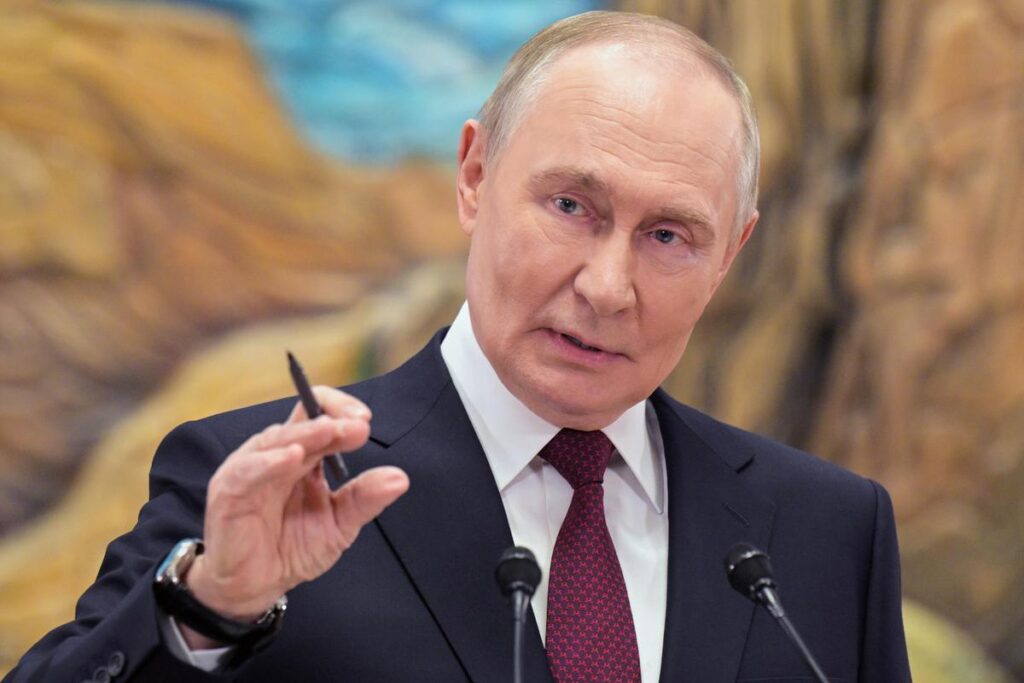
Russian President Vladimir Putin is set to visit India in December 2025 to attend the 23rd India–Russia Annual Summit, a significant diplomatic event expected to shape the future of bilateral relations between the two long-standing strategic partners. This visit marks an important moment in India–Russia ties, especially amid shifting global geopolitical landscapes and evolving economic partnerships.
The Annual Summit mechanism, established in 2000, is the highest-level institutional dialogue between the two nations. The upcoming 23rd edition is expected to focus on defence cooperation, energy security, nuclear collaboration, space partnership, trade expansion, and regional stability.
Putin’s visit carries high strategic value, symbolising continuity in India–Russia relations despite global political recalibrations and growing multipolar tensions.
⭐ Background: A Legacy of Strategic Partnership
India and Russia share one of the most durable strategic partnerships in the world. Over decades, both nations have collaborated extensively in:
- defence and military technology
- nuclear energy
- space exploration
- hydrocarbons
- scientific research
- cultural engagement
- geopolitical coordination
The Annual Summit mechanism ensures consistent high-level engagement, allowing both leaderships to discuss long-term vision and address challenges proactively.
The upcoming 23rd Summit will be especially significant as it comes after major geopolitical events, including:
- shifts in global power structures
- emerging Indo-Pacific dynamics
- strengthened India–US cooperation
- Russia’s expanding ties with China
- global energy realignments
Against this backdrop, Putin’s visit sends a strong diplomatic message on the importance Russia places on its partnership with India.
⭐ What Putin’s Visit Means for India–Russia Relations
⭐ 1. Renewed High-Level Engagement
The visit reaffirms commitment at the top leadership level. Both nations are expected to:
- reaffirm diplomatic trust
- prioritize economic partnership
- expand security cooperation
- align on critical international issues
High-level engagements are essential for navigating complex global politics.
⭐ 2. Strengthening the Special and Privileged Strategic Partnership
The Indo-Russian relationship is designated as a “Special and Privileged Strategic Partnership”, reflecting its depth and historical roots. Putin’s December 2025 visit reinforces this unique status.
⭐ 3. Boost to Bilateral Trade Target
India and Russia have set a target of reaching $100 billion in bilateral trade by 2030. Current trends indicate growth in:
- oil and gas
- fertilizers
- coal
- pharmaceuticals
- defence components
- agricultural products
The Summit is expected to push infrastructure and logistics to support this goal.
⭐ Key Agendas for the 23rd Annual Summit
⭐ 1. Defence and Military Cooperation
Defence cooperation remains a cornerstone of India–Russia relations.
Expected discussions:
- Joint development of advanced weapon systems
- Maintenance and upgrade of existing Russian-origin military platforms
- Technology transfer
- Supply-chain stability for defence components
- Expansion of training, exercises, and defence technology parks in India
Russia continues to be a major supplier of equipment for India’s Army, Navy, and Air Force.
⭐ 2. Nuclear Energy Partnership
The two countries share strong cooperation in civil nuclear energy, especially through the Kudankulam Nuclear Power Plant.
Likely areas of discussion:
- New units under the Kudankulam project
- Joint development of small modular reactors (SMRs)
- Nuclear fuel supply agreements
- Research collaboration in nuclear safety and fusion technology
This partnership supports India’s clean energy goals and energy security.
⭐ 3. Energy and Hydrocarbon Trade
Russia has emerged as a leading supplier of discounted crude oil to India in recent years.
Summit discussions expected on:
- Long-term energy agreements
- Expansion of LNG trade
- Collaboration in Arctic energy projects
- Transportation corridors for energy supplies
- Joint ventures in refining and petrochemicals
A major focus will be ensuring stable energy flows amid global volatility.
⭐ 4. Space Cooperation
India and Russia have a vibrant space partnership, and the Summit is likely to explore:
- Gaganyaan human spaceflight cooperation
- Satellite navigation interoperability (GLONASS & NAVIC)
- Joint lunar missions
- Space science collaboration
- Satellite launch logistics
Space technology remains a key pillar of bilateral scientific collaboration.
⭐ 5. Connectivity & Trade Corridors
A major agenda item will be the International North-South Transport Corridor (INSTC). This corridor connects:
- India
- Iran
- Russia
- Central Asia
- Europe
Key objectives include:
- reducing shipping time by up to 40%
- lowering transport costs
- boosting trade and logistics efficiency
The Chennai–Vladivostok Maritime Route may also be revived for discussion.
⭐ 6. Technology and Digital Economy
With global focus shifting to AI, cybersecurity, digital payments, and semiconductor ecosystems, India and Russia are expected to deepen cooperation in:
- cybersecurity frameworks
- digital infrastructure
- fintech systems
- AI development
- electronics manufacturing
- secure communication networks
Strengthening tech ties can diversify digital partnerships beyond the West.
⭐ Regional and Global Issues on the Table
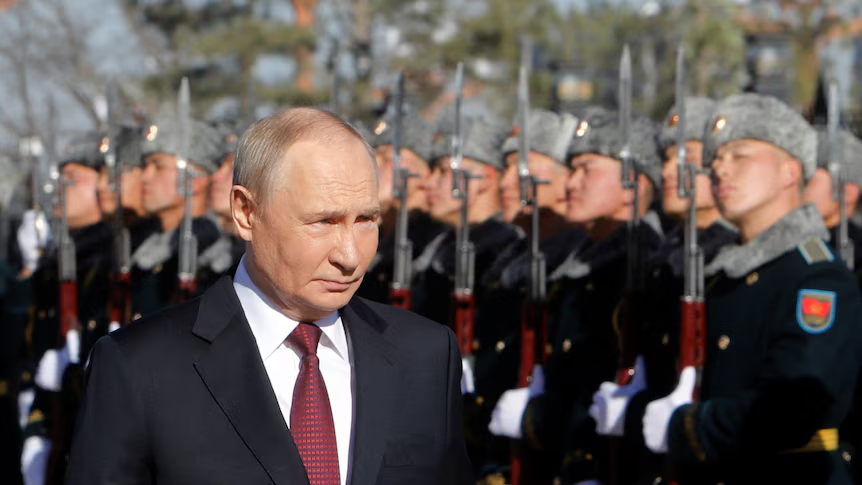
Putin’s visit takes place at a time of major geopolitical tension. Key topics will include:
- situation in Eurasia
- developments in the Indo-Pacific
- global terrorism threats
- BRICS expansion and cooperation
- UN reforms and multilateral diplomacy
- balancing relations with China, US, and EU
- Middle East conflict stability
India and Russia often coordinate closely on regional security issues.
⭐ Significance for India
Putin’s visit is strategically important for India as it seeks:
- balanced international partnerships
- diversified energy sources
- defence autonomy
- technology and space collaboration
- a stable Eurasian security environment
The relationship helps India enhance strategic autonomy in global affairs.
⭐ Significance for Russia
For Russia, deepening relations with India serves several interests:
- accessing one of the world’s fastest-growing markets
- diversifying partnerships beyond China
- expanding defence exports
- maintaining geopolitical influence in South Asia
- accelerating trade through alternative corridors
India remains a key pillar of Russia’s “multipolar world” vision.
⭐ Expected Outcomes of the 23rd Summit
The Summit may result in:
✔ New defence contracts
✔ Expansion of nuclear energy cooperation
✔ Long-term oil and LNG supply agreements
✔ Strengthened INSTC and connectivity projects
✔ New MoUs in space, science, education, and digital economy
✔ Enhanced trade settlement mechanisms in national currencies
✔ People-to-people initiatives including tourism and education programs
Several joint statements, strategic declarations, and sectoral agreements may be signed.
⭐ Conclusion
Vladimir Putin’s upcoming December 2025 visit to India for the 23rd India–Russia Annual Summit marks an important milestone in one of the world’s most enduring strategic partnerships. The visit underscores the mutual trust, diplomatic depth, and shared geopolitical outlook that both nations continue to uphold.
From defence and nuclear energy to trade, connectivity, space, and technology, the Summit is set to define the next phase of India–Russia cooperation. In an era of global uncertainty, the ability of both nations to maintain stable and consistent engagement remains one of the defining strengths of this partnership.
As India continues to rise on the world stage and Russia adapts to new geopolitical realities, the December 2025 Summit will shape future collaboration, reaffirm strategic goals, and outline a renewed vision for a robust multipolar order.