
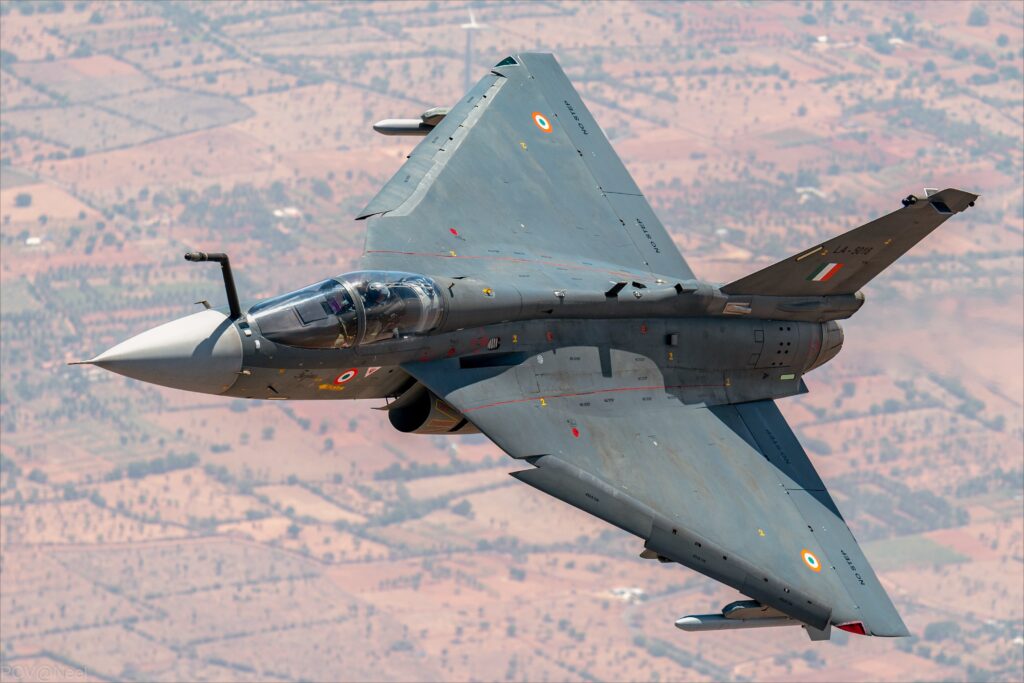
The Indian Air Force (IAF) has proudly commemorated the 25th anniversary of the first flight of the Tejas Light Combat Aircraft (LCA)—a landmark moment in India’s defence and aerospace history. This milestone not only celebrates a technological achievement but also symbolizes India’s long journey toward self-reliance in defence manufacturing.
From its maiden flight in 2001 to becoming a frontline fighter jet, Tejas has evolved into a powerful representation of indigenous innovation, operational capability, and strategic confidence. The silver jubilee celebrations reaffirm the aircraft’s critical role in shaping the future of the Indian Air Force.
A Historic Flight That Changed Indian Aviation
The Tejas Light Combat Aircraft made its first successful flight on January 4, 2001, marking a turning point in India’s quest to develop an indigenous combat aircraft. Designed to replace the ageing MiG-21 fleet, the aircraft demonstrated India’s ability to conceptualize, design, test, and fly a modern supersonic fighter.
Twenty-five years later, the IAF’s commemoration highlights how that single flight laid the foundation for a robust domestic aerospace ecosystem.
What Is the Tejas Light Combat Aircraft?
The Tejas Light Combat Aircraft is a single-engine, multirole supersonic fighter aircraft developed to meet the operational requirements of the Indian Air Force.
Key characteristics include:
- Lightweight composite airframe
- Advanced fly-by-wire flight control system
- Multi-role capability (air-to-air and air-to-ground)
- High agility and maneuverability
Tejas stands among a select group of fighter aircraft globally to be developed indigenously from scratch.
Role of the Indian Air Force
The Indian Air Force has played a pivotal role in the Tejas program—not just as an end user, but as an active partner in its evolution.
IAF pilots, engineers, and test crews contributed extensively to:
- Flight testing and certification
- Operational feedback and upgrades
- Mission capability enhancement
By inducting Tejas into active service and continuously refining it, the IAF demonstrated confidence in indigenous technology.
Journey from Prototype to Frontline Fighter
Early Development Phase
The initial years were marked by technological challenges, including:
- Development of fly-by-wire controls
- Integration of avionics and radar systems
- Engine and structural testing
Despite delays and scepticism, Indian scientists and engineers persisted.
Induction into the IAF
Tejas was officially inducted into the IAF in 2016, entering operational service with frontline squadrons. This marked India’s transition from a technology demonstrator to a combat-ready fighter.
Continuous Evolution
Over the years, Tejas has seen steady upgrades, improving:
- Weapons integration
- Electronic warfare capabilities
- Mission reliability
Institutions Behind the Tejas Program
The Tejas program represents a collaborative national effort led by:
- Aeronautical Development Agency – design and development
- Hindustan Aeronautics Limited – production and assembly
- Defence research laboratories and private industry partners
This collaboration has strengthened India’s aerospace manufacturing base and reduced dependence on imports.
Why Tejas Matters Strategically
Strengthening National Security
Tejas enhances India’s air combat capability with:
- Quick response time
- High operational availability
- Modern weapons compatibility
It plays a key role in safeguarding Indian airspace.
Boost to Atmanirbhar Bharat
Tejas is a flagship success of India’s self-reliant defence manufacturing vision. A significant percentage of the aircraft’s components are now sourced domestically, with continuous localization underway.
Export Potential
With proven performance and competitive cost, Tejas has emerged as a strong contender in the global light fighter market, enhancing India’s defence export ambitions.
Tejas Variants and the Road Ahead
Tejas Mk1 and Mk1A
The Mk1 variant laid the foundation, while the Mk1A brings:
- Improved radar and avionics
- Enhanced electronic warfare suite
- Better maintainability
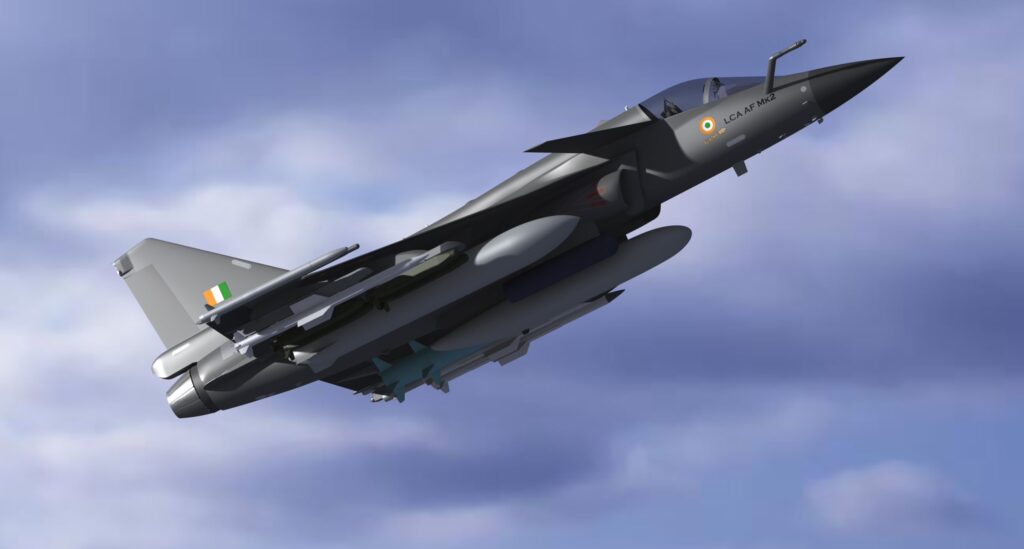
Tejas Mk2
The upcoming Mk2 variant will be:
- Larger and more powerful
- Equipped with advanced sensors
- Designed for extended range and payload
Together, these variants ensure Tejas remains relevant for decades.
IAF’s Silver Jubilee Celebrations
To mark the 25th anniversary, the IAF organized:
- Special formation flights by Tejas squadrons
- Commemorative events and exhibitions
- Tributes to scientists, engineers, and test pilots
Senior Air Force officials described Tejas as a “symbol of India’s technological perseverance and operational confidence.”
Impact on India’s Aerospace Ecosystem
The Tejas program has:
- Created a skilled aerospace workforce
- Enabled private sector participation
- Advanced composite material manufacturing
- Strengthened testing and certification capabilities
These benefits extend beyond Tejas, supporting future projects like advanced fighters and unmanned systems.
Challenges Overcome
The journey was not without hurdles:
- Technology denial regimes
- Limited initial experience in fighter design
- Long development timelines
Overcoming these challenges has given India valuable expertise that cannot be bought—only built through experience.
Global Recognition and Confidence
Over the years, Tejas has participated in:
- International air shows
- Joint exercises with friendly air forces
These platforms have showcased India’s indigenous capability and boosted confidence among potential global partners.
Inspiration for Future Generations
The 25th anniversary celebration is also a message to young engineers and scientists:
- Indigenous innovation is possible
- Persistence leads to success
- National challenges can be solved at home
Tejas stands as an inspiration for future defence and aerospace projects.
Conclusion
The Indian Air Force’s commemoration of the 25th anniversary of the Tejas Light Combat Aircraft’s first flight is more than a ceremonial milestone—it is a celebration of India’s determination to achieve technological sovereignty.
From a bold vision to an operational reality, Tejas has transformed India’s defence landscape. As it continues to evolve through advanced variants, the aircraft remains a cornerstone of the IAF’s combat capability and a shining example of Make in India in action.
Twenty-five years after its maiden flight, Tejas is no longer just an aircraft—it is a symbol of India’s aerospace ambition, resilience, and future-ready defence strength.