
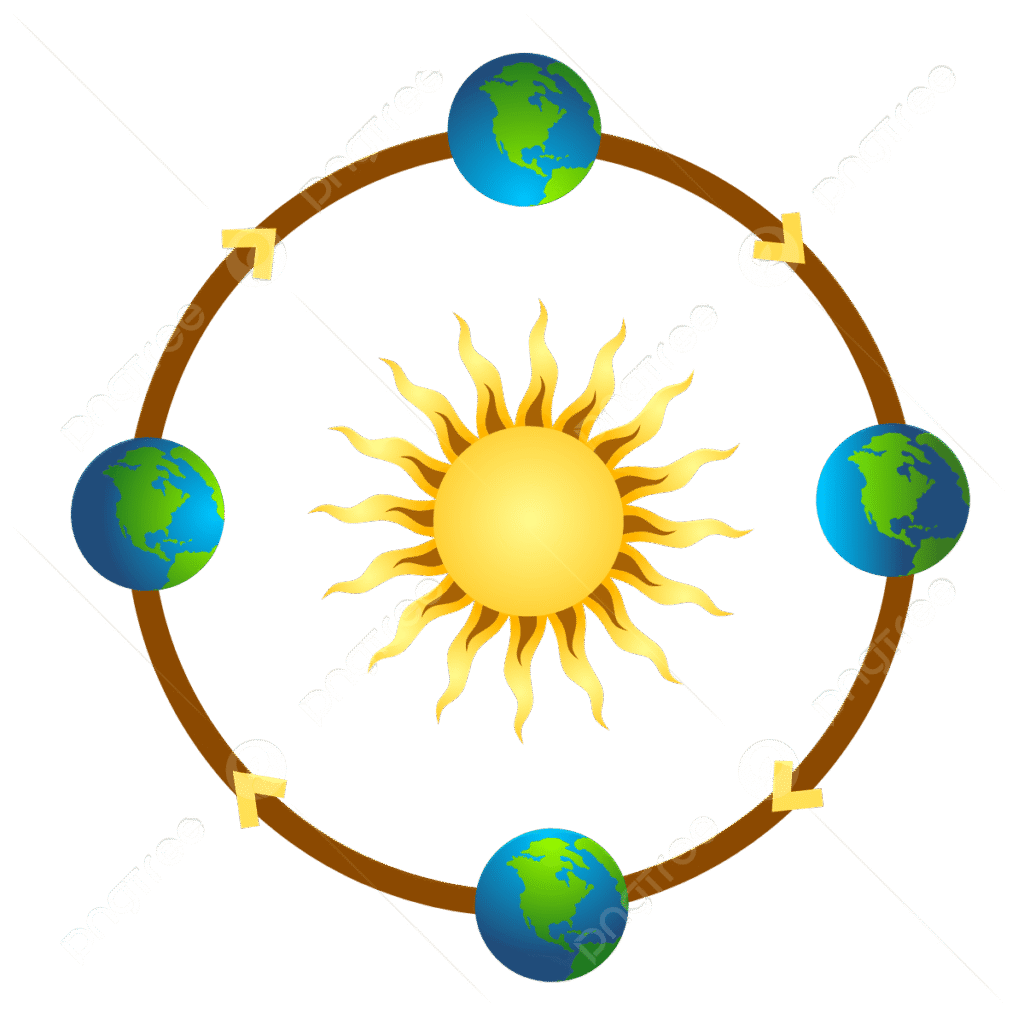
Earth’s Rotation Day 2026, observed on January 8, celebrates one of the most elegant and revolutionary scientific demonstrations in human history—the experimental proof that Earth rotates on its axis. This day honors the groundbreaking work of Léon Foucault, whose simple yet powerful pendulum experiment forever changed humanity’s understanding of our planet’s motion.
While the idea that Earth rotates had been proposed centuries earlier, Foucault’s experiment provided direct, visible, and undeniable evidence—something that could be observed by anyone, not just calculated by astronomers. Earth’s Rotation Day reminds us of the beauty of scientific curiosity, observation, and the courage to question established beliefs.
What Is Earth’s Rotation Day?
Earth’s Rotation Day is an annual observance that commemorates the scientific discovery proving that Earth rotates on its axis once every 24 hours. It marks the achievement of Léon Foucault, who demonstrated this motion experimentally in the mid-19th century.
Although not an official public holiday, the day is widely recognized by:
- Scientists and educators
- Astronomy enthusiasts
- Science museums and institutions
- Schools and universities
The observance encourages scientific thinking, appreciation of physics, and awareness of how Earth’s motion influences daily life.
Why January 8 Is Significant
January 8 is associated with Léon Foucault’s legacy and his contributions to experimental physics. His work transformed abstract astronomical theory into a visible physical phenomenon, allowing people to literally see Earth rotating beneath their feet.
The date is symbolic of humanity’s shift from philosophical speculation to experimental science—one of the defining transitions of the modern scientific age.
Who Was Léon Foucault?
Léon Foucault (1819–1868) was a French physicist best known for inventing the Foucault pendulum, an experiment that demonstrated Earth’s rotation in a way that was simple, visual, and convincing.
Unlike many scientists of his time, Foucault was deeply interested in:
- Experimental proof
- Public demonstrations
- Making science accessible
His work bridged the gap between complex scientific theory and everyday human experience.
The Foucault Pendulum: A Simple Yet Revolutionary Experiment
What Is a Foucault Pendulum?
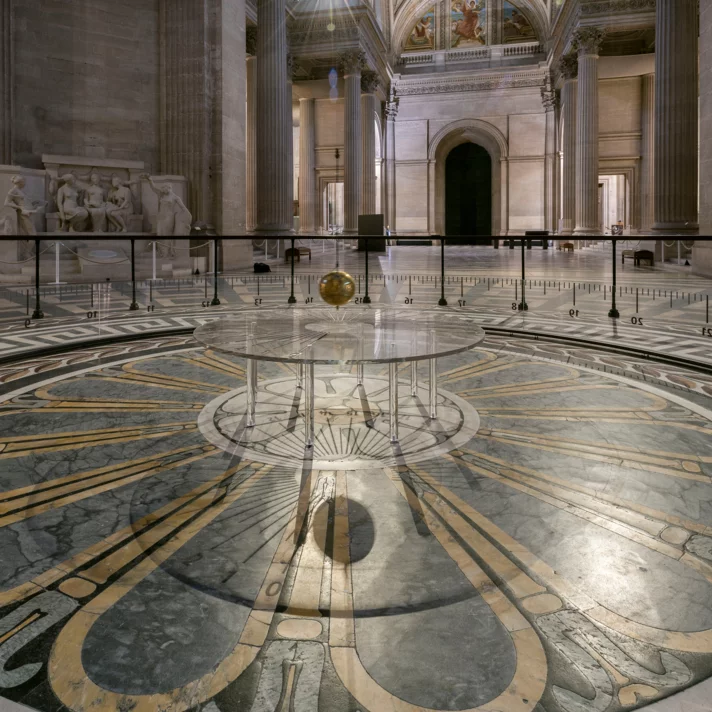
A Foucault pendulum is a long, heavy pendulum suspended from a high point so it can swing freely in any vertical plane. Once set in motion, the pendulum continues swinging in the same plane relative to space.
However, the Earth rotates beneath it.
To an observer on Earth, the pendulum’s swing appears to slowly rotate over time. This apparent change is not due to the pendulum—but due to Earth’s rotation.
The Historic Demonstration
In 1851, Foucault publicly demonstrated his pendulum inside the Panthéon in Paris. As spectators watched, the pendulum’s swing plane gradually shifted direction over hours.
For the first time in history:
- Earth’s rotation could be seen with the naked eye
- No telescope or calculations were required
- The proof was immediate and intuitive
The scientific world was stunned.
Why Foucault’s Proof Was So Important
Before Foucault:
- Earth’s rotation was accepted mainly through astronomical calculations
- Critics argued these were indirect or theoretical
After Foucault:
- Earth’s rotation became experimentally undeniable
- Physics entered a new era of public demonstration
- Scientific truth became accessible to ordinary people
This moment marked a turning point in how science was communicated and understood.
Understanding Earth’s Rotation
Earth rotates:
- From west to east
- Once every 23 hours, 56 minutes, and 4 seconds (sidereal day)
- At approximately 1,670 km/h at the equator
This rotation is responsible for:
- Day and night
- Apparent movement of the Sun and stars
- Time zones
- Atmospheric circulation patterns
Earth’s Rotation Day highlights how a motion we don’t feel directly governs nearly every aspect of life.
Scientific Effects of Earth’s Rotation
1. Day and Night Cycle
Earth’s rotation causes alternating exposure to sunlight, creating day and night.
2. Coriolis Effect
Rotation deflects moving air and water, influencing:
- Wind patterns
- Ocean currents
- Cyclones and weather systems
3. Timekeeping and Time Zones
Global time systems are based on Earth’s rotation and longitude.
4. Equatorial Bulge
Centrifugal force causes Earth to bulge slightly at the equator.
These effects demonstrate that Earth’s rotation is not just an abstract idea—it shapes climate, navigation, and daily routines.
Earth’s Rotation Day in Education
Earth’s Rotation Day 2026 is an excellent opportunity for:
- Science demonstrations
- Pendulum experiments in schools
- Astronomy workshops
- STEM awareness programs
Many science centers recreate Foucault pendulums to allow students to experience physics in action, just as spectators did in the 19th century.
Why Earth’s Rotation Day Still Matters Today
In an age of satellites, space stations, and advanced simulations, Foucault’s experiment remains deeply relevant because it teaches:
- The power of simple experiments
- The importance of observable evidence
- That science is not just equations—it is curiosity and observation
Earth’s Rotation Day reminds us that even the most fundamental truths about our world were once unknown—and discovered through human ingenuity.
Earth’s Rotation and Modern Space Science
Understanding Earth’s rotation is critical for:
- Satellite orbits
- GPS accuracy
- Space launches
- Climate modeling
Modern space agencies rely on precise rotational data to ensure navigation, communication, and planetary studies remain accurate.
Thus, Foucault’s work laid foundational thinking for technologies we depend on today.
How Earth’s Rotation Day Is Observed
Though informal, the day is marked by:
- Science articles and lectures
- Planetarium shows
- Museum demonstrations
- Educational social media content
It is especially popular among educators who use it to spark interest in physics and astronomy.
Lessons from Léon Foucault’s Legacy
Foucault’s greatest contribution was not just proving Earth’s rotation—it was showing that:
- Big ideas can be demonstrated simply
- Science belongs to everyone
- Observation is as powerful as theory
His legacy continues to inspire scientists, educators, and curious minds around the world.
Conclusion
Earth’s Rotation Day 2026 – January 8 celebrates a moment when humanity gained visible proof that our planet is constantly in motion. Through Léon Foucault’s historic pendulum experiment, Earth’s rotation was transformed from a theoretical concept into a living, observable reality.
As we commemorate this day, we honor the spirit of scientific discovery—the courage to question, the patience to observe, and the brilliance of simplicity. Earth may rotate silently beneath our feet, but thanks to Foucault, its motion is no longer invisible.
Earth’s Rotation Day reminds us that even the most fundamental truths about our universe are worth celebrating—because understanding them is what moves humanity forward. 🌍✨