
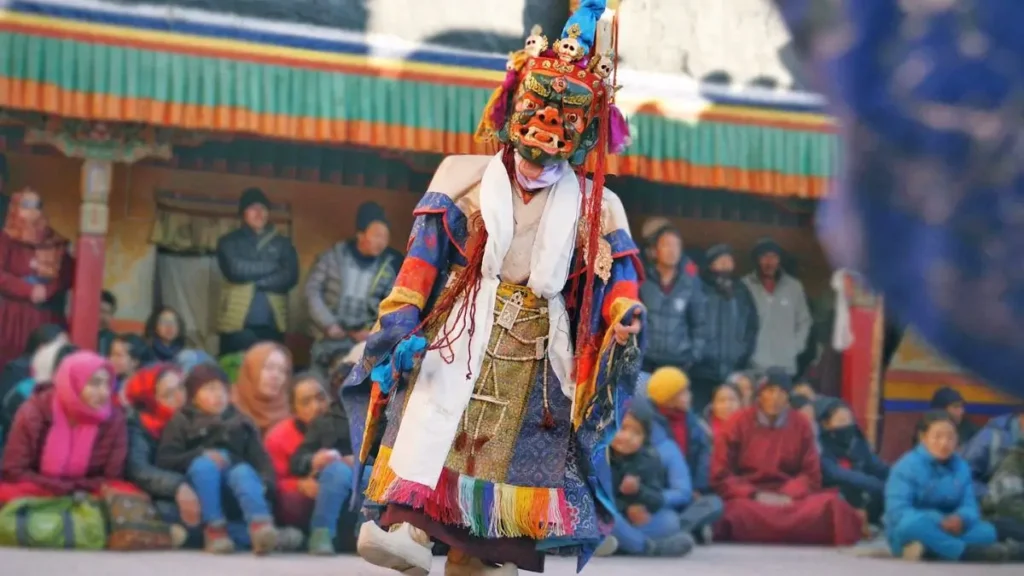
High in the cold desert of the Himalayas, where mountains touch the sky and silence feels sacred, the Spituk Gustor Festival unfolds as one of Ladakh’s most spiritually significant events. Celebrated at the historic Spituk Monastery near Leh, this two-day festival is not just a cultural spectacle—it marks a spiritual new beginning, symbolizing the victory of good over evil, wisdom over ignorance, and light over darkness.
Each year, as winter deepens and snow blankets the valleys, monks and villagers gather to perform sacred masked dances, chant ancient prayers, and reenact stories of divine protection. The festival becomes a moment of renewal—for the monastery, the community, and every soul who witnesses it.
What Is the Spituk Gustor Festival?
The word “Gustor” means “sacrifice of the 29th day,” referring to the 29th day of the 11th month in the Tibetan lunar calendar. On this auspicious day, rituals are performed to:
- Remove negative energies
- Protect the land from evil forces
- Ensure peace, prosperity, and harmony
- Begin a spiritually purified new cycle
The festival is held at Spituk Gompa, one of Ladakh’s oldest and most important monasteries, belonging to the Gelugpa (Yellow Hat) sect of Tibetan Buddhism.
Spituk Monastery: The Sacred Setting
Spituk Monastery stands on a rocky hill overlooking the Indus River, about 8 kilometers from Leh. Founded in the 11th century, it has long been a center of Buddhist learning, meditation, and spiritual practice.
During Gustor, the monastery transforms into a living stage of sacred drama:
- Courtyards fill with monks in elaborate costumes
- Prayer flags flutter in icy winds
- The air echoes with horns, cymbals, and chanting
- Locals and travelers gather in reverent silence
The monastery becomes a bridge between the visible world and the spiritual realm.
Why Spituk Gustor Is Spiritually Important
Spituk Gustor is not merely a festival—it is a ritual of spiritual cleansing. According to Buddhist belief, as the year draws to a close, negative energies accumulate. Gustor rituals aim to:
- Destroy harmful spirits and obstacles
- Purify minds and surroundings
- Prepare for a new spiritual cycle
- Strengthen faith and moral discipline
This is why the festival is seen as a spiritual new beginning—a reset of energy before entering a new phase of life and time.
The Sacred Cham Dance
The heart of the Spituk Gustor Festival is the Cham dance, a powerful ritual performed by monks wearing dramatic masks and silk costumes.
Meaning of Cham
Cham dances are not entertainment. They are:
- Spiritual teachings in motion
- Meditative rituals
- Visual representations of Buddhist philosophy
Each mask represents:
- Wrathful deities
- Protective spirits
- Animal symbols
- Human vices and virtues
Through dance, monks show how good conquers evil and how wisdom destroys ignorance.
Symbolism in the Dances
Every movement has meaning:
- Slow steps represent calm awareness
- Sudden turns symbolize destruction of ego
- Circular movements reflect the cycle of life
- Fierce masks show power against evil
The most awaited performance is the ritual destruction of a symbolic effigy representing evil forces. When it is cut or burned, it marks:
- End of negativity
- Beginning of purity
- Renewal of spiritual balance
This moment defines the festival’s message of new beginnings.
Rituals and Ceremonies During the Festival
Spituk Gustor spans two days, each filled with sacred acts:
Day One
- Opening prayers and blessings
- Cham dances by junior monks
- Chanting of protective mantras
- Spiritual preparation rituals
Day Two
- Main masked dance performances
- Appearance of wrathful deities
- Final ritual of destroying evil
- Community prayers for peace
These rituals are believed to protect Ladakh from natural disasters, illness, and spiritual imbalance.
Community Participation and Faith
The festival is deeply rooted in local life. Villagers from nearby areas travel in winter cold to attend, bringing offerings like:
- Butter lamps
- Barley flour
- Incense
- Traditional food
For them, Gustor is:
- A prayer for family well-being
- A request for good harvest
- A spiritual duty
- A moment of hope
Children watch in awe, elders whisper prayers, and monks guide the sacred flow—creating a living spiritual tradition.
Cultural Significance of Spituk Gustor
Beyond religion, the festival is a pillar of Ladakhi identity. It preserves:
- Ancient dance forms
- Traditional music
- Sacred costume designs
- Oral spiritual stories
In a rapidly modernizing world, Spituk Gustor keeps Ladakh connected to its roots, reminding people of who they are and where they come from.
Winter Festival and Inner Warmth
Held in deep winter, when Ladakh faces freezing temperatures, Gustor offers emotional and spiritual warmth.
- Monasteries glow with lamps
- People gather despite snow and cold
- Songs and prayers replace silence
The harsh climate makes the festival even more meaningful—it shows that faith and community can overcome even nature’s toughest challenges.
Spiritual New Beginning: What It Truly Means
The phrase “spiritual new beginning” at Spituk Gustor means:
- Letting go of anger, fear, and pride
- Renewing commitment to compassion
- Starting again with clarity and purpose
- Aligning life with spiritual values
For monks, it renews vows of discipline.
For villagers, it renews hope.
For visitors, it offers reflection.
Spituk Gustor and Buddhist Philosophy
The festival reflects core Buddhist ideas:
- Impermanence: Evil, pain, and suffering can be transformed
- Karma: Actions shape future outcomes
- Compassion: Protection is for all beings
- Wisdom: Ignorance is the greatest enemy
Through dance and ritual, philosophy becomes visible and alive.
Tourism and Responsible Travel
Spituk Gustor also attracts visitors from around the world. Many come to:
- Experience authentic Himalayan culture
- Witness sacred rituals
- Learn about Buddhism
However, visitors are encouraged to:
- Respect silence and rituals
- Dress modestly
- Avoid disturbing monks
- Treat the event as spiritual, not just scenic
Responsible tourism helps preserve the sacredness of the festival.
Economic and Social Impact
During the festival:
- Local homestays fill up
- Handicraft sellers find buyers
- Food vendors earn income
Thus, Gustor supports:
- Local livelihoods
- Cultural preservation
- Sustainable tourism
Faith and economy grow together in harmony.
Challenges in Preserving Tradition
Like many ancient traditions, Spituk Gustor faces challenges:
- Modern lifestyle influences
- Declining interest among youth
- Climate change affecting winter travel
- Over-tourism risk
Monasteries and communities now work to:
- Educate young monks
- Record rituals digitally
- Teach cultural history in schools
- Promote respectful tourism
Why Spituk Gustor Matters Today
In a world full of noise, speed, and conflict, Spituk Gustor offers:
- Silence instead of chaos
- Meaning instead of rush
- Reflection instead of reaction
It reminds humanity that progress without spirituality is incomplete.
Global Message of the Festival
Though rooted in Ladakh, the festival carries a universal message:
- Every soul needs renewal
- Every society needs compassion
- Every year deserves a fresh start
Spituk Gustor teaches that new beginnings are not about calendars—they are about consciousness.
Conclusion
The Spituk Gustor Festival is more than a winter celebration in Ladakh—it is a sacred declaration that life can begin again, purified and hopeful. Through masked dances, ancient prayers, and powerful rituals, the festival cleanses the past and welcomes the future with spiritual strength.
As monks dance under snow-filled skies and villagers whisper prayers into cold winds, one truth becomes clear:
Spituk Gustor is not just about tradition—it is about transformation.
In the silence of the Himalayas, it tells the world a simple but powerful message:
Every ending holds the seed of a spiritual new beginning.