
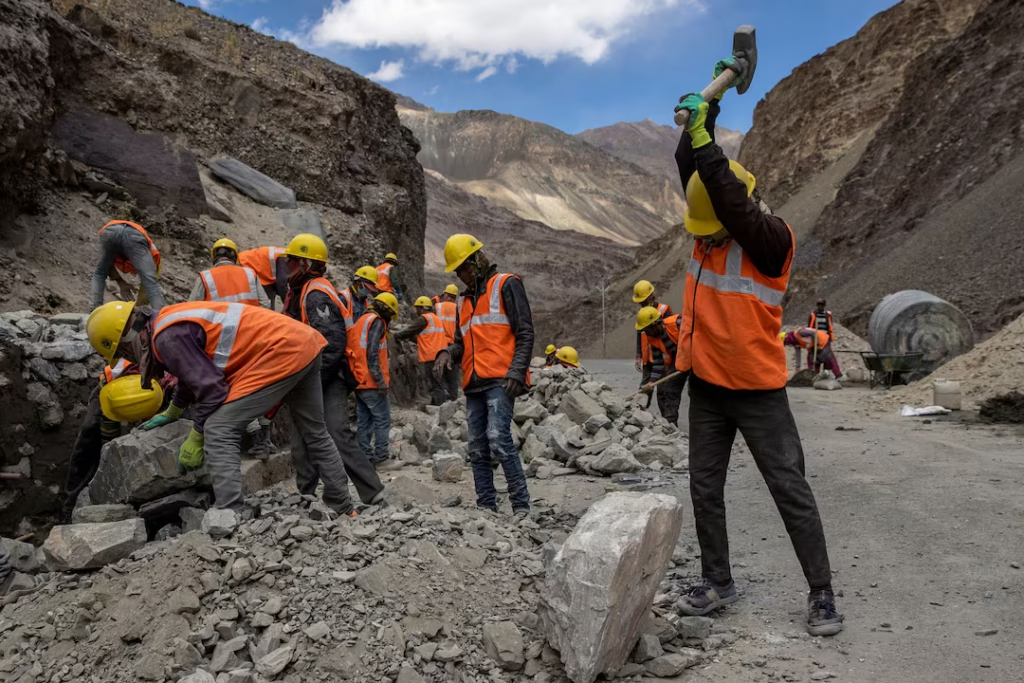
Building and maintaining roads in hilly and mountainous regions has always been a complex engineering challenge. Steep gradients, unstable soil, heavy rainfall, landslides, freeze–thaw cycles, and limited construction seasons make conventional road construction costly and short-lived. In this context, steel slag technology is emerging as a promising, sustainable solution for constructing durable, climate-resilient roads in hilly regions.
By using steel slag—a byproduct of steel manufacturing—as a construction material, engineers and policymakers aim to address two major challenges simultaneously: infrastructure durability in difficult terrains and environmentally responsible waste management.
What Is Steel Slag?
Steel slag is a solid byproduct generated during the steelmaking process when impurities in molten steel separate and combine with fluxes such as limestone. Instead of being discarded as waste, this material can be processed and reused in construction.
Key Properties of Steel Slag
- High strength and durability
- Excellent load-bearing capacity
- Rough surface texture for better bonding
- Resistance to wear and deformation
- Good drainage characteristics
These properties make steel slag particularly suitable for road base layers, sub-base materials, and asphalt mixes, especially in regions exposed to harsh environmental conditions.
Why Road Construction in Hilly Regions Is Challenging
Hilly terrains present unique and persistent problems for road engineers:
1. Landslides and Soil Instability
Frequent landslides caused by rainfall, earthquakes, or erosion damage road foundations and surfaces.
2. Extreme Weather Conditions
Snowfall, freeze–thaw cycles, and intense monsoons weaken traditional road materials quickly.
3. Heavy Maintenance Costs
Repeated repairs and reconstruction increase long-term costs and disrupt connectivity.
4. Environmental Sensitivity
Mountain ecosystems are fragile, and large-scale quarrying for stone aggregates can cause ecological damage.
These challenges demand stronger, longer-lasting, and more sustainable construction materials—precisely where steel slag technology shows promise.
How Steel Slag Technology Works in Road Construction
Steel slag can be used in multiple layers of road construction:
- Sub-base layer for improved load distribution
- Base layer to increase structural strength
- Asphalt mixtures to improve skid resistance and durability
After proper processing and quality checks, steel slag is crushed, graded, and stabilized before being used as an aggregate substitute.
Advantages of Steel Slag for Hilly Roads
1. Superior Strength and Stability
Steel slag has higher compressive strength compared to many natural aggregates. This helps roads withstand heavy vehicle loads and slope-induced stresses.
In hilly areas where road failure often begins at the foundation, this added strength is critical.
2. Improved Resistance to Landslides
The angular and rough texture of steel slag enhances interlocking between particles. This improves slope stability and reduces the risk of material displacement during heavy rainfall.
3. Better Performance in Extreme Weather
Steel slag shows strong resistance to:
- Freeze–thaw damage
- Water-induced weakening
- Rutting and deformation
This makes it ideal for mountain regions that experience seasonal snow, rain, and temperature fluctuations.
4. Enhanced Drainage
Good drainage is essential in hills to prevent water accumulation and erosion. Steel slag’s porous structure allows water to drain efficiently, reducing pressure on road layers.
5. Longer Road Life, Lower Maintenance
Roads built with steel slag typically last longer and require fewer repairs. This is particularly valuable in remote hilly regions where maintenance access is difficult and expensive.
Environmental Benefits of Steel Slag Technology
Turning Waste into a Resource
Steel slag is produced in large quantities by steel plants. Using it in road construction:
- Reduces industrial waste
- Minimizes landfill use
- Promotes circular economy practices
Reduced Mining and Quarrying
Traditional road construction depends heavily on stone aggregates mined from hills and riverbeds. Replacing part of this demand with steel slag:
- Protects fragile mountain ecosystems
- Reduces deforestation and soil erosion
- Lowers environmental degradation
Lower Carbon Footprint
By reusing industrial byproducts and reducing mining activity, steel slag roads can significantly reduce the overall carbon footprint of infrastructure projects.
Economic Advantages for Infrastructure Development
Cost Savings in the Long Run
Although initial processing costs exist, steel slag roads:
- Last longer
- Require fewer repairs
- Reduce reconstruction frequency
Over time, this leads to substantial savings, especially in terrain where maintenance is logistically complex.
Local Material Utilisation
Steel slag can often be sourced domestically, reducing transportation costs and dependence on distant quarries.
Boost to Green Construction Industry
Wider adoption of steel slag technology encourages:
- Innovation in sustainable materials
- New employment opportunities
- Growth of green infrastructure sectors
Suitability for Mountainous Regions
Steel slag technology is particularly relevant for:
- Himalayan and sub-Himalayan regions
- Northeastern hill states
- Western and Eastern Ghats
- Mountain roads prone to landslides
In these regions, durability and environmental sensitivity are as important as cost and speed of construction.
Safety Benefits for Hill Roads
Road safety is a major concern in mountainous areas. Steel slag contributes to safety by:
- Improving skid resistance
- Reducing surface polishing
- Providing better vehicle grip on slopes and curves
This can help lower accident risks, especially during rain or snow.
Challenges and Considerations
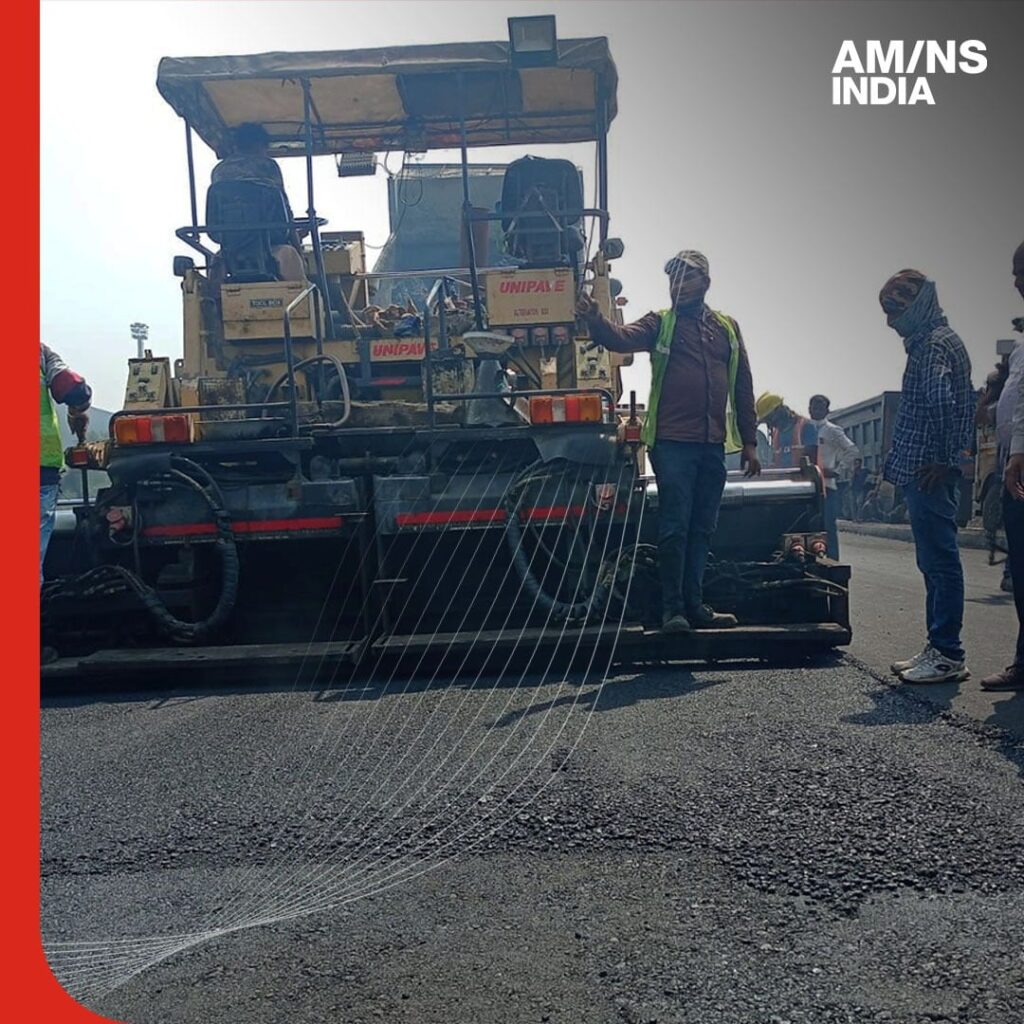
Despite its advantages, steel slag technology requires careful implementation:
Quality Control
Steel slag must be properly processed to remove:
- Free lime
- Excess metals
- Unstable compounds
Without treatment, expansion or leaching issues may occur.
Standardization and Guidelines
Widespread adoption requires:
- Clear construction standards
- Performance testing protocols
- Long-term monitoring
Regulatory frameworks must evolve to support large-scale use.
Awareness and Training
Engineers, contractors, and local authorities need:
- Technical training
- Exposure to best practices
- Demonstration projects
This helps overcome hesitation around non-traditional materials.
Global and Indian Context
Globally, steel slag has been successfully used in:
- Highways
- Airport runways
- Industrial roads
In India, pilot projects and research studies are increasingly supporting its use, particularly for challenging terrains and sustainable infrastructure goals.
With expanding steel production and growing infrastructure needs, India is well-positioned to benefit from this technology.
Role in Climate-Resilient Infrastructure
As climate change increases:
- Rainfall intensity
- Landslide frequency
- Temperature extremes
Roads in hilly regions must become more resilient. Steel slag technology supports:
- Climate adaptation
- Disaster-resilient infrastructure
- Long-term connectivity
This aligns with broader goals of sustainable development and resilient transport networks.
Future Potential of Steel Slag Roads
Looking ahead, steel slag technology could be expanded to:
- Border roads in high-altitude areas
- Strategic mountain highways
- Rural connectivity projects
- Eco-sensitive zones with strict mining restrictions
With continued research and policy support, it could become a standard material for hill road construction.
Why This Technology Matters Now
The proposal to use steel slag for sustainable roads comes at a critical time when:
- Infrastructure demand is rising
- Environmental concerns are growing
- Climate risks are intensifying
It offers a solution that balances engineering strength, economic efficiency, and environmental responsibility.
Conclusion
The proposal to adopt steel slag technology for sustainable roads in hilly regions represents a smart and forward-looking approach to infrastructure development. By transforming an industrial byproduct into a high-performance construction material, this technology addresses two pressing challenges—durable mountain roads and sustainable resource use.
With proper processing, regulation, and implementation, steel slag can significantly improve road stability, reduce environmental damage, and lower long-term costs in some of the most challenging terrains. As nations seek resilient, eco-friendly infrastructure solutions, steel slag roads could play a crucial role in shaping the future of mountain connectivity.
In the journey toward sustainable development, sometimes the strongest solutions come not from new materials—but from reimagining how we use what we already have.