
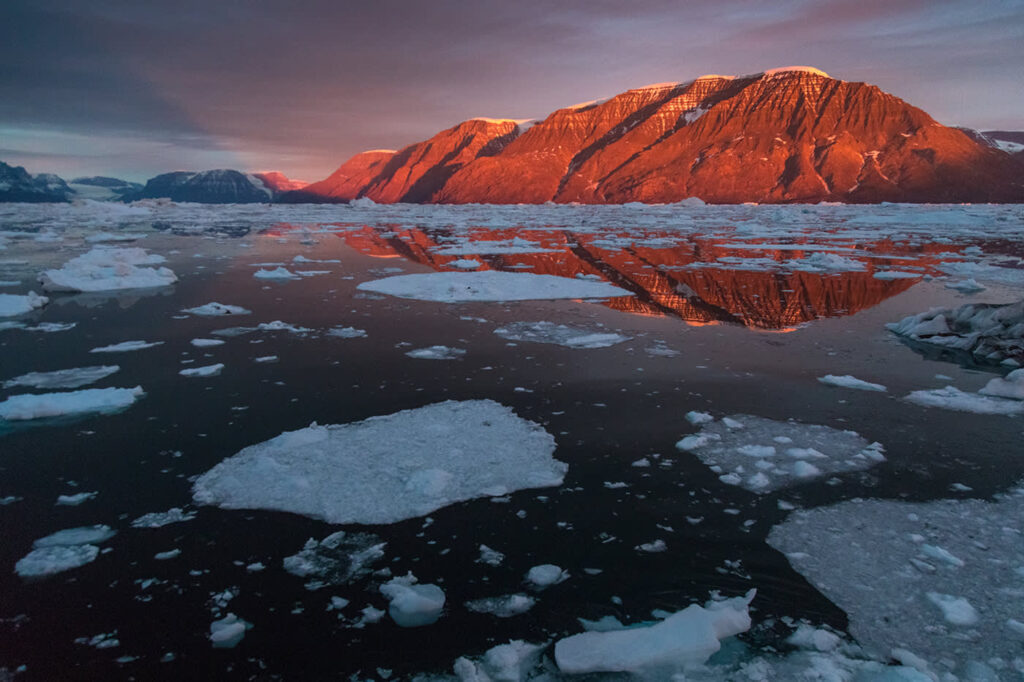
The idea of the United States acquiring Greenland has shifted from a surprising diplomatic remark to a serious geopolitical debate. Donald Trump has repeatedly expressed interest in Greenland, arguing that the Arctic island is critical to American security, economic interests, and global strategic positioning.
While the idea has been firmly rejected by Greenland and Denmark, Trump’s interest is not random or impulsive. It is rooted in geography, military strategy, natural resources, climate change, and great-power competition. This explainer breaks down why Greenland matters so much—and why Trump wants it.
What Is Greenland?
Greenland is the world’s largest island and a self-governing territory within the Kingdom of Denmark. It has its own parliament and controls domestic affairs, while Denmark manages foreign policy and defense.
Despite its massive size, Greenland has a very small population—around 56,000 people—most of whom are Indigenous Inuit (Kalaallit). Much of the island is covered by ice, but climate change is rapidly transforming its strategic value.
Trump’s Interest: Not a New Idea
Trump’s interest in Greenland first surfaced publicly during his earlier presidency and re-emerged more forcefully in recent years. However, the concept itself is older:
- The United States has long viewed Greenland as strategically important
- After World War II, the US explored acquiring it
- The US already operates a major military base on the island
Trump’s approach revived this historical idea but framed it in modern geopolitical terms.
Greenland’s Strategic Location: Geography Is Destiny
The Arctic Gateway
Greenland sits at the crossroads of:
- North America
- Europe
- The Arctic Ocean
As Arctic ice melts, Greenland becomes a gateway to:
- New shipping routes
- Military transit corridors
- Submarine and missile paths
This makes Greenland central to future global trade and defense planning.
The GIUK Gap
Greenland lies near the GIUK Gap (Greenland–Iceland–UK), a crucial corridor for monitoring naval and air movement between the Atlantic and Arctic.
For military planners:
- Control or influence over this region improves early-warning systems
- It helps track adversary submarines and aircraft
- It strengthens North American defense
Trump views Greenland as a front-line asset in future global security competition.
National Security: The Core Argument
US Military Presence
The United States already operates Thule Air Base in Greenland, a key installation for:
- Missile detection
- Space surveillance
- Arctic defense
Trump has argued that:
- The base is not enough on its own
- The US should have full control over the island’s defense environment
In his view, Greenland is too important to leave under another nation’s sovereignty.
Russia and China in the Arctic
One of Trump’s biggest concerns is the growing presence of:
- Russia, which has expanded Arctic military infrastructure
- China, which describes itself as a “near-Arctic state”
Greenland sits directly along potential strategic routes for both powers. Trump’s stance is that if the US does not assert influence, others will.
Climate Change Is Reshaping Greenland’s Value
Although Trump has often downplayed climate change, his Greenland strategy indirectly acknowledges its impact.
As ice melts:
- New shipping lanes open
- Mineral deposits become accessible
- Strategic access improves
Greenland is no longer a frozen backwater—it is becoming a central Arctic hub.
Rare Earth Minerals and Natural Resources
Greenland holds significant reserves of:
- Rare earth elements
- Uranium
- Oil and gas
- Critical minerals used in defense and clean energy
Rare earth minerals are essential for:
- Smartphones
- Electric vehicles
- Wind turbines
- Advanced weapons systems
Trump’s interest aligns with America’s broader goal of reducing dependence on foreign mineral supply chains.
Economic and Strategic Independence
Trump has framed Greenland as:
- An investment in long-term American power
- A way to secure resources domestically
- A strategic hedge against global instability
From this perspective, Greenland is not just land—it is leverage.
Prestige, Legacy, and Power Politics

Trump often views foreign policy through:
- National strength
- Deal-making
- Historical legacy
He has described Greenland acquisition as:
- A missed opportunity by past leaders
- A move that would define American leadership
- A symbol of strategic foresight
For Trump, Greenland represents both practical value and symbolic power.
Greenland’s Perspective: “We Are Not for Sale”
Greenland’s leaders and people have repeatedly stated:
- Greenland belongs to Greenlanders
- Decisions about its future will be made locally
- Sovereignty and self-determination are non-negotiable
Many Greenlanders support eventual independence—not annexation by another country.
Public protests and political statements have made it clear that Trump’s proposal is deeply unpopular locally.
Denmark’s Position: Firm Rejection
Denmark has consistently rejected the idea, emphasizing:
- Greenland is not a commodity
- Territorial integrity is protected by international law
- Cooperation does not require ownership
Denmark has also increased investment in Greenland to reinforce its partnership with the island.
NATO and Alliance Concerns
Trump’s rhetoric caused unease among NATO allies because:
- Greenland is part of the NATO security structure
- Aggressive acquisition talk strains alliances
- Unity is critical in countering external threats
European leaders worry that unilateral pressure could weaken Western cohesion.
Legal Reality: Can the US Buy Greenland?
Legally:
- Greenland cannot be sold without consent
- International law protects territorial sovereignty
- Any change in status requires democratic approval
There is no legal pathway for forced acquisition without violating international norms.
Why Trump Keeps Pushing the Idea
Trump continues to raise Greenland because:
- It fits his security-first worldview
- It appeals to voters who favor strong national posture
- It reflects concern over Arctic competition
- It reinforces his image as a disruptor of traditional diplomacy
Even without realistic prospects, the idea shapes strategic debate.
What This Debate Really Reveals
The Greenland controversy highlights larger global shifts:
1. The Arctic Is the New Geopolitical Frontier
Climate change has transformed the Arctic from periphery to priority.
2. Resources Drive Strategy
Critical minerals are now as important as oil once was.
3. Power Politics Are Back
Major powers are openly competing for influence and territory.
4. Small Regions Matter More Than Ever
Even sparsely populated areas can have outsized global impact.
Possible Future Scenarios
Instead of acquisition, the future may involve:
- Expanded US military cooperation
- Increased investment and economic partnerships
- Greater Greenlandic autonomy
- Multilateral Arctic agreements
Ownership may be unrealistic—but influence is still possible.
Conclusion
Donald Trump’s interest in Greenland is not a joke, not a real-estate whim, and not a diplomatic accident. It is rooted in hard geopolitical logic shaped by security concerns, resource competition, climate change, and global power rivalry.
Greenland’s strategic location, mineral wealth, and Arctic importance make it one of the most valuable territories of the 21st century. Trump’s push reflects a world where geography, once again, defines power.
However, Greenland’s future will ultimately be decided by its people—not by outside ambitions. While Trump’s proposal has amplified global attention on the Arctic, it has also reaffirmed a central principle of modern geopolitics:
Strategic value does not override sovereignty.
Greenland may be central to global strategy—but it is not for sale.