
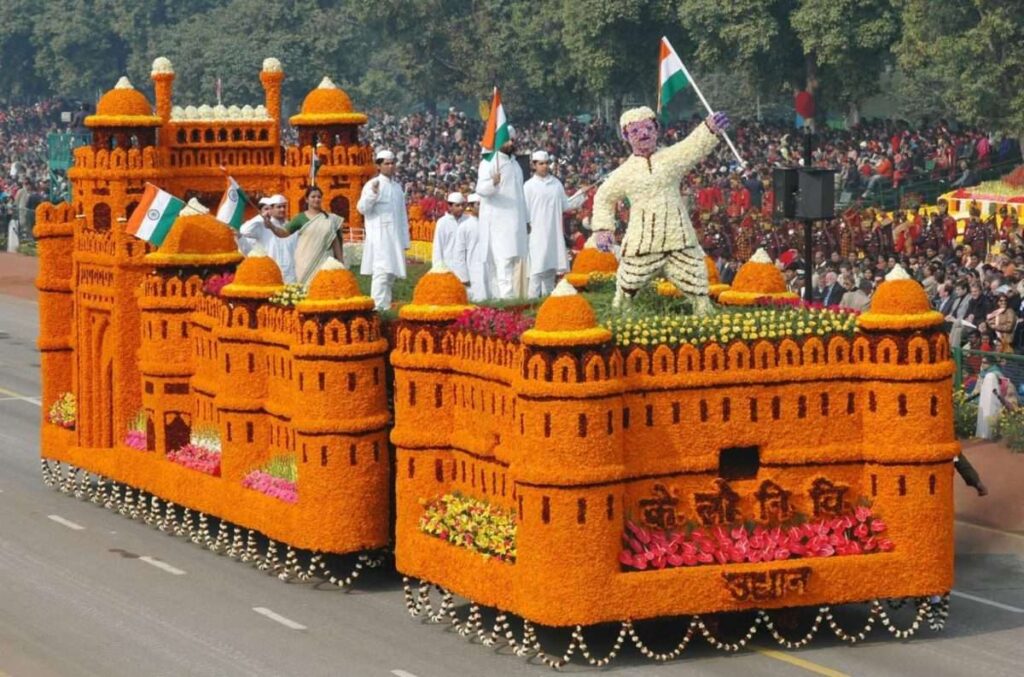
The Republic Day Parade 2026 emerged as a powerful blend of patriotism, history, and artistic expression, with a special highlight marking 150 years of ‘Vande Mataram’—one of India’s most iconic national songs. Through meticulously curated rare artwork, archival visuals, and symbolic tableaux, the parade paid tribute to a song that has inspired generations in India’s freedom struggle and continues to resonate deeply with the nation’s identity.
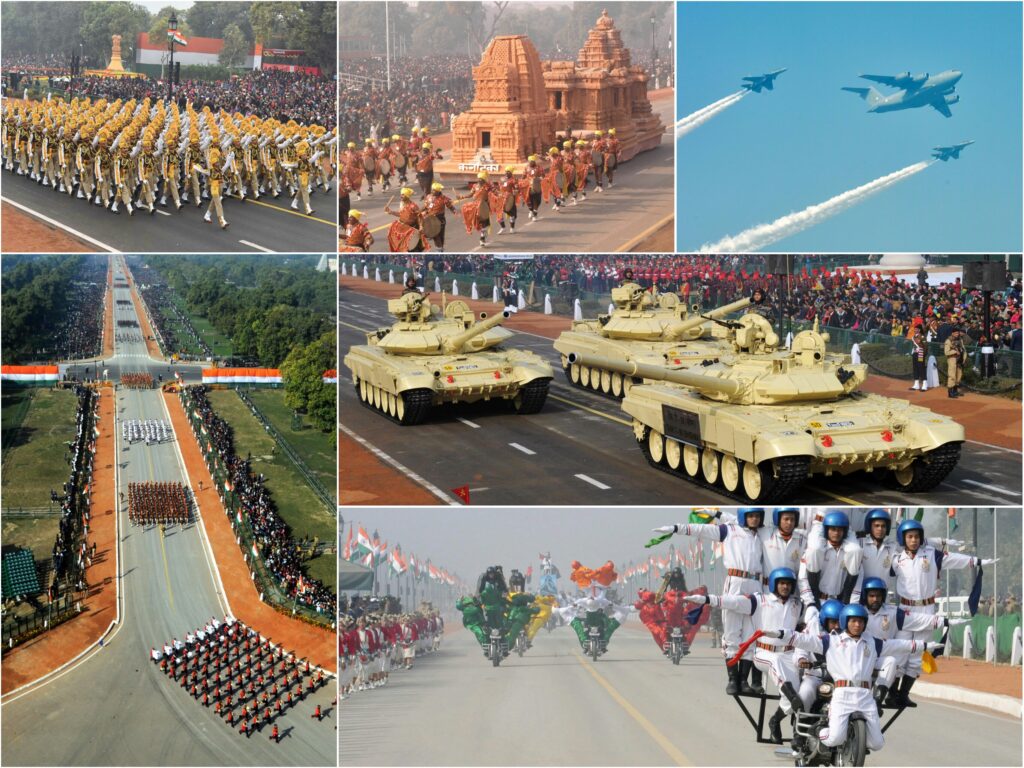
Held at Kartavya Path, the 2026 parade transformed history into a living spectacle, reminding millions of viewers that Republic Day is not only about military strength and constitutional pride, but also about the cultural soul of India.
Republic Day Parade 2026: Tradition Meets Cultural Memory
Republic Day commemorates the adoption of the Constitution of India on 26 January 1950. Over the decades, the parade has evolved into a grand national showcase—displaying India’s:
- Military preparedness
- Technological progress
- Cultural diversity
- Historical consciousness
In 2026, the cultural segment took center stage by commemorating 150 years since the creation of ‘Vande Mataram’, elevating the parade from a ceremonial event to a journey through India’s freedom movement and artistic heritage.
Why ‘Vande Mataram’ Matters
A Song That Became a Movement
‘Vande Mataram’ was composed by Bankim Chandra Chattopadhyay in the late 19th century. Originally part of his novel Anandamath, the song quickly transcended literature to become a rallying cry against colonial rule.
For freedom fighters, ‘Vande Mataram’ symbolized:
- Devotion to the motherland
- Resistance against oppression
- Unity across regions and communities
Its words ignited courage in times of repression, making it much more than a patriotic composition—it became the emotional anthem of India’s national awakening.
Marking 150 Years: A Historic Milestone
The year 2026 marks 150 years since the composition of ‘Vande Mataram’, making it a landmark anniversary. Recognising this, the Republic Day Parade organizers chose to celebrate the milestone through visual storytelling rather than mere narration.
This decision reflected a broader vision:
- To connect younger generations with history
- To present freedom-era emotions through art
- To honour cultural contributions alongside political achievements
The result was one of the most visually evocative segments in recent Republic Day history.
Rare Artwork Takes Centre Stage
Archival Paintings and Manuscripts
The cultural tableau dedicated to ‘Vande Mataram’ showcased:
- Reproductions of early handwritten manuscripts
- Rare paintings depicting freedom movement scenes
- Visual interpretations of the song’s verses
These artworks were inspired by archival material preserved in libraries, museums, and private collections, offering viewers a glimpse into how artists and nationalists once visualised the idea of “Mother India.”
Mother India as an Artistic Symbol
One of the most striking features of the tableau was the evolving portrayal of Bharat Mata (Mother India):
- Early depictions reflected spiritual and mythological imagery
- Later visuals showed Mother India as a nurturing yet resilient figure
- Freedom-era art depicted her surrounded by revolutionaries and reformers
This evolution mirrored India’s own transformation—from a colonised land to a sovereign republic.
The Tableau Narrative: From Colonial Rule to Independence
The ‘Vande Mataram’ tableau followed a clear narrative arc:
- Birth of the Song – Artistic representation of Bankim Chandra Chattopadhyay composing the song during colonial rule
- Freedom Movement – Paintings showing protests, gatherings, and sacrifices where ‘Vande Mataram’ was sung
- Cultural Unity – Depictions of people from different regions and communities united by the song
- Modern India – A contemporary interpretation of ‘Vande Mataram’ symbolising progress, democracy, and unity
This visual journey allowed spectators to experience history emotionally rather than academically.
Music, Art, and Motion in Perfect Harmony
The tableau was accompanied by:
- A soft instrumental rendition of ‘Vande Mataram’
- Classical dance-inspired movements by performers
- Choreographed transitions reflecting changing historical eras
Together, sound, movement, and imagery created a multisensory tribute that resonated with audiences across age groups.
Artistic Excellence and Craftsmanship
The artwork featured in the parade reflected months of collaboration between:
- Historians
- Visual artists
- Designers
- Cultural scholars
Every brushstroke, colour choice, and symbol was carefully selected to remain historically respectful while visually impactful.
This emphasis on authenticity elevated the tableau beyond decoration—it became art as historical documentation.
Educating the Next Generation
One of the most important impacts of highlighting ‘Vande Mataram’ through rare artwork was its educational value.
For younger viewers:
- The parade introduced the song’s origins
- Art made history accessible and engaging
- The freedom movement felt personal and relatable
In an era dominated by digital media, such visual storytelling ensures that foundational national narratives remain alive and relevant.
Cultural Heritage at the Heart of Republic Day
The 2026 parade reinforced a broader message:
India’s strength lies not only in its institutions and armed forces, but also in its cultural memory.
By placing ‘Vande Mataram’ at the center of the celebration, the parade highlighted:
- The role of literature and art in nation-building
- The importance of cultural continuity
- The emotional foundations of Indian nationalism
This approach balanced modern statehood with civilisational depth.
Public Response and Emotional Resonance
The ‘Vande Mataram’ segment drew widespread appreciation for:
- Its visual richness
- Emotional depth
- Historical sensitivity
Many viewers described the tableau as one of the most moving moments of the parade, evoking pride, nostalgia, and reflection rather than spectacle alone.
A Song Beyond Politics
While ‘Vande Mataram’ has occasionally been part of political debate, the Republic Day Parade 2026 presentation consciously focused on:
- Its historical role
- Its cultural symbolism
- Its unifying message
By presenting the song through art and history, the parade placed it above contemporary divisions, reaffirming its place as a shared national heritage.
Art as a Tool of National Memory
The success of the 2026 tribute demonstrated how art can:
- Preserve history
- Humanise national narratives
- Create emotional connections
Rather than relying on speeches or slogans, the parade allowed images and symbols to speak, making the story of ‘Vande Mataram’ timeless and universal.
Republic Day Parade 2026: A Cultural Benchmark
With its focus on rare artwork and historical storytelling, the Republic Day Parade 2026 set a new benchmark for cultural presentation. It showed that:
- National celebrations can educate as well as inspire
- Heritage can be showcased without nostalgia or rigidity
- Art can be as powerful as arms in expressing national strength
Conclusion
The Republic Day Parade 2026 transformed a national celebration into a profound cultural reflection by commemorating 150 years of ‘Vande Mataram’ through rare and evocative artwork. By weaving history, art, and emotion into the parade, India paid homage not just to a song, but to the spirit of freedom and unity it represents.
As the tableaux rolled down Kartavya Path, they carried with them memories of sacrifice, dreams of independence, and the enduring power of cultural expression. In doing so, the parade reminded the nation that India’s republic stands not only on laws and institutions, but also on songs, stories, and symbols that bind its people together.