
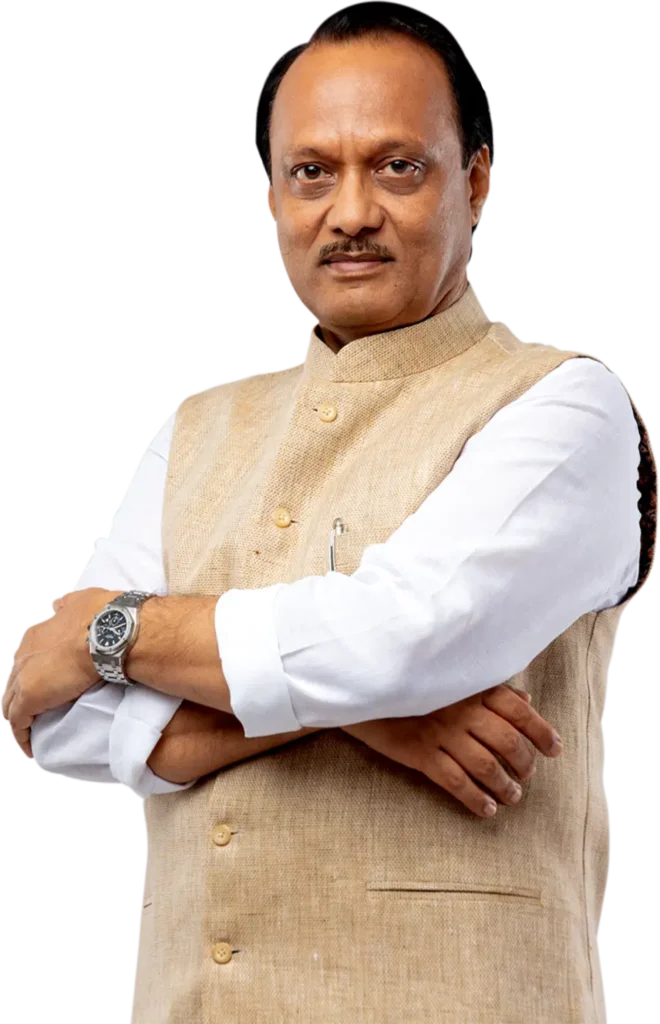
Ajit Pawar is one of the most influential, controversial, and enduring figures in Maharashtra politics. Known for his sharp political instincts, administrative grip, and ability to survive repeated power shifts, Ajit Pawar’s journey from rural Maharashtra to the very centre of state power is a story of ambition, adaptability, and political resilience.
Often described as a master strategist and a decisive administrator, Pawar has shaped Maharashtra’s political landscape for decades—sometimes as a kingmaker, sometimes as a rebel, and often as a central power broker.
Early Life and Rural Roots
Ajit Pawar was born into a politically active family rooted in the agrarian heartland of Maharashtra. Growing up in a rural environment shaped his understanding of:
- Agriculture and irrigation issues
- Cooperative movements
- Grassroots politics
- Farmer-centric governance
These early experiences would later define his policy focus, particularly on water management, rural infrastructure, and agricultural development.
Political Lineage and Early Influence
Ajit Pawar is the nephew of veteran leader Sharad Pawar, one of the most powerful political figures in India. While this lineage gave him early exposure to politics, it also placed him under constant scrutiny.
Rather than relying solely on legacy, Ajit Pawar:
- Built his own regional support base
- Developed a reputation as a tough negotiator
- Emerged as a leader with independent ambitions
His political identity gradually moved beyond being “Sharad Pawar’s nephew” to becoming a force in his own right.
Entry Into Active Politics
Ajit Pawar formally entered active politics in the early 1990s. He contested and won elections from rural constituencies, establishing himself as:
- A mass leader in western Maharashtra
- A strong voice in cooperative politics
- A politician closely connected with farmers and local institutions
His electoral success highlighted his ability to mobilize rural voters and manage local power structures effectively.
Rise Within the Nationalist Congress Party
Ajit Pawar rose rapidly within the Nationalist Congress Party (NCP) after its formation. His ascent was driven by:
- Organizational control in key districts
- Strong fundraising ability
- Influence over cooperative banks and sugar factories
He became one of the party’s most important leaders in Maharashtra, especially in the western region.
Administrative Reputation: The ‘Doer’ Image
One of Ajit Pawar’s defining traits is his image as an administrator who:
- Makes quick decisions
- Focuses on execution over rhetoric
- Pushes bureaucracy aggressively
Focus on Irrigation and Infrastructure
As a minister, Pawar was closely associated with:
- Large irrigation projects
- Dam construction and water management
- Rural road and power infrastructure
Supporters credit him with accelerating stalled projects, while critics have questioned transparency and financial oversight.
Deputy Chief Minister: Multiple Terms, Multiple Alliances
Ajit Pawar has served multiple terms as Deputy Chief Minister of Maharashtra, a rare feat that underlines his political adaptability.
A Constant in Changing Governments
Across different political equations, Pawar has:
- Retained relevance
- Negotiated power-sharing
- Positioned himself as indispensable
This ability to survive regime changes has earned him a reputation as one of Maharashtra’s most astute power players.
The Reputation of a Power Broker
Ajit Pawar is often described as:
- A hard-nosed negotiator
- A leader comfortable with behind-the-scenes politics
- Someone who prioritizes power consolidation
He is known for:
- Strategic timing
- Tactical defections and alliances
- Leveraging legislative numbers
This has made him both feared and respected across party lines.
The Rebel Image and Political Breaks
One of the most defining aspects of Ajit Pawar’s career has been his periodic rebellion within his own political family and party.
Breaking Ranks
On more than one occasion, Pawar:
- Challenged party leadership
- Took independent political positions
- Triggered major realignments in Maharashtra politics
These moves reinforced his image as a leader who:
- Values authority and autonomy
- Is willing to risk controversy for power
Support Base: Western Maharashtra Stronghold
Ajit Pawar’s core strength lies in:
- Western Maharashtra
- Cooperative institutions
- Sugar belt politics
His influence extends through:
- Cooperative banks
- Sugar factories
- Agricultural unions
This network gives him:
- Financial leverage
- Organizational depth
- Electoral resilience
Criticism and Controversies
No profile of Ajit Pawar is complete without addressing the controversies.
Allegations and Political Attacks
Over the years, Pawar has faced:
- Allegations related to irrigation projects
- Accusations of misuse of power
- Criticism over aggressive political tactics
While many allegations have been contested or remain unresolved, they have shaped public perception and opposition narratives.
The ‘Strongman’ Perception
Critics often label him as:
- Authoritarian
- Intimidating
- Uncompromising
Supporters, however, see the same traits as:
- Decisiveness
- Administrative efficiency
- Political realism
Relationship With Sharad Pawar
Ajit Pawar’s relationship with Sharad Pawar has been one of:
- Mentorship
- Political collaboration
- Ideological and strategic divergence
While Sharad Pawar is seen as a consensus builder and national strategist, Ajit Pawar is viewed as a:
- State-level power tactician
- Ground-level enforcer
- Pragmatic decision-maker
This contrast has defined both cooperation and conflict between the two.
Ideology vs Pragmatism
Ajit Pawar is often described as:
- Less ideological
- Highly pragmatic
- Focused on results and authority
His politics is driven by:
- Power arithmetic
- Administrative control
- Regional dominance
This makes him flexible—but also unpredictable.
Mass Appeal and Electoral Strength
Despite controversies, Ajit Pawar has:
- Won multiple elections
- Retained strong voter loyalty
- Demonstrated grassroots appeal
His ability to connect with rural voters on issues like:
- Water availability
- Farmer distress
- Local development
has kept him electorally relevant.
Ajit Pawar in Maharashtra’s Power Structure
Today, Ajit Pawar stands as:
- One of the most powerful politicians in Maharashtra
- A key figure in government formation
- A leader whose moves can alter political equations overnight
His presence ensures that no major political decision in the state ignores his role.
Supporters vs Critics: A Divided Opinion
Supporters Say:
- He delivers results
- He understands rural Maharashtra
- He is decisive and efficient
Critics Say:
- He centralizes power
- He thrives on political instability
- He prioritizes authority over transparency
This divided opinion has followed him throughout his career.
What Makes Ajit Pawar Unique
Few leaders combine:
- Rural political grounding
- Cooperative sector dominance
- Administrative authority
- Alliance-shifting agility
Ajit Pawar’s strength lies in navigating realpolitik—the politics of power as it exists, not as it is idealized.
Future Political Trajectory
Looking ahead, Ajit Pawar’s role will likely:
- Remain central in Maharashtra politics
- Influence coalition dynamics
- Shape rural and cooperative policies
Whether as a stabilizer or disruptor, his actions will continue to command attention.
Legacy in the Making
Ajit Pawar’s political legacy is still evolving. He will be remembered as:
- A rural leader who mastered power politics
- A figure who redefined coalition maneuvering in Maharashtra
- A politician who blurred the line between loyalty and ambition
Conclusion
Ajit Pawar’s journey from rural roots to power politics is a study in ambition, adaptability, and authority. He represents a style of leadership grounded in grassroots realities but sharpened by high-stakes political strategy.
Loved by supporters, criticized by opponents, and closely watched by allies, Ajit Pawar remains one of Maharashtra’s most consequential political figures. In a state where politics is as complex as its social fabric, his story reflects a simple truth:
In Maharashtra, power doesn’t just change hands—it is negotiated, managed, and mastered. And Ajit Pawar has mastered that game.