
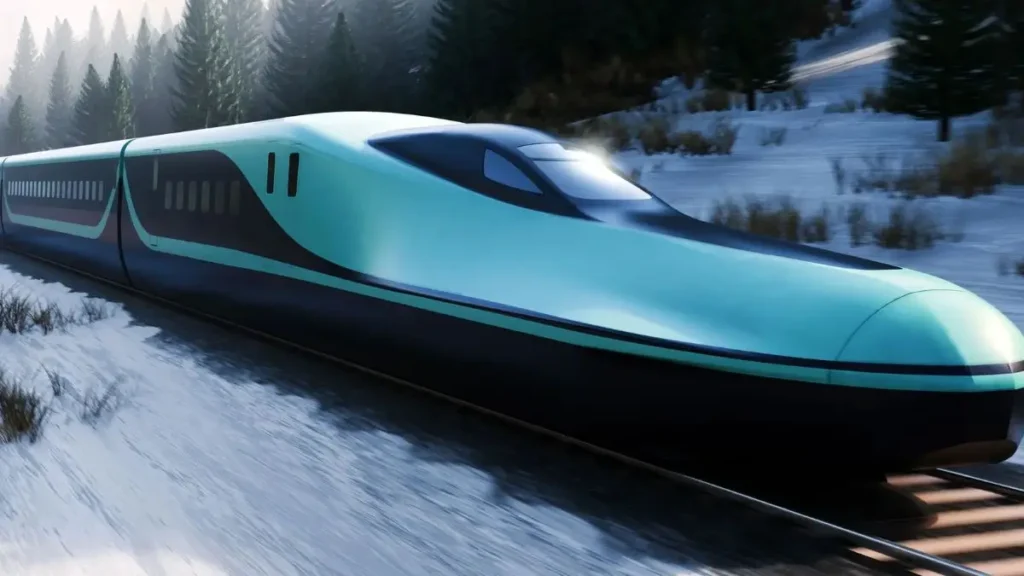
In a groundbreaking development in global transportation, Japan is set to revolutionize logistics with the launch of the world’s first high-speed cargo bullet train, capable of reaching speeds of 275 kmph. Developed by the renowned Japan Railways Group (JR Group), this innovation marks a new era where freight transport meets the speed and efficiency of passenger rail systems.
The project aims to transform the way goods are transported across the country by combining speed, sustainability, and advanced railway technology. Known as the freight Shinkansen, this initiative could redefine logistics not just in Japan but globally.
What is the Cargo Bullet Train?
Japan’s cargo bullet train is a modified version of the famous Shinkansen, the country’s high-speed rail network known for its punctuality and safety.
Traditionally used for passenger travel, the Shinkansen system is now being adapted to carry freight at high speeds. The cargo bullet train will transport goods such as parcels, fresh produce, and time-sensitive shipments between major cities.
Key Features
- Top speed of 275 kmph
- High-speed freight transportation
- Use of existing Shinkansen infrastructure
- Advanced cargo handling systems
- Reduced delivery time across regions
This innovation bridges the gap between air freight and traditional rail cargo by offering both speed and efficiency.
Why Japan is Introducing High-Speed Freight Trains
Japan is known for its technological innovation and efficient transport systems. The introduction of a high-speed cargo train is driven by several factors.
Rising Demand for Fast Deliveries
With the growth of e-commerce and online shopping, there is an increasing demand for faster delivery of goods. High-speed freight trains can significantly reduce delivery times.
Labor Shortages in Logistics
Japan faces a shortage of truck drivers due to an aging population. The cargo bullet train offers an alternative to road transport, reducing reliance on trucking.
Environmental Sustainability
Rail transport is more energy-efficient and environmentally friendly compared to air and road transport. The cargo Shinkansen supports Japan’s efforts to reduce carbon emissions.
How the Freight Shinkansen Works
The cargo bullet train operates on the same high-speed tracks used by passenger Shinkansen trains, but with specially designed compartments for freight.
Dedicated Cargo Space
Passenger coaches are either modified or replaced with cargo units designed to securely hold packages and goods.
Efficient Loading Systems
Automated systems are used to load and unload cargo quickly, minimizing delays at stations.
Integration with Logistics Networks
The system is integrated with local delivery networks, ensuring that goods can be transported from station to final destination efficiently.
Benefits of the High-Speed Cargo Train
The introduction of a 275 kmph cargo train offers numerous advantages.
1. Faster Delivery Times
Goods can be transported across long distances in a matter of hours, making it ideal for time-sensitive deliveries.
2. Reduced Road Congestion
By shifting freight from trucks to trains, the system helps reduce traffic congestion on highways.
3. Lower Carbon Emissions
Rail transport produces fewer emissions compared to road and air transport, contributing to environmental sustainability.
4. Improved Supply Chain Efficiency
Businesses can benefit from faster and more reliable delivery systems, improving overall supply chain performance.
Impact on E-Commerce and Business
The cargo bullet train is expected to have a significant impact on Japan’s e-commerce and logistics industries.
Supporting Online Retail
Fast and reliable delivery is a key factor in e-commerce success. The high-speed freight train enables quicker order fulfillment, enhancing customer satisfaction.
Boosting Small Businesses
Small and medium enterprises can benefit from faster logistics, allowing them to compete more effectively in the market.
Enhancing Perishable Goods Transport
Fresh produce, seafood, and other perishable goods can be transported quickly, maintaining quality and reducing waste.
Global Significance of the Innovation
Japan’s cargo bullet train is the first of its kind in the world, setting a new benchmark for high-speed freight transport.
Countries around the world are closely watching this development, as it offers a potential solution to common logistics challenges such as:
- Delivery delays
- Traffic congestion
- Environmental concerns
If successful, similar systems could be adopted in other countries with advanced rail networks.
Challenges and Considerations
While the concept is revolutionary, there are challenges that need to be addressed.
Infrastructure Limitations
Not all countries have high-speed rail networks like Japan, making it difficult to replicate the model globally.
Cost of Implementation
Developing and modifying trains for cargo use requires significant investment.
Scheduling Conflicts
Balancing passenger and freight services on the same tracks requires careful planning to avoid disruptions.
Despite these challenges, Japan’s expertise in railway management positions it well to overcome these obstacles.
Future of High-Speed Freight Transport
The success of Japan’s cargo bullet train could lead to the expansion of high-speed freight networks worldwide.
Future developments may include:
- Dedicated high-speed freight corridors
- Integration with smart logistics systems
- Use of AI for route optimization
- Expansion to international transport networks
Such innovations could transform global logistics and supply chains.
Comparison with Traditional Freight Systems
Rail vs Road Transport
- Rail offers higher efficiency and lower emissions
- Road transport provides flexibility but faces congestion issues
Rail vs Air Freight
- Air freight is faster but more expensive
- High-speed rail offers a balance between cost and speed
The cargo bullet train combines the advantages of both systems, making it a highly efficient alternative.
Conclusion
Japan’s 275 kmph cargo bullet train represents a major leap forward in transportation and logistics. By combining the speed of the Shinkansen with advanced cargo systems, the country is setting a new standard for high-speed freight transport.
This innovation not only addresses current challenges in logistics but also paves the way for a more sustainable and efficient future. As the world moves toward faster and greener solutions, Japan’s freight Shinkansen could become a model for global transportation systems.
With its potential to transform supply chains, reduce emissions, and improve delivery efficiency, the cargo bullet train is a clear example of how technology can reshape industries and redefine possibilities. 🚄📦