
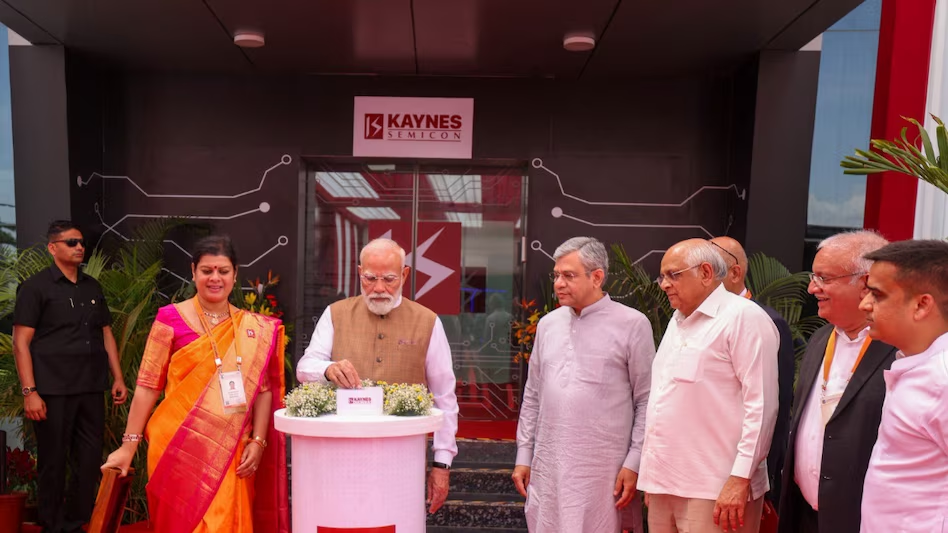
In a landmark development for India’s technology and manufacturing sector, Narendra Modi, the Prime Minister of India, inaugurated the Kaynes Semiconductor Plant in Gujarat, marking a major step toward strengthening the country’s semiconductor ecosystem. The initiative aligns with India’s vision of becoming a global hub for electronics manufacturing and reducing dependence on imported chips.
The launch of this facility represents a crucial milestone in India’s journey toward self-reliance in semiconductor production, a sector that is vital for modern technologies such as smartphones, automobiles, artificial intelligence, and defense systems.
What is the Kaynes Semiconductor Plant?
The new semiconductor facility has been established by Kaynes Technology India Limited, a leading electronics manufacturing services company. The plant is designed to support semiconductor assembly, testing, marking, and packaging (ATMP) operations.
Key Highlights of the Plant
- Located in Gujarat, a rapidly growing industrial hub
- Focus on semiconductor packaging and testing
- Supports domestic electronics manufacturing
- Equipped with advanced technology infrastructure
- Expected to create thousands of job opportunities
The plant will play a critical role in strengthening India’s semiconductor supply chain and boosting domestic production capabilities.
Why Semiconductors Are Important
Semiconductors, often referred to as “chips,” are the backbone of modern electronics. They are used in a wide range of devices and industries.
Applications of Semiconductors
- Smartphones and consumer electronics
- Automobiles and electric vehicles
- Medical devices
- Telecommunications equipment
- Defense and aerospace systems
With increasing digitization and technological advancement, the demand for semiconductors is growing rapidly across the world.
India’s Push for Semiconductor Self-Reliance
India has been heavily dependent on imports for semiconductors, which has posed challenges for its electronics and manufacturing sectors. The government has been actively promoting domestic production through various initiatives.
Key Government Initiatives
- Production Linked Incentive (PLI) schemes
- Semiconductor Mission of India
- Incentives for chip manufacturing companies
- Support for research and development
The launch of the Kaynes Semiconductor Plant is a significant step in reducing this dependency and building a strong domestic ecosystem.
Role of Gujarat as a Semiconductor Hub
Gujarat has emerged as a preferred destination for semiconductor and electronics manufacturing projects.
Why Gujarat?
- Strong industrial infrastructure
- Availability of land and resources
- Business-friendly policies
- Strategic location and connectivity
The state government has been actively supporting investments in high-tech industries, making it an ideal location for semiconductor facilities.
Boost to India’s Electronics Manufacturing Sector
The establishment of the Kaynes Semiconductor Plant is expected to provide a major boost to India’s electronics manufacturing industry.
Key Benefits
- Strengthening the supply chain
- Reducing import dependency
- Supporting domestic manufacturers
- Enhancing competitiveness in global markets
The availability of locally produced semiconductors will help Indian companies scale up production and reduce costs.
Job Creation and Economic Impact
The semiconductor plant is expected to generate significant employment opportunities.
Employment Benefits
- Direct jobs in manufacturing and operations
- Indirect jobs in supply chain and logistics
- Opportunities for skilled professionals in engineering and technology
The project will also contribute to regional economic development and attract further investments.
Strengthening India’s Position in Global Supply Chains
The global semiconductor industry has faced disruptions in recent years due to supply chain challenges and geopolitical tensions.
By investing in domestic semiconductor production, India aims to position itself as a reliable player in the global supply chain.
Global Impact
- Increased participation in international markets
- Attracting foreign investments
- Collaboration with global technology companies
This move aligns with India’s goal of becoming a major player in the global electronics and semiconductor industry.
Technological Advancements and Innovation
The Kaynes Semiconductor Plant will also promote technological innovation in India.
Areas of Innovation
- Advanced chip packaging technologies
- Research and development in semiconductors
- Integration with emerging technologies like AI and IoT
Such advancements will help India keep pace with global technological trends and foster innovation.
Challenges in Building a Semiconductor Ecosystem
While the launch of the plant is a positive step, building a robust semiconductor ecosystem comes with challenges.
Key Challenges
- High capital investment requirements
- Need for skilled workforce
- Technological complexity
- Global competition
Addressing these challenges will require continuous support from the government, industry, and academia.
Future of India’s Semiconductor Industry
The Kaynes Semiconductor Plant is part of a larger vision to establish India as a global semiconductor hub.
Future Prospects
- More semiconductor fabs and ATMP units
- Increased collaboration with global companies
- Development of skilled talent pool
- Growth in electronics exports
With sustained efforts, India has the potential to become a key player in the global semiconductor market.
PM Modi’s Vision for Digital India
During the inauguration, Prime Minister Narendra Modi emphasized the importance of technology-driven growth and self-reliance.
The initiative aligns with key national programs such as:
- Digital India
- Make in India
- Atmanirbhar Bharat
These programs aim to transform India into a technologically advanced and self-sufficient nation.
Conclusion
The launch of the Kaynes Semiconductor Plant in Gujarat by Prime Minister Narendra Modi marks a significant milestone in India’s journey toward becoming a global semiconductor powerhouse.
By strengthening domestic production, creating jobs, and promoting innovation, the initiative is set to transform India’s electronics and technology landscape.
As the demand for semiconductors continues to grow, investments like this will play a crucial role in shaping the future of India’s economy and technological capabilities.
The Kaynes Semiconductor Plant is not just an industrial project—it is a symbol of India’s ambition to lead in the global technology race and build a self-reliant future.