
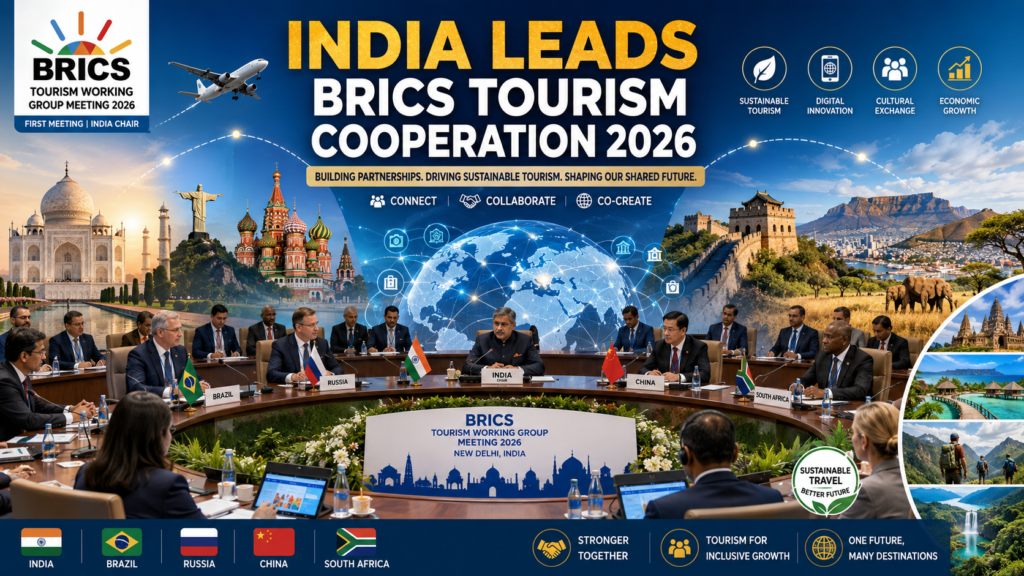
India chaired the first BRICS Tourism Working Group Meeting of 2026, marking an important step toward strengthening tourism cooperation among emerging economies and shaping a new collaborative agenda for sustainable and technology-driven tourism development.
The meeting brought together representatives from BRICS member nations to discuss strategies for boosting tourism partnerships, improving connectivity, promoting cultural exchange, and enhancing economic cooperation through travel and hospitality initiatives.
India’s leadership of the meeting highlights its growing diplomatic role within BRICS and its increasing focus on tourism as a major pillar of economic growth, international cooperation, and cultural diplomacy.
What Is the BRICS Tourism Working Group?
The BRICS Tourism Working Group is a collaborative platform involving tourism officials and policymakers from BRICS nations.
The group focuses on:
- Tourism cooperation
- Sustainable tourism strategies
- Cultural exchange
- Travel connectivity
- Digital tourism innovation
- Investment opportunities
BRICS countries increasingly recognize tourism as an important sector for economic development, employment generation, and international engagement.
Why the Meeting Matters
The first Tourism Working Group meeting of 2026 carries significance because BRICS nations collectively represent:
- A large share of the global population
- Major emerging economies
- Expanding middle-class travel markets
- Diverse cultural destinations
Tourism cooperation among BRICS countries could significantly influence global travel patterns and economic partnerships in the coming years.
The meeting also reflects efforts to strengthen Global South collaboration beyond traditional trade and political discussions.
India’s Leadership Role in BRICS
India chairing the meeting reinforces its growing influence within BRICS as one of the bloc’s leading economies and diplomatic voices.
India has increasingly promoted cooperation in areas including:
- Technology
- Sustainable development
- Digital infrastructure
- Climate action
- Tourism and culture
The tourism sector has become an important part of India’s international economic and soft power strategy.
Key Areas Discussed During the Meeting
Several important topics were reportedly discussed during the Tourism Working Group session.
Sustainable Tourism Development
Member countries explored strategies for promoting environmentally responsible and community-based tourism models.
Digital Tourism Infrastructure
The meeting highlighted the role of digital platforms, AI, and smart tourism technologies in improving traveler experiences.
Tourism Investment Opportunities
Countries discussed attracting investment into hospitality, infrastructure, and tourism services.
Cultural and Heritage Tourism
BRICS members emphasized promoting cultural exchange and heritage tourism among participating nations.
Skill Development and Training
Tourism workforce development and hospitality training also emerged as important discussion areas.
Importance of Tourism for BRICS Economies
Tourism contributes significantly to the economies of BRICS nations through:
- Employment generation
- Foreign exchange earnings
- Infrastructure development
- Cultural industries
- Aviation and hospitality sectors
Many BRICS countries possess globally important tourism destinations involving:
- Heritage sites
- Wildlife tourism
- Beaches
- Spiritual tourism
- Eco-tourism
- Urban tourism
Strengthening cooperation could create new tourism opportunities across member nations.
India’s Tourism Diplomacy Strategy
India has increasingly expanded tourism diplomacy as part of its international outreach efforts.
Major focus areas include:
- Spiritual tourism
- Cultural tourism
- Wellness tourism
- Medical tourism
- Heritage tourism
India has also promoted initiatives involving:
- Buddhist tourism circuits
- Yoga tourism
- Eco-tourism development
- Digital tourism services
The BRICS platform provides India an opportunity to expand these initiatives globally.
Technology and Smart Tourism
The meeting reportedly emphasized the growing importance of technology in tourism management and traveler experiences.
Emerging tourism technologies include:
- AI-powered travel platforms
- Digital visas
- Smart destination management
- Virtual tourism tools
- Contactless travel systems
Digital transformation is becoming increasingly important as tourism industries adapt to changing traveler expectations.
Sustainable and Responsible Tourism
Environmental sustainability has become a major global tourism priority.
The BRICS Tourism Working Group discussions reportedly focused on:
- Reducing tourism-related environmental impact
- Supporting local communities
- Protecting cultural heritage
- Climate-resilient tourism planning
Sustainable tourism is increasingly viewed as essential for long-term economic and ecological balance.
Cultural Exchange and Soft Power
Tourism also plays a major role in strengthening cultural diplomacy and international understanding.
Travel and tourism encourage:
- People-to-people connections
- Cultural awareness
- Educational exchange
- Artistic collaboration
India’s diverse cultural heritage positions it strongly within international tourism and soft power initiatives.
Growing Importance of Intra-BRICS Tourism
BRICS countries are increasingly focusing on boosting tourism flows among member nations.
Improved cooperation could support:
- Easier travel access
- Joint tourism promotion campaigns
- Airline connectivity
- Visa facilitation efforts
Growing middle-class populations in BRICS economies may create substantial future tourism demand.
Economic Opportunities for India
India could benefit economically from stronger BRICS tourism partnerships through:
- Increased foreign tourist arrivals
- Hospitality sector growth
- Aviation expansion
- Infrastructure investment
- Medical and wellness tourism growth
Tourism remains one of India’s largest employment-generating sectors.
Tourism and Infrastructure Development
Tourism expansion often drives infrastructure investment involving:
- Airports
- Hotels
- Transportation systems
- Smart city projects
- Digital connectivity
Many BRICS countries are currently investing heavily in tourism infrastructure modernization.
Role of AI and Data in Tourism
Artificial Intelligence and data analytics are increasingly shaping tourism industries worldwide.
Potential applications include:
- Personalized travel recommendations
- Crowd management systems
- Smart destination planning
- Predictive tourism analytics
Technology integration was reportedly an important focus area during the discussions.
Post-Pandemic Tourism Recovery
Global tourism continues recovering after disruptions caused by the COVID-19 pandemic.
Countries are now prioritizing:
- Tourism resilience
- Health security
- Digital travel systems
- Sustainable growth models
BRICS cooperation may help member countries strengthen tourism recovery and future preparedness.
Challenges Facing Global Tourism
Despite growth opportunities, the tourism sector continues facing challenges such as:
Geopolitical Instability
Conflicts and diplomatic tensions affect international travel patterns.
Climate Change
Environmental risks increasingly impact tourism destinations and infrastructure.
Economic Uncertainty
Global financial pressures influence consumer travel spending.
Infrastructure Gaps
Developing tourism infrastructure remains important in many regions.
The BRICS discussions likely addressed long-term strategies for managing these challenges.
India’s Growing Global Tourism Ambitions
India aims to significantly expand its tourism sector over the coming decade.
Government priorities include:
- Improving global tourism rankings
- Expanding international connectivity
- Enhancing tourist infrastructure
- Promoting heritage destinations
- Supporting digital tourism services
The BRICS Tourism Working Group aligns with these broader national goals.
Importance of Multilateral Cooperation
Tourism increasingly requires international cooperation involving:
- Aviation coordination
- Visa policies
- Safety standards
- Environmental management
- Digital systems integration
BRICS nations are exploring how collaborative frameworks can strengthen tourism ecosystems collectively.
Future of BRICS Tourism Cooperation
The first Tourism Working Group meeting of 2026 may shape future BRICS collaboration in areas including:
- Joint tourism campaigns
- Smart tourism technology sharing
- Sustainability initiatives
- Cultural exchange programs
- Tourism investment partnerships
As BRICS expands its global influence, tourism cooperation may become an increasingly important pillar of the bloc’s economic strategy.
Conclusion
India chairing the first BRICS Tourism Working Group Meeting of 2026 marks an important milestone in strengthening tourism diplomacy and international cooperation among emerging economies.
The discussions highlighted the growing importance of sustainable tourism, digital innovation, cultural exchange, and economic collaboration in shaping the future of global travel.
As tourism industries continue evolving through technology and sustainability priorities, BRICS cooperation could play a major role in redefining travel partnerships and tourism development across the Global South.