
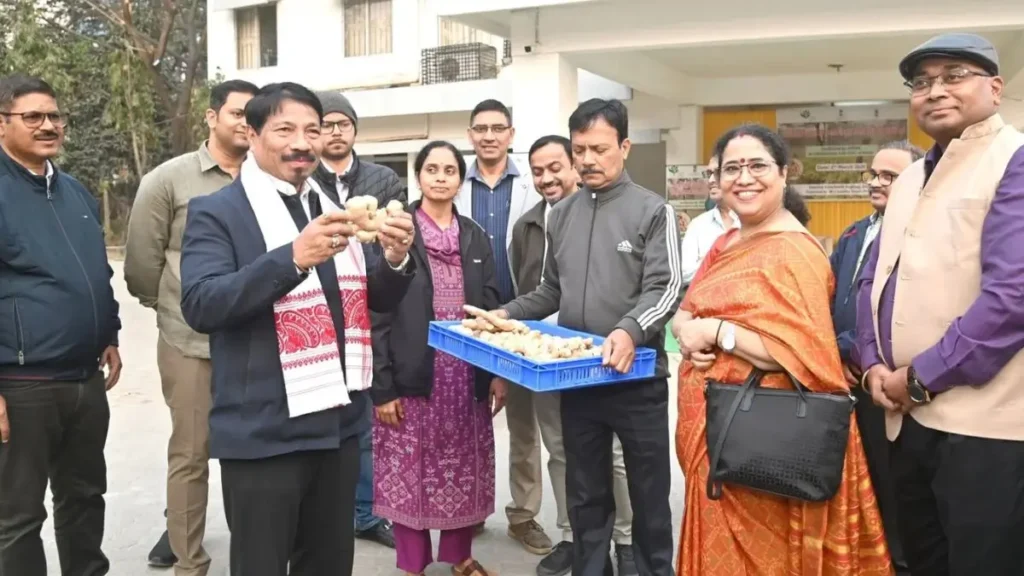
A Historic Moment for Indian Agriculture
In a landmark development for India’s agricultural exports, the famous Karbi Anglong Ginger from Assam has made its international debut in London. This milestone marks the first time that the Geographical Indication (GI)-tagged ginger from the Karbi Anglong district has entered a major global market, highlighting the growing recognition of India’s unique agricultural produce.
The export of this premium ginger variety not only brings global attention to the rich biodiversity of Northeast India but also opens new economic opportunities for farmers in the region. With its distinctive aroma, high fiber content, and exceptional medicinal properties, Karbi Anglong ginger is now poised to become a sought-after spice in international markets.
What Makes Karbi Anglong Ginger Special?
Karbi Anglong, a hilly district in Assam, is known for its fertile soil, favorable climate, and traditional farming practices that contribute to the superior quality of its agricultural produce. The ginger cultivated in this region stands out due to several unique characteristics.
Key Features of Karbi Anglong Ginger
- High Nutritional Value: Rich in antioxidants and essential oils.
- Distinct Aroma and Flavor: Stronger fragrance compared to common ginger varieties.
- High Fiber Content: Preferred for medicinal and culinary uses.
- Low Pesticide Usage: Mostly grown using traditional and organic farming methods.
- Superior Shelf Life: Makes it ideal for long-distance exports.
These qualities helped the ginger earn a Geographical Indication (GI) tag, which protects the authenticity of products originating from a specific region.
Understanding the GI Tag and Its Importance
A Geographical Indication (GI) tag is given to products that have a unique identity linked to their geographical origin. In India, GI tags are issued under the Geographical Indications of Goods (Registration and Protection) Act, 1999.
For farmers and producers, a GI tag provides several advantages:
- Protects traditional knowledge and regional identity.
- Prevents unauthorized use of the product name.
- Increases global market value.
- Enhances export potential.
Karbi Anglong ginger received its GI tag in 2023, recognizing the region’s traditional cultivation methods and unique soil composition that contribute to the ginger’s distinctive quality.
The Journey from Assam Hills to London
The first export consignment of Karbi Anglong ginger to London represents a significant breakthrough for India’s agricultural trade. The shipment was facilitated through collaborative efforts between farmer producer organizations, agricultural agencies, and export promotion bodies.
The ginger was carefully sourced from local farmers in Karbi Anglong, processed according to international export standards, and packaged to preserve its freshness and flavor during transit.
This initiative forms part of India’s broader strategy to promote GI-tagged products in global markets, allowing farmers to benefit from premium pricing and international demand.
Boosting the Economy of Northeast India
The export of Karbi Anglong ginger is expected to have a positive impact on the economy of the region, especially for small and marginal farmers.
Benefits for Local Farmers
- Higher Income Opportunities
Farmers can earn better prices due to the premium status of GI-tagged produce. - Global Market Access
Direct export opportunities reduce dependence on middlemen. - Employment Generation
Increased demand will create jobs in farming, processing, packaging, and logistics. - Agricultural Development
Encourages sustainable and organic farming practices.
The development also strengthens the government’s focus on transforming Northeast India into an agricultural export hub.
Rising Global Demand for Indian Spices
India has long been known as the “Land of Spices.” The country accounts for a significant share of the global spice trade, exporting products such as turmeric, cardamom, pepper, and ginger.
In recent years, global demand for natural, organic, and health-promoting ingredients has surged. Ginger, widely used for its medicinal and culinary benefits, has seen growing popularity worldwide.
Uses of Ginger in Global Markets
- Herbal teas and beverages
- Ayurvedic and natural medicines
- Culinary spices in international cuisines
- Nutraceutical and wellness products
- Food processing and confectionery
With these expanding applications, the entry of Karbi Anglong ginger into international markets could significantly strengthen India’s position in the global spice industry.
Government Support for GI Products
The Indian government has been actively promoting GI-tagged products through various initiatives. Programs aimed at increasing exports, improving branding, and strengthening supply chains have played a crucial role in bringing regional products to international markets.
Key initiatives include:
- Export promotion programs for agricultural produce
- Support for Farmer Producer Organizations (FPOs)
- Training in international quality standards
- Financial assistance for packaging and logistics
These measures help ensure that farmers receive fair compensation while maintaining the authenticity and quality of GI products.
A Global Platform for Indigenous Produce
The export of Karbi Anglong ginger represents more than just a trade milestone—it symbolizes the global recognition of indigenous agricultural knowledge and practices.
For generations, farmers in the Karbi Anglong hills have cultivated ginger using traditional methods that prioritize soil health and biodiversity. By entering international markets, their produce now carries the story of the region’s culture, heritage, and agricultural wisdom.
Experts believe that success stories like this will encourage the export of other unique products from Northeast India, including turmeric, black rice, and specialty teas.
Future Prospects for Karbi Anglong Ginger
The successful launch in London could pave the way for larger export volumes and expansion into other global markets such as Europe, the Middle East, and North America.
Potential Growth Opportunities
- Expansion into premium organic food markets
- Partnerships with global spice brands
- Inclusion in wellness and herbal product industries
- Increased export volumes through e-commerce platforms
If supported with strong branding and supply chain infrastructure, Karbi Anglong ginger could become one of India’s most recognizable GI products internationally.
Conclusion
The global debut of GI-tagged Karbi Anglong ginger in London marks a proud moment for Indian agriculture and the farmers of Assam. This milestone highlights the growing international appreciation for India’s diverse agricultural heritage and the importance of protecting region-specific produce.
As the world continues to seek authentic, natural, and high-quality ingredients, Karbi Anglong ginger stands as a shining example of how traditional farming communities can benefit from global trade.
With continued support from government agencies, export bodies, and international buyers, the journey from the Assam hills to global markets has only just begun. For the farmers of Karbi Anglong, this achievement represents not just recognition but also a pathway toward sustainable economic growth and global visibility.