
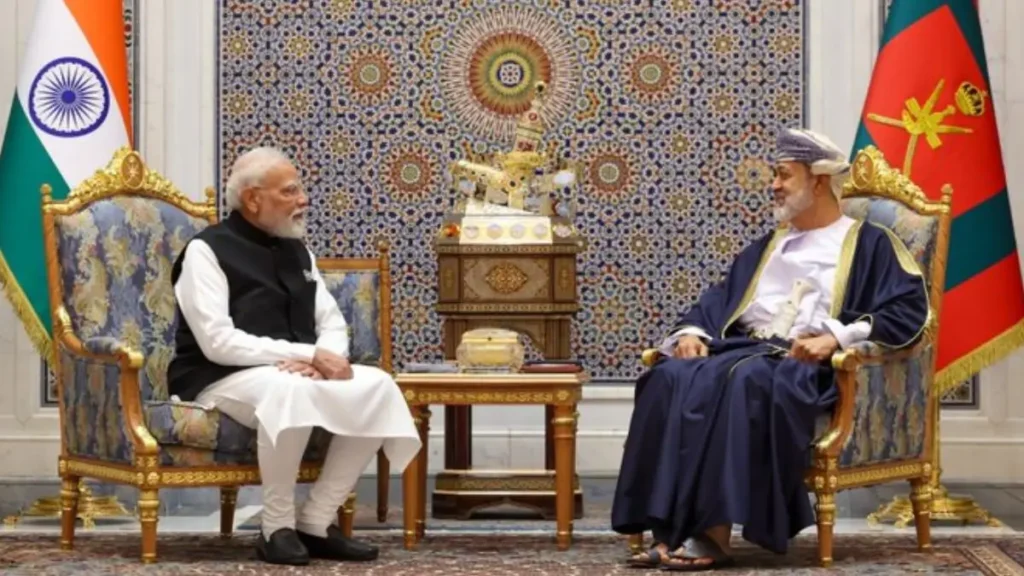
India and Oman have taken a significant step toward deepening their economic partnership with the signing of the India–Oman Comprehensive Economic Partnership Agreement (CEPA). The landmark agreement is aimed at strengthening bilateral trade, boosting investment flows, enhancing supply chain cooperation, and opening new opportunities for businesses in both countries.
The signing of the CEPA reflects the growing strategic and economic alignment between India and Oman, two nations that share centuries-old cultural, maritime, and commercial ties. With the agreement now in place, policymakers and industry leaders expect a substantial increase in trade volumes, job creation, and sectoral collaboration across key industries.
Understanding the India–Oman CEPA
The Comprehensive Economic Partnership Agreement (CEPA) is a broad-based trade pact that goes beyond conventional free trade agreements. It covers not only trade in goods but also services, investments, customs cooperation, intellectual property rights, digital trade, and dispute resolution mechanisms.
The India–Oman CEPA seeks to create a predictable, transparent, and investor-friendly environment by reducing trade barriers and encouraging long-term economic cooperation.
Key focus areas of the CEPA include:
- Reduction or elimination of customs duties
- Market access for goods and services
- Promotion of bilateral investments
- Enhanced mobility for professionals
- Trade facilitation and regulatory cooperation
Why the India–Oman CEPA Is Significant
Oman is a strategically located nation in the Gulf region, acting as a gateway between Asia, Africa, and the Middle East. For India, the agreement strengthens its economic footprint in the Gulf Cooperation Council (GCC) region and aligns with its broader strategy of forging high-quality trade partnerships.
From Oman’s perspective, the CEPA supports its economic diversification agenda under Oman Vision 2040, reducing dependence on hydrocarbons and attracting foreign investment into non-oil sectors.
Boosting Bilateral Trade Volumes
Bilateral trade between India and Oman has shown steady growth over the years, with India emerging as one of Oman’s key trading partners. The CEPA is expected to further accelerate this growth by making Indian exports more competitive in the Omani market and vice versa.
Key Indian Exports to Oman
- Engineering goods and machinery
- Pharmaceuticals and healthcare products
- Food products, including rice and spices
- Textiles and apparel
- Chemicals and plastics
Key Omani Exports to India
- Crude oil and petroleum products
- Fertilizers
- Minerals and metals
- Petrochemicals
By reducing tariffs and simplifying customs procedures, the CEPA is expected to significantly lower transaction costs and enhance trade efficiency.
Services Sector Gains Under CEPA
One of the most important components of the India–Oman CEPA is its strong emphasis on the services sector, where India holds a competitive advantage.
The agreement provides improved market access for Indian professionals and companies in areas such as:
- Information technology and IT-enabled services
- Healthcare and medical services
- Education and skill development
- Engineering and construction services
- Financial and professional services
This is expected to benefit Indian service providers while helping Oman meet its growing demand for skilled professionals and knowledge-based services.
Investment Promotion and Protection
The CEPA includes provisions to promote and protect bilateral investments, offering greater confidence to investors from both countries. It establishes clear rules related to:
- Investor protection
- Fair and equitable treatment
- Transparency in regulations
- Dispute settlement mechanisms
Indian companies are expected to increase investments in sectors such as renewable energy, logistics, infrastructure, manufacturing, and healthcare in Oman. At the same time, Omani investors are likely to explore opportunities in India’s fast-growing sectors, including fintech, real estate, hospitality, and green energy.
Support for MSMEs and Startups
The agreement places special emphasis on Micro, Small, and Medium Enterprises (MSMEs) and startups, recognizing their role as engines of economic growth and employment.
Key benefits for MSMEs include:
- Simplified trade procedures
- Easier access to market information
- Capacity-building initiatives
- Enhanced participation in global value chains
By lowering entry barriers, the CEPA aims to enable smaller businesses to tap into cross-border trade opportunities more effectively.
Strengthening Supply Chains and Logistics
In the wake of global supply chain disruptions, the India–Oman CEPA focuses on strengthening resilient and diversified supply chains. Oman’s advanced ports and logistics infrastructure, combined with India’s manufacturing capabilities, offer strong potential for collaboration.
The agreement promotes:
- Port-led development
- Maritime cooperation
- Logistics and warehousing investments
- Regional value chain integration
This cooperation is expected to enhance trade efficiency not just between India and Oman but also with other markets in the Middle East and Africa.
Digital Trade and Innovation

Recognizing the importance of digital transformation, the CEPA includes provisions related to digital trade and e-commerce. These measures aim to:
- Facilitate cross-border digital transactions
- Encourage innovation and data-driven services
- Improve cybersecurity cooperation
- Support digital startups and platforms
This focus aligns with India’s Digital India initiative and Oman’s push toward a technology-driven economy.
Strategic and Geopolitical Implications
Beyond economics, the India–Oman CEPA carries strategic significance. Oman has long been a trusted partner of India in the Gulf region, and the agreement reinforces cooperation in:
- Maritime security
- Energy security
- Regional connectivity
- Economic diplomacy
The CEPA strengthens India’s engagement with the Middle East while supporting Oman’s role as a stable and reliable economic partner.
Expected Economic Impact
Experts believe that the India–Oman CEPA will:
- Increase bilateral trade volumes substantially in the coming years
- Attract higher foreign direct investment (FDI)
- Create new employment opportunities
- Enhance technology transfer and skill development
- Improve ease of doing business
The agreement is also expected to complement India’s other trade initiatives with countries in the Gulf and beyond.
Implementation and the Way Forward
While the signing of the CEPA is a major milestone, its success will depend on effective implementation. Both governments are expected to:
- Establish joint committees for monitoring progress
- Engage with industry stakeholders
- Address non-tariff barriers
- Ensure timely resolution of disputes
Businesses on both sides will need to familiarize themselves with the agreement’s provisions to fully leverage the opportunities it offers.
Conclusion
The India–Oman Comprehensive Economic Partnership Agreement marks a new chapter in bilateral economic relations, reflecting mutual trust, shared economic goals, and a forward-looking partnership. By facilitating trade, encouraging investments, and promoting innovation, the CEPA has the potential to deliver long-term economic benefits for both nations.
As India continues to strengthen its global trade ties and Oman advances its economic diversification strategy, the CEPA stands as a testament to the growing importance of strategic economic partnerships in an interconnected global economy.