
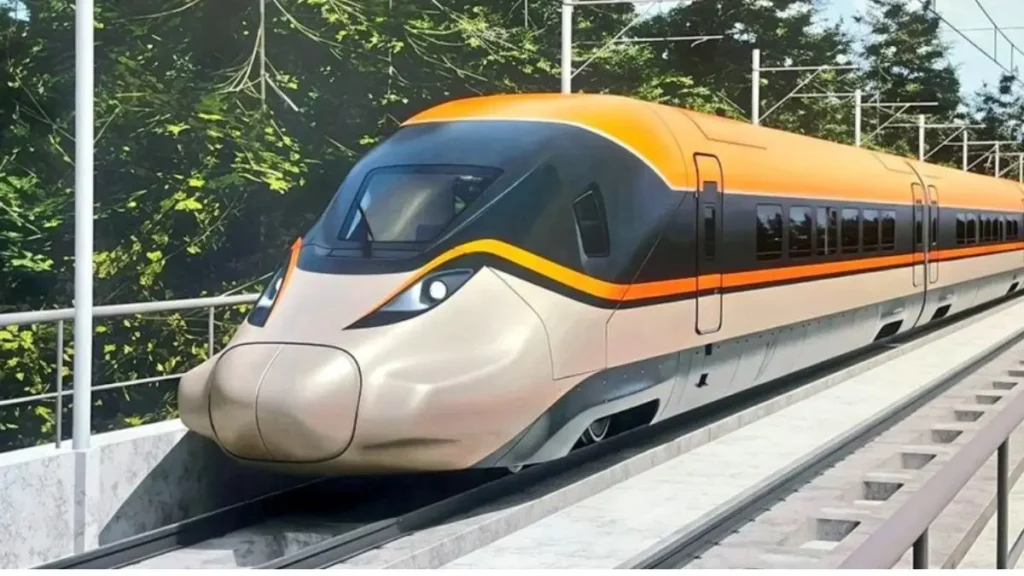
India has officially unveiled the first proposed design for the much-anticipated Mumbai-Ahmedabad Bullet Train project, marking a major milestone in the country’s high-speed rail ambitions. The project, regarded as one of India’s most transformative infrastructure developments, is expected to redefine long-distance travel, modern transportation, and economic connectivity between two of the country’s most important business hubs.
The bullet train corridor will connect Mumbai in Maharashtra with Ahmedabad in Gujarat using advanced Japanese Shinkansen technology, bringing India into the league of countries operating world-class high-speed rail systems.
The newly revealed design has generated widespread attention from infrastructure experts, urban planners, railway enthusiasts, and the general public.
What Is the Mumbai-Ahmedabad Bullet Train Project?
The Mumbai-Ahmedabad High-Speed Rail Corridor is India’s first bullet train project and one of the largest transportation infrastructure initiatives in the country’s history.
The project aims to introduce trains capable of operating at speeds of over 300 km/h, significantly reducing travel time between Mumbai and Ahmedabad.
The corridor is expected to cover approximately 508 kilometers and connect several major cities and industrial zones along western India.
The project is being implemented with technical and financial support from Japan using its globally respected Shinkansen high-speed rail technology.
First Proposed Design Revealed
The newly proposed design offers the public an early look at India’s future bullet train system.
According to reports and concept presentations, the train design focuses on:
- Aerodynamic structure
- Passenger comfort
- Energy efficiency
- High-speed stability
- Advanced safety systems
- Modern interiors
The sleek exterior reflects global high-speed rail standards while incorporating features suited for Indian operating conditions and climate requirements.
The design is expected to evolve further as testing, engineering refinements, and operational planning continue.
Inspiration from Japan’s Shinkansen Technology
India’s bullet train project is heavily inspired by Japan’s famous Shinkansen network, often regarded as one of the safest and most efficient high-speed rail systems in the world.
Japan’s expertise includes:
- High-speed train engineering
- Earthquake-resistant systems
- Precision rail operations
- Passenger safety technology
- Advanced signaling systems
The collaboration between India and Japan is considered one of the most important strategic infrastructure partnerships between the two countries.
Key Features of the Bullet Train Design
Aerodynamic Nose Structure
The proposed train features a streamlined aerodynamic nose designed to reduce air resistance and improve speed efficiency.
Advanced Passenger Comfort
The interiors are expected to include:
- Spacious seating
- Noise reduction systems
- Modern digital displays
- Comfortable travel cabins
- Enhanced luggage space
Safety Systems
The project incorporates advanced Japanese safety mechanisms including automated train control systems and collision prevention technologies.
Energy Efficiency
The trains are expected to use energy-efficient systems to minimize environmental impact and operational costs.
Travel Time Reduction
One of the biggest advantages of the bullet train project is the dramatic reduction in travel time.
The Mumbai-Ahmedabad journey, which currently takes several hours by conventional rail or road, is expected to be completed in approximately 2 to 3 hours depending on the service type.
Faster travel could significantly improve:
- Business connectivity
- Tourism
- Regional mobility
- Economic integration
- Daily commuting opportunities
Importance for India’s Infrastructure Modernization
The bullet train project symbolizes India’s broader push toward infrastructure modernization and advanced transportation systems.
The government has increasingly focused on:
- High-speed rail
- Metro rail expansion
- Expressways
- Smart cities
- Airport modernization
- Freight corridors
The project is expected to showcase India’s ability to implement large-scale world-class infrastructure systems.
Economic Benefits of the Project
Experts believe the Mumbai-Ahmedabad Bullet Train corridor could generate major economic benefits.
Employment Generation
The project is creating jobs in:
- Construction
- Engineering
- Manufacturing
- Technology
- Operations
- Maintenance
Industrial Development
High-speed connectivity may boost industrial growth along the corridor by improving logistics and business mobility.
Technology Transfer
Collaboration with Japan allows India to gain valuable expertise in advanced rail technology and infrastructure management.
Urban Growth
Cities connected by the corridor may experience increased investment, real estate development, and economic activity.
Strategic Importance of the Corridor
The Mumbai-Ahmedabad route is strategically important because it connects two major economic regions of India.
Mumbai serves as India’s financial capital, while Gujarat is one of the country’s strongest industrial and manufacturing states.
Improved connectivity between these regions could strengthen:
- Trade activity
- Financial services
- Industrial collaboration
- Business travel
- Regional economic integration
Stations Along the Route
The high-speed rail corridor is expected to include multiple stations across Maharashtra and Gujarat.
Major planned stations include:
- Mumbai
- Thane
- Virar
- Boisar
- Surat
- Vadodara
- Anand
- Ahmedabad
These stations are expected to become modern transportation hubs integrated with local urban transit systems.
Engineering Challenges
The bullet train project involves highly complex engineering challenges.
Underground and Undersea Sections
The route includes underground tunneling work and an undersea section near Mumbai.
Land Acquisition
Land acquisition has been one of the biggest challenges during project implementation.
Climate Adaptation
Infrastructure must withstand India’s varied climate conditions including heat, monsoons, and coastal environments.
High-Speed Safety Standards
Maintaining international safety standards for high-speed rail requires advanced engineering precision.
Despite these challenges, construction progress has accelerated in recent years.
Environmental Impact and Sustainability
High-speed rail is generally considered more environmentally sustainable than air or road transportation for medium-distance travel.
Potential environmental benefits include:
- Reduced carbon emissions
- Lower fuel consumption
- Reduced traffic congestion
- Cleaner mass transportation
The project aligns with India’s broader sustainability and infrastructure efficiency goals.
Public Reactions to the Proposed Design
The proposed train design has generated strong public interest online and across media platforms.
Many people praised:
- The futuristic appearance
- Modern engineering approach
- Technological advancement
- International design standards
At the same time, discussions also continue around project costs, affordability, and implementation timelines.
India’s Future High-Speed Rail Plans
The Mumbai-Ahmedabad corridor is expected to become the foundation for future high-speed rail expansion across India.
Several additional corridors are being discussed for future development including routes connecting:
- Delhi
- Varanasi
- Chennai
- Bengaluru
- Hyderabad
- Kolkata
The success of the first bullet train project could influence the future of India’s transportation infrastructure strategy.
India-Japan Strategic Partnership
The bullet train collaboration has strengthened broader India-Japan relations involving:
- Technology cooperation
- Infrastructure investment
- Manufacturing partnerships
- Economic development
Japan’s financial and technical support for the project highlights growing strategic ties between the two countries.
Challenges and Criticism
Despite excitement around the project, criticism and concerns remain.
Some concerns include:
- High project cost
- Land acquisition disputes
- Construction delays
- Ticket pricing affordability
- Environmental impact during construction
Supporters argue that long-term economic and technological benefits could outweigh these challenges.
Future of Transportation in India
The bullet train project reflects India’s ambition to modernize its transportation ecosystem and compete with global infrastructure standards.
Future transportation trends in India may increasingly focus on:
- High-speed rail
- Electric mobility
- Smart transportation systems
- Sustainable transit infrastructure
The Mumbai-Ahmedabad corridor may become a model for future high-speed transportation projects across the country.
Conclusion
India’s unveiling of the first proposed design for the Mumbai-Ahmedabad Bullet Train marks a historic moment in the country’s infrastructure and transportation journey.
The project combines advanced Japanese high-speed rail technology with India’s long-term economic and connectivity ambitions.
While engineering, financial, and operational challenges remain, the bullet train corridor represents a bold step toward modern, sustainable, and globally competitive transportation infrastructure in India.
If successfully completed, the Mumbai-Ahmedabad Bullet Train could transform intercity travel and become one of the defining infrastructure achievements of modern India.