
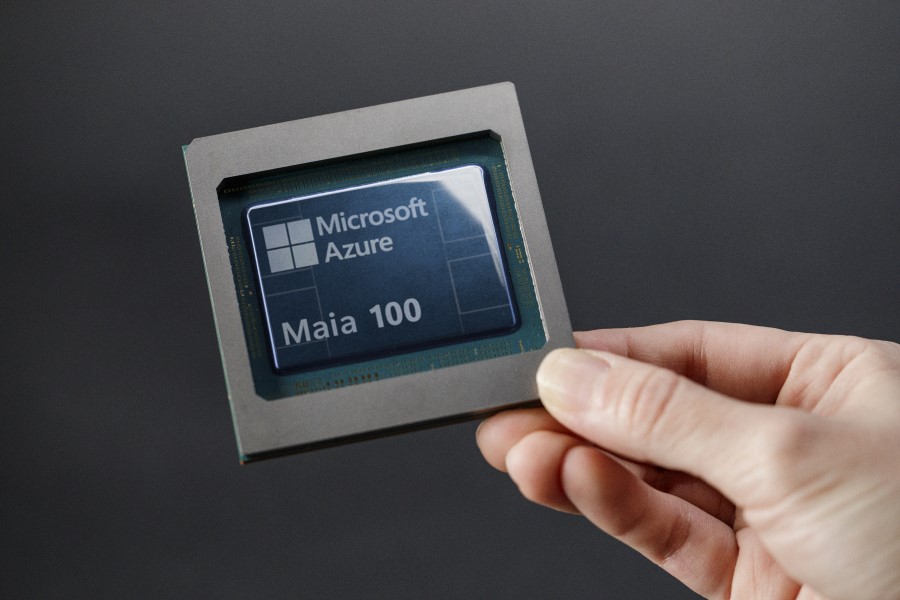
In a bold move that could reshape the global artificial intelligence hardware market, Microsoft has unveiled its latest custom AI accelerator — the Maia 200 AI chip. Designed specifically to power large-scale AI workloads in data centres, the Maia 200 signals Microsoft’s strongest challenge yet to the long-standing dominance of Nvidia in AI computing.
The announcement marks a strategic turning point in the AI arms race, as cloud giants increasingly move away from reliance on third-party chips and toward in-house silicon tailored for AI.
The Rise of Custom AI Chips
The explosion of generative AI, large language models, and real-time AI services has dramatically increased demand for:
- High-performance computing
- Energy-efficient AI accelerators
- Scalable data centre infrastructure
Traditional CPUs are no longer sufficient for these workloads. GPUs, led by Nvidia, have filled the gap—but their high cost, limited supply, and strategic importance have pushed hyperscalers to develop custom AI silicon.
Microsoft’s Maia 200 is a direct response to this shift.
What Is the Maia 200 AI Chip?
The Maia 200 is Microsoft’s next-generation AI accelerator, purpose-built for:
- Training large AI models
- Running inference at scale
- Powering cloud-based AI services
It is part of Microsoft’s broader strategy to vertically integrate hardware and software across its AI stack, particularly within Microsoft Azure.
Unlike general-purpose GPUs, Maia 200 is optimised specifically for AI workloads that Microsoft runs daily across its cloud and enterprise products.
Key Features of the Maia 200
1. Designed for Generative AI at Scale
Maia 200 is engineered to handle:
- Large language models (LLMs)
- Multimodal AI systems
- High-throughput inference
These are the same workloads that power:
- AI copilots
- Enterprise AI tools
- Cloud-based generative services
By designing the chip internally, Microsoft can fine-tune performance for its most demanding use cases.
2. Deep Integration With Azure
A major advantage of Maia 200 is its tight integration with Azure’s infrastructure.
Benefits include:
- Lower latency for AI workloads
- Better optimisation between hardware and software
- Improved efficiency across data centres
This level of integration is difficult to achieve when relying solely on third-party chips.
3. Energy Efficiency and Cost Control
AI data centres consume massive amounts of power. Maia 200 focuses on:
- Improved performance-per-watt
- Reduced operational costs
- Lower total cost of ownership
This is critical as cloud providers face rising energy costs and sustainability pressure.
Why Microsoft Built Its Own AI Chip
Reducing Dependence on Nvidia
Nvidia currently dominates the AI accelerator market, with its GPUs forming the backbone of most AI data centres worldwide.
However:
- Demand for Nvidia chips far exceeds supply
- Prices remain extremely high
- Cloud providers compete for limited inventory
By developing Maia 200, Microsoft reduces its reliance on Nvidia and gains greater control over its AI roadmap.
Strategic Control Over AI Infrastructure
AI is now core to Microsoft’s future — from cloud services to enterprise software.
Custom silicon allows Microsoft to:
- Control performance optimisation
- Align hardware with AI models
- Accelerate deployment timelines
This mirrors strategies already adopted by other hyperscalers.
Nvidia’s Dominance — And Why It’s Being Challenged
Nvidia’s Stronghold in AI Computing
Nvidia built its dominance through:
- Early investment in GPU computing
- A mature software ecosystem (CUDA)
- Strong relationships with AI researchers
Its chips are currently the gold standard for AI training and inference.
The Hyperscaler Pushback
Despite Nvidia’s strength, cloud giants face challenges:
- Vendor lock-in risks
- Supply chain constraints
- Rising infrastructure costs
As a result, companies like Microsoft are investing heavily in custom AI accelerators to complement — and eventually compete with — Nvidia’s offerings.
How Maia 200 Fits Into Microsoft’s AI Strategy
Powering AI Across Products
Maia 200 is expected to support AI workloads behind:
- Enterprise productivity tools
- Cloud AI services
- Developer platforms
By owning the hardware layer, Microsoft can roll out AI features faster and more efficiently.
Supporting Large AI Partnerships
Microsoft has positioned itself as a leading AI platform provider, hosting some of the world’s most advanced AI systems on Azure.
Custom chips like Maia 200 ensure:
- Scalability as demand grows
- Predictable performance
- Long-term infrastructure resilience
Impact on the Global AI Chip Market
Increased Competition
Microsoft’s entry intensifies competition in the AI hardware space, which is already seeing:
- Cloud providers developing in-house chips
- Increased innovation in AI accelerators
- Pressure on dominant players to evolve
This competition is likely to drive:
- Faster innovation
- Better pricing
- More efficient AI computing
A Shift Toward Specialised Silicon
The Maia 200 reinforces a broader trend:
The future of AI computing lies in specialised, workload-specific silicon.
General-purpose chips are giving way to accelerators designed for:
- AI training
- AI inference
- Edge and cloud optimisation
What This Means for Enterprises and Developers
Faster and More Affordable AI Services
For businesses using Azure:
- AI workloads may become more cost-efficient
- Performance consistency may improve
- AI services could scale more smoothly
This benefits enterprises adopting AI at scale.
Stronger AI Ecosystem Choice
With more hardware options available:
- Customers gain flexibility
- Dependence on a single vendor reduces
- Innovation accelerates across the ecosystem
Challenges Ahead for Microsoft
Catching Up to Nvidia’s Software Ecosystem
Nvidia’s advantage isn’t just hardware—it’s software.
Microsoft will need to:
- Build strong developer tools
- Ensure compatibility with existing AI frameworks
- Deliver seamless performance
Hardware alone is not enough to dethrone Nvidia.
Scaling Production and Deployment
Custom chips must:
- Be manufactured at scale
- Meet reliability standards
- Integrate smoothly into global data centres
Execution will determine Maia 200’s long-term success.
Broader Implications for the AI Arms Race
The Maia 200 launch highlights a key reality:
AI leadership is increasingly determined by infrastructure, not just algorithms.
As AI models grow larger and more complex:
- Compute power becomes strategic
- Hardware becomes a competitive weapon
- Nations and companies race for AI self-reliance
Sustainability and Energy Considerations
AI’s environmental footprint is under scrutiny.
Custom chips like Maia 200 can:
- Reduce energy waste
- Improve data centre efficiency
- Support greener AI deployment
This aligns with global sustainability goals and regulatory pressure.
What Comes Next?
Microsoft is unlikely to stop at Maia 200.
Future possibilities include:
- Successive generations of AI chips
- Expanded use beyond Azure
- Deeper hardware–software co-design
This suggests a long-term commitment to custom silicon.
Industry Reaction and Market Signals
The unveiling of Maia 200 has been widely interpreted as:
- A serious challenge to Nvidia’s AI monopoly
- A sign of hyperscaler maturity
- Proof that AI infrastructure is becoming more diversified
Investors, competitors, and customers are watching closely.
Conclusion
Microsoft’s unveiling of the Maia 200 AI chip marks a pivotal moment in the global AI hardware landscape. By developing a powerful, purpose-built AI accelerator, Microsoft has signalled that it no longer wants to rely entirely on third-party hardware for its AI future.
While Nvidia remains the dominant force in AI computing, Maia 200 represents a credible and strategic challenge—one rooted in scale, integration, and long-term vision.
As AI becomes the foundation of modern computing, the battle will not be fought only in algorithms or applications, but in who controls the silicon beneath them. With Maia 200, Microsoft has firmly entered that battle—and the outcome could redefine the future of AI infrastructure.