
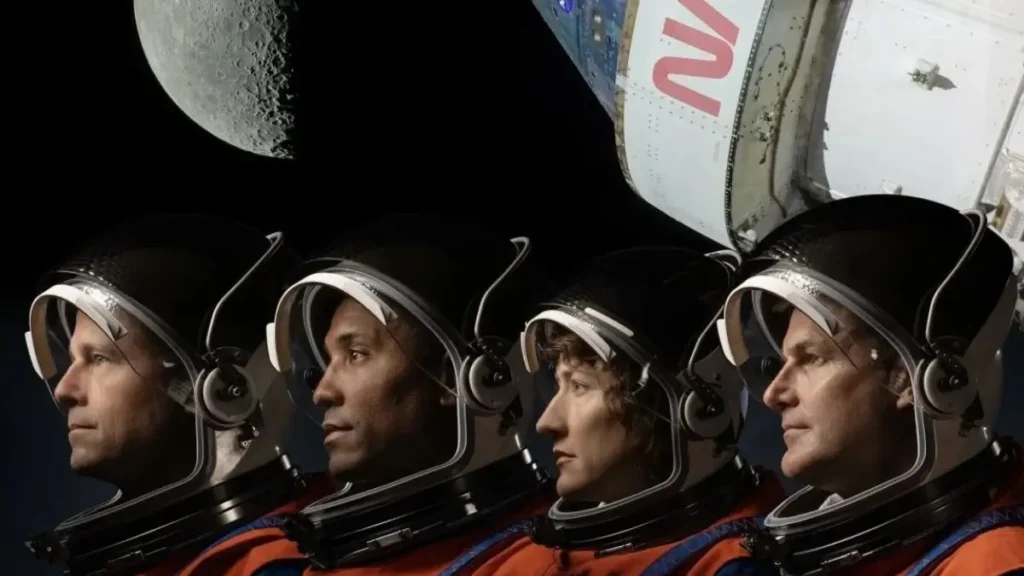
The dream of sending humans back to the Moon is becoming a reality with NASA’s Artemis II mission, a historic step in space exploration that aims to carry astronauts around the Moon for the first time in over five decades. Scheduled for 2026, Artemis II is a crucial milestone in NASA’s broader Artemis Program, which seeks to establish a sustainable human presence on the Moon and pave the way for future missions to Mars.
This mission represents a new era of space exploration, combining advanced technology, international collaboration, and ambitious goals to push the boundaries of human capability.
What is Artemis II?
Artemis II is NASA’s first crewed mission under the Artemis Program. Unlike Artemis I, which was an uncrewed test flight, Artemis II will carry astronauts aboard the Orion spacecraft on a journey around the Moon.
The mission is designed to test critical systems required for human spaceflight, including life support, navigation, and communication systems. It will also demonstrate the ability to safely send humans beyond Earth’s orbit and bring them back.
Mission Objectives
The Artemis II mission has several key objectives that are essential for future lunar exploration.
1. Testing Human Spaceflight Systems
One of the primary goals is to validate the Orion spacecraft’s systems in real conditions with astronauts onboard. This includes testing environmental control systems, radiation protection, and crew safety measures.
2. Lunar Flyby
The mission will take astronauts on a lunar flyby, allowing them to travel around the Moon and return safely to Earth. Although they will not land on the Moon, this journey is a critical step toward future lunar landings.
3. Deep Space Navigation
Artemis II will test navigation and communication systems in deep space, ensuring that astronauts can maintain contact with Earth during long-distance missions.
4. Preparing for Artemis III
The mission will lay the groundwork for Artemis III, which aims to land humans on the Moon’s surface, including the first woman and the next man.
The Orion Spacecraft
The Orion spacecraft is at the heart of the Artemis II mission. Designed for deep space exploration, Orion is equipped with advanced technology to support astronauts on long-duration missions.
Key Features of Orion
- Crew module designed for up to four astronauts
- Advanced life support systems
- Heat shield capable of withstanding extreme temperatures during re-entry
- High-speed communication systems
Orion will carry astronauts farther from Earth than any human has traveled since the Apollo missions.
Launch Vehicle: Space Launch System (SLS)
The Artemis II mission will be powered by NASA’s Space Launch System (SLS), the most powerful rocket ever built.
Highlights of SLS
- Generates more thrust than the Saturn V rocket used during Apollo missions
- Designed for deep space missions
- Capable of carrying heavy payloads, including Orion
The combination of SLS and Orion makes Artemis II one of the most advanced space missions ever attempted.
Meet the Artemis II Crew
NASA has selected a diverse team of astronauts for the Artemis II mission, representing a new generation of space explorers.
The crew includes:
- Experienced astronauts with prior spaceflight experience
- Specialists trained in engineering, science, and mission operations
- Representation of diversity and inclusion in space exploration
This mission will mark the first time humans travel beyond low Earth orbit since 1972, making it a historic moment for humanity.
Why Artemis II Matters
Artemis II is more than just a mission—it is a stepping stone toward long-term human presence on the Moon and beyond.
Reviving Lunar Exploration
The last human mission to the Moon was during NASA’s Apollo program. Artemis II marks the return of human spaceflight to deep space after decades.
Advancing Technology
The mission will test cutting-edge technologies that will be used in future lunar and Mars missions.
Inspiring Future Generations
Artemis II is expected to inspire millions of people worldwide, encouraging interest in science, technology, engineering, and mathematics (STEM).
International Collaboration
The Artemis Program is a global effort involving multiple countries and space agencies.
NASA is collaborating with partners such as:
- European Space Agency (ESA)
- Canadian Space Agency (CSA)
- Japan Aerospace Exploration Agency (JAXA)
These partnerships contribute technology, expertise, and resources, making Artemis a truly international mission.
Challenges of Deep Space Travel
Sending humans to the Moon is not without challenges. Artemis II must overcome several obstacles to ensure mission success.
Radiation Exposure
Astronauts will be exposed to higher levels of cosmic radiation beyond Earth’s protective atmosphere.
Long-Distance Communication
Maintaining communication over vast distances requires advanced systems and precise coordination.
Technical Complexity
The mission involves complex systems that must function flawlessly in extreme conditions.
Despite these challenges, NASA has spent years preparing for Artemis II to ensure the highest levels of safety and reliability.
The Road to Artemis III and Beyond
Artemis II is part of a larger vision that extends beyond a single mission.
Artemis III
Scheduled for a future date, Artemis III aims to land astronauts on the Moon’s south pole, a region believed to contain water ice.
Lunar Base Development
NASA plans to establish a sustainable human presence on the Moon, including the development of lunar habitats and infrastructure.
Mission to Mars
The ultimate goal of the Artemis Program is to prepare for human missions to Mars, marking the next frontier in space exploration.
Impact on Science and Innovation
The Artemis missions are expected to drive innovation in multiple fields, including:
- Aerospace engineering
- Robotics
- Artificial intelligence
- Materials science
Research conducted during these missions could lead to new discoveries and technological advancements that benefit life on Earth.
Conclusion
NASA’s Artemis II mission represents a bold step forward in humanity’s journey to explore space. By sending astronauts around the Moon for the first time in over 50 years, the mission marks the beginning of a new era in space exploration.
With advanced technology, international collaboration, and a clear vision for the future, Artemis II is paving the way for lunar landings, sustainable space exploration, and eventually, human missions to Mars.
As the world watches this historic mission unfold, one thing is certain—the return of humans to the Moon is no longer a dream, but an imminent reality. 🚀🌕