
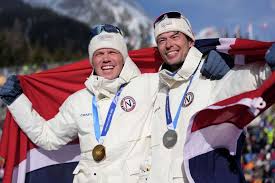
In a historic achievement that has electrified the sporting world, Norway has clinched its 17th gold medal at the Milan–Cortina 2026 Winter Olympics, setting a new record for the most gold medals won by a nation at a single Winter Games. The remarkable milestone cements Norway’s position as the undisputed powerhouse of winter sports and highlights the nation’s extraordinary consistency on the Olympic stage.
From biathlon brilliance to cross-country skiing dominance, Norway’s record-breaking campaign in Italy will be remembered as one of the most commanding performances in Winter Olympic history.
A Record-Breaking 17th Gold Medal
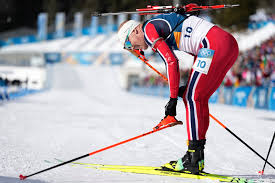
The defining moment came in the men’s biathlon mass start event, where Norwegian athletes delivered a performance that exemplified precision, endurance, and composure under pressure. The gold medal victory not only added to Norway’s growing tally but officially pushed the nation past its previous Winter Olympics record.
Surpassing its earlier benchmark, Norway’s 17-gold achievement demonstrates how the country continues to raise the bar in global winter sports competition. With this milestone, Norway has set a new Olympic standard that future generations will aim to match.
Norway’s Medal Tally at Milan–Cortina 2026
At the time of sealing the 17th gold medal, Norway’s overall medal tally showcased complete dominance across multiple disciplines:
- 🥇 Gold: 17
- 🥈 Silver: 10+
- 🥉 Bronze: 10+
- Total Medals: Over 35
The consistent podium finishes reflect depth across sports rather than reliance on a single discipline. Norway’s strength lies in its versatility — excelling in both endurance-heavy Nordic events and high-speed ice competitions.
Dominance Across Winter Disciplines
Norway’s Winter Olympics record in Milan was built on exceptional performances across various events:
1. Biathlon Supremacy
Biathlon once again proved to be a cornerstone of Norway’s Olympic success. Combining cross-country skiing stamina with rifle shooting precision, Norwegian athletes delivered near-flawless performances.
The ability to maintain perfect shooting accuracy under immense Olympic pressure gave Norway crucial gold medals in individual and team events. These victories reinforced Norway’s long-standing dominance in the sport.
2. Cross-Country Skiing Excellence
Cross-country skiing remains Norway’s strongest discipline. Norwegian skiers displayed extraordinary endurance and strategy in both sprint and distance events.
The country’s relay teams also performed brilliantly, demonstrating seamless teamwork and tactical awareness. The ability to control race tempo and deliver strong finishes contributed significantly to the gold medal surge.
3. Speed Skating and Nordic Combined
Beyond skiing and biathlon, Norway continued to shine in speed skating and Nordic combined events. Athletes showed remarkable technical control, explosive acceleration, and mental resilience in high-stakes finals.
This multi-sport strength highlights the country’s holistic winter sports development model.
Why Norway Excels at the Winter Olympics
Norway’s record-breaking 17 gold medals are not a coincidence. Several factors contribute to its Olympic dominance:
Deep-Rooted Winter Sports Culture
Winter sports are embedded in Norwegian identity. From a young age, children participate in skiing and outdoor activities. Community clubs play a crucial role in talent identification and early training.
Investment in Athlete Development
Norway’s sports system emphasizes long-term athlete development. Scientific training methods, sports psychology, and data-driven performance analysis give athletes a competitive edge.
Focus on Grassroots Programs
Instead of relying solely on elite academies, Norway fosters a broad participation base. This wide talent pool increases the likelihood of producing world-class athletes.
Mental Strength Under Pressure
Olympic competition requires composure. Norwegian athletes consistently demonstrate mental toughness, maintaining focus even in high-pressure gold medal moments.
Breaking Their Own Record
What makes the 17th gold even more remarkable is that Norway surpassed its own previous benchmark. At earlier Winter Games, Norway had already set records for medal dominance. By raising the standard again in Milan, the country proved that its system continues to evolve and improve.
This achievement reinforces Norway’s long-term supremacy rather than a one-time golden generation.
Impact on Global Winter Sports
Norway’s record-breaking performance sends a powerful message to the global sporting community:
- Small nations can dominate with strategic investment.
- Consistency across multiple disciplines is key to medal success.
- Grassroots development produces sustainable excellence.
Countries aiming to improve their Winter Olympics performance are likely to study Norway’s model closely.
Historic Context: Norway at the Winter Olympics
Norway has long been among the most successful nations in Winter Olympic history. Over decades, the country has accumulated one of the highest total medal counts in Winter Games history.
The Milan–Cortina 2026 achievement strengthens this legacy and widens the gap between Norway and other leading winter sports nations.
The Emotional Significance of the 17th Gold
Beyond statistics, the 17th gold medal carries emotional weight:
- A moment of national pride for Norway
- A celebration of teamwork and resilience
- A defining highlight of the 2026 Winter Games
Images of athletes draped in Norwegian flags, celebrating in the Italian Alps, have already become iconic representations of Olympic excellence.
The Road to Milan–Cortina 2026
Preparation for the Winter Olympics begins years in advance. Norwegian athletes trained rigorously through international competitions, World Cups, and national trials.
By the time they arrived in Milan and Cortina, the team was prepared physically and mentally. Strategic planning ensured that athletes peaked at the right moment — during Olympic competition.
Setting the Standard for Future Winter Games
With 17 gold medals secured, Norway has set a new benchmark that will challenge traditional winter sports powerhouses such as Germany, the United States, and Canada.
The question now becomes: Can Norway break its own record again in future Winter Olympics?
If current development systems continue at this level, it remains a strong possibility.
Inspiration for the Next Generation
Norway’s historic milestone will inspire young athletes across the country. Seeing compatriots dominate on the world’s biggest stage motivates future Olympians to pursue winter sports.
The legacy of Milan–Cortina 2026 may shape Norway’s athletic pipeline for the next decade.
Economic and Tourism Boost
Such a record-breaking performance also boosts national visibility. Winter tourism, sporting infrastructure investment, and sponsorship opportunities often increase following Olympic success.
The spotlight on Norwegian athletes reinforces the country’s image as a global winter sports capital.
What Made Milan 2026 Special?
The Milan–Cortina Games combined modern infrastructure with classic Alpine tradition. Competing in iconic European winter venues added prestige to every medal win.
Norway’s record was achieved not just in any Olympic Games — but in one celebrated for high competition standards and global participation.
Conclusion: A Historic Olympic Milestone
Norway’s 17th gold medal at the Milan–Cortina 2026 Winter Olympics represents more than just a number. It symbolizes:
- Decades of dedication to winter sports
- Strategic investment in athlete development
- Cultural passion for snow and ice competition
- Unmatched consistency on the Olympic stage
By breaking its own record and raising the global standard, Norway has once again proven why it stands at the pinnacle of Winter Olympic excellence.
As the world reflects on Milan 2026, one fact remains clear: Norway’s dominance in winter sports is not temporary — it is historic, sustained, and inspirational.