
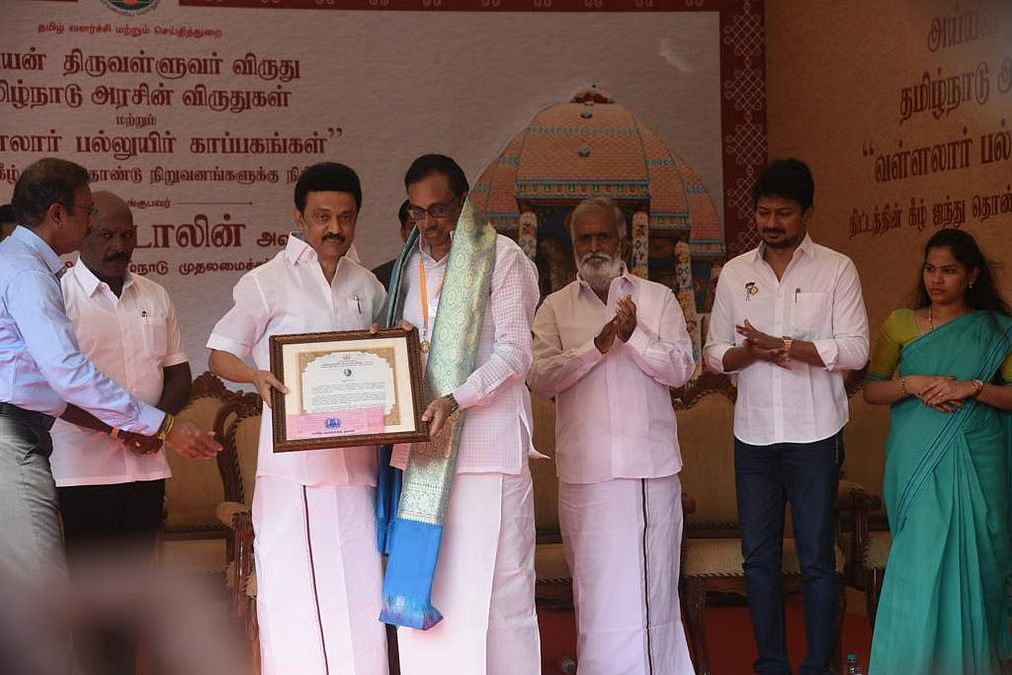
In a landmark cultural initiative, Tamil Nadu has launched the ‘Semmozhi Illakiya Virudhu’, a new national-level literary award dedicated to celebrating excellence in Indian languages. The announcement marks a significant step in strengthening India’s multilingual literary ecosystem and reaffirming Tamil Nadu’s long-standing commitment to the preservation, promotion, and recognition of classical and modern Indian literature.
The award is envisioned as a prestigious national honour that goes beyond linguistic boundaries, recognising outstanding literary contributions across India’s rich tapestry of languages—while drawing inspiration from the classical legacy of Tamil, one of the world’s oldest living languages.
What Is the Semmozhi Illakiya Virudhu?
The Semmozhi Illakiya Virudhu (which translates to Classical Language Literary Award) is a newly instituted literary honour aimed at:
- Recognising lifetime and significant contributions to Indian literature
- Honouring writers across classical and modern Indian languages
- Promoting linguistic diversity and cultural unity
- Elevating the national status of Indian-language literature
Unlike region-specific awards, this initiative positions itself as a pan-Indian literary recognition, reinforcing the idea that all Indian languages form a shared cultural heritage.
Meaning and Significance of “Semmozhi”
The word “Semmozhi” refers to a classical language. Tamil is officially recognised as a classical language of India due to its:
- Ancient origins
- Rich literary tradition
- Independent grammatical structure
- Continuous usage across centuries
By naming the award Semmozhi Illakiya Virudhu, Tamil Nadu symbolically extends the classical ethos of Tamil to celebrate literary excellence in all Indian languages, both classical and contemporary.
Why Tamil Nadu Launched This Award
A Longstanding Literary Tradition
Tamil Nadu has historically been at the forefront of literary and cultural movements in India. From ancient Sangam literature to modern social and political writing, the state has consistently championed:
- Language pride
- Literary scholarship
- Translation and cross-cultural exchange
The launch of this award reflects Tamil Nadu’s aspiration to lead national conversations on literature and linguistic equality.
Strengthening Indian-Language Literature
In an era where English-language publishing often dominates visibility, the Semmozhi Illakiya Virudhu seeks to:
- Restore focus on Indian-language creativity
- Honour writers working in their mother tongues
- Encourage younger generations to write in Indian languages
This aligns with broader cultural efforts to preserve linguistic diversity in a globalised world.
National-Level Recognition: What Makes It Unique
Unlike many existing awards that are:
- Language-specific
- Region-focused
- Genre-limited
The Semmozhi Illakiya Virudhu stands out because it:
- Is open to writers from across India
- Recognises multiple Indian languages
- Values both classical heritage and modern literary innovation
- Emphasises literary merit over commercial success
This makes it one of the most inclusive literary honours proposed at the national level.
Eligible Languages and Literary Forms
The award is expected to cover:
- Classical languages such as Tamil, Sanskrit, Telugu, Kannada, Malayalam, Odia, and others
- Modern Indian languages recognised in the Eighth Schedule of the Constitution
Eligible literary forms may include:
- Poetry
- Fiction and novels
- Literary criticism
- Essays and non-fiction
- Translated works of high literary value
This broad scope ensures representation of India’s diverse literary traditions.
Selection Philosophy and Criteria
While detailed guidelines will evolve, the award’s core evaluation principles include:
- Literary excellence and originality
- Depth of cultural and social insight
- Contribution to language and literature
- Influence on readers and literary discourse
- Long-term impact rather than short-term popularity
This approach places quality, depth, and cultural significance at the heart of the selection process.
Cultural and Political Significance
Promoting Linguistic Equality
The Semmozhi Illakiya Virudhu sends a strong message that:
- No single language dominates Indian literary identity
- All languages deserve equal respect and recognition
- Literature thrives in diversity
This is particularly significant in India’s multilingual democracy, where language is closely tied to identity and culture.
Soft Power and Cultural Leadership
By instituting a national-level award, Tamil Nadu positions itself as:
- A cultural thought leader
- A champion of Indian languages
- A bridge between classical traditions and modern creativity
This enhances India’s cultural soft power domestically and internationally.
Impact on Writers and Literary Communities
Recognition and Visibility
For many Indian-language writers, national recognition remains limited. This award:
- Provides high visibility
- Validates lifelong literary work
- Encourages continued writing and mentorship
It can be especially meaningful for writers working in less commercially visible languages.
Encouragement for Young Writers
By celebrating Indian-language literature at a national level, the award:
- Inspires young writers to choose their mother tongue
- Counters the perception that success requires English
- Reinforces pride in linguistic heritage
This could have a lasting impact on the future of Indian literature.
Role of Translation and Cross-Language Exchange
One of the most important indirect outcomes of such an award is:
- Increased interest in translation
- Wider readership across linguistic borders
- National circulation of regional literary works
By highlighting excellence across languages, the Semmozhi Illakiya Virudhu can strengthen inter-linguistic dialogue.
Tamil Nadu’s Broader Cultural Vision
The award is part of a larger cultural vision that includes:
- Preservation of classical Tamil texts
- Support for literary research and institutions
- Promotion of cultural festivals and academic discourse
- Encouragement of contemporary writing rooted in tradition
This holistic approach ensures literature remains a living, evolving force.
Comparison with Existing Literary Awards
India already has respected literary honours, but the Semmozhi Illakiya Virudhu adds value by:
- Being language-inclusive rather than institution-centric
- Drawing inspiration from classical language philosophy
- Offering a fresh, state-led national platform
It complements rather than competes with existing awards.
Why This Award Matters in Today’s India
In a rapidly digitising, globalised society:
- Attention spans are shrinking
- Regional languages face declining readership
- Oral and written traditions risk marginalisation
The Semmozhi Illakiya Virudhu acts as:
- A reminder of literature’s enduring value
- A tool for cultural preservation
- A symbol of unity through diversity
Potential Long-Term Legacy
If sustained and transparently administered, the award could:
- Become one of India’s most prestigious literary honours
- Shape national literary discourse
- Influence publishing, academia, and translation efforts
- Strengthen inter-state cultural collaboration
Its success will depend on consistency, credibility, and inclusiveness.
A Message to the Nation
Through this initiative, Tamil Nadu sends a powerful message:
- Indian languages are not relics of the past—they are voices of the present and future
- Literature is central to cultural identity
- Unity does not require uniformity
This message resonates deeply in a country defined by diversity.
Conclusion
The launch of the Semmozhi Illakiya Virudhu by Tamil Nadu marks a historic moment in India’s literary journey. By creating a national-level award for Indian languages, the state has taken a bold step toward recognising the depth, diversity, and dignity of Indian-language literature.
Rooted in the classical legacy of Tamil yet inclusive of all Indian tongues, the award embodies the spirit of cultural unity through linguistic plurality. For writers, readers, and scholars alike, the Semmozhi Illakiya Virudhu is more than an honour—it is a celebration of India’s living literary soul.
As India looks toward the future, initiatives like this ensure that its many languages continue to write, speak, and imagine the nation forward.