
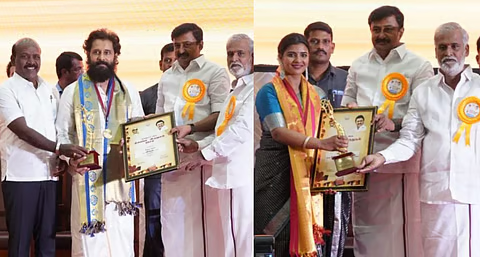
The Tamil Nadu State Film Awards, one of the most prestigious honours in Indian cinema, celebrate excellence in Tamil (Kollywood) films across acting, direction, music, writing, and technical crafts. After a long delay, the Government of Tamil Nadu announced the State Film Awards for the years 2016 to 2022, recognising some of the most influential and successful artists of contemporary Tamil cinema.
The awards list features major names such as Suriya, Dhanush, Nayanthara, and director Lokesh Kanagaraj, reflecting a period marked by creative experimentation, social realism, and pan-Indian appeal.
This article takes a detailed look at the Tamil Nadu State Film Awards from 2016 to 2022, highlighting key winners, trends, and the broader impact on Tamil cinema.
Tamil Nadu State Film Awards: A Legacy of Excellence
Instituted by the Government of Tamil Nadu, the State Film Awards aim to:
- Promote artistic and technical excellence
- Encourage meaningful storytelling
- Recognise contributions to Tamil culture and language
- Honour both mainstream and offbeat cinema
Unlike commercial awards, these honours are jury-driven, focusing on craft, content, and cultural relevance.
Why the 2016–2022 Awards Are Significant
The awards for 2016–2022 are particularly important because:
- They cover a transformative phase in Tamil cinema
- Films increasingly addressed social justice, caste, politics, and identity
- Tamil cinema gained strong national and global visibility
- New-age directors emerged alongside established stars
The winners list reflects both box-office success and critical acclaim.
Major Acting Winners: Stars and Performances
Suriya: Powerhouse Performances and Social Cinema
Suriya emerged as one of the most celebrated actors during this period. Known for balancing commercial success with socially driven narratives, his performances stood out for:
- Emotional depth
- Physical transformation
- Commitment to character-driven stories
His award recognition reflects his ability to lead films that combine entertainment with social impact, a defining trend of late-2010s Tamil cinema.
Dhanush: Versatility Across Genres
Few actors in Indian cinema match the versatility of Dhanush. During the 2016–2022 period, he delivered performances that:
- Crossed linguistic and cultural boundaries
- Explored complex psychological and social themes
- Balanced arthouse sensibilities with mass appeal
His State Film Award recognition underscores his reputation as an actor who constantly reinvents himself.
Nayanthara: Redefining Female Stardom
Often referred to as the “Lady Superstar,” Nayanthara’s recognition at the Tamil Nadu State Film Awards highlights:
- Her shift toward female-led narratives
- Strong, independent character portrayals
- Commercial viability without traditional male leads
Her wins symbolise a broader change in Tamil cinema, where women-centric stories gained mainstream acceptance.
Best Director: Lokesh Kanagaraj and the Rise of New-Age Filmmaking
Lokesh Kanagaraj: Crafting a New Cinematic Language
Director Lokesh Kanagaraj stands out as a defining figure of this era. His films are known for:
- Tightly written screenplays
- Stylised yet grounded action
- Interconnected storytelling
- Strong character arcs
His recognition at the State Film Awards signals the arrival of a new generation of Tamil filmmakers who blend technical finesse with mainstream appeal.
Films That Defined the Era (2016–2022)
During this period, Tamil cinema saw:
- Social dramas addressing caste, labour, and inequality
- Political allegories reflecting contemporary realities
- Genre experimentation in action, thriller, and noir
- Growing influence of streaming platforms
Award-winning films often combined strong storytelling with cultural relevance, aligning with the jury’s emphasis on substance.
Supporting Roles and Character Actors
The awards also honoured:
- Character actors who elevated films with nuanced performances
- Supporting roles that added emotional and narrative depth
This recognition reflects Tamil cinema’s tradition of valuing ensemble performances, not just star power.
Technical Excellence: Music, Cinematography, and Editing
Music and Background Score
Tamil cinema’s musical legacy continued strongly between 2016 and 2022, with award-winning work noted for:
- Innovative sound design
- Minimalist yet impactful background scores
- Seamless integration with narrative tone
Music increasingly became a storytelling tool rather than just a commercial element.
Cinematography and Visual Storytelling
Awarded cinematography during this period showcased:
- Naturalistic lighting
- Real-location shooting
- Bold visual compositions
These techniques enhanced realism and immersive storytelling.
Screenplay and Dialogue: Content Takes Centre Stage
One of the strongest trends reflected in the awards was the emphasis on:
- Well-structured screenplays
- Authentic dialogue
- Regional specificity
Tamil cinema during these years proved that strong writing could drive both critical acclaim and box-office success.
Representation and Social Themes
Award-winning films from 2016 to 2022 frequently explored:
- Marginalised voices
- Rural and working-class lives
- Gender and power dynamics
- Moral and ethical dilemmas
This period marked a shift toward cinema as a tool for reflection and dialogue, not just entertainment.
Women in Tamil Cinema: A Changing Landscape
The recognition of performers like Nayanthara also reflects:
- Increased focus on women-led films
- More complex female characters
- Greater visibility for women technicians and writers
The State Film Awards played a role in legitimising these changes.
Impact on Kollywood’s National and Global Image
The winners list from 2016–2022 mirrors Tamil cinema’s:
- Rising influence across India
- Strong festival presence
- Growing international audience through OTT platforms
Artists recognised during this period became ambassadors of Tamil cinema beyond regional boundaries.
Delay and Its Significance
The long delay in announcing these awards sparked debate, but the eventual recognition:
- Acknowledged years of creative work
- Gave overdue credit to artists
- Reaffirmed the relevance of state-backed cultural honours
The consolidated announcement also offered a retrospective view of a crucial cinematic era.
Tamil Nadu State Film Awards vs Commercial Awards
Unlike popular awards driven by:
- Television ratings
- Fan voting
The State Film Awards emphasise:
- Jury evaluation
- Artistic merit
- Cultural value
This distinction enhances their prestige among filmmakers and critics.
What These Awards Say About Tamil Cinema
The 2016–2022 winners highlight:
- A balance between mass and class cinema
- Growing respect for content-driven films
- Acceptance of bold themes and new voices
Tamil cinema during this period proved that innovation and tradition can coexist.
Looking Ahead: The Legacy of 2016–2022
The impact of this award cycle will be felt in:
- Future storytelling choices
- Increased confidence in experimental cinema
- Stronger roles for actors and directors who prioritise substance
The winners set benchmarks for the next generation.
Conclusion
The Tamil Nadu State Film Awards (2016 to 2022) offer a compelling snapshot of one of the most dynamic phases in Tamil cinema. With winners like Suriya, Dhanush, Nayanthara, and Lokesh Kanagaraj, the awards celebrate a period defined by powerful performances, bold storytelling, and technical excellence.
More than individual accolades, these honours recognise a collective movement—where Tamil cinema evolved into a confident, socially aware, and globally respected industry. As Kollywood continues to grow, the 2016–2022 State Film Awards will be remembered as a testament to creativity, courage, and cultural relevance.