
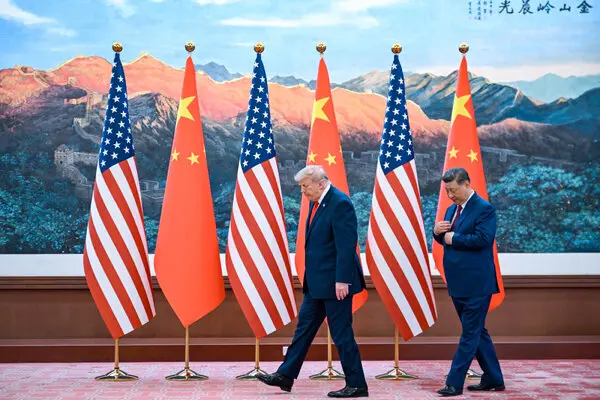
High-level talks between the United States and China concluded with optimistic public statements but without any major breakthrough agreements, as former U.S. President Donald Trump completed his closely watched visit to China. The discussions attracted global attention due to ongoing tensions between the world’s two largest economies over trade, technology, geopolitics, and security issues.
While both sides described the meetings as “constructive” and “positive,” analysts noted that no significant trade deal or major policy agreement was announced at the conclusion of the talks.
The visit nevertheless highlighted the importance of continued dialogue between Washington and Beijing at a time of growing global economic uncertainty and geopolitical competition.
Why Trump’s China Visit Drew Global Attention
Relations between the United States and China remain one of the most influential factors shaping global politics and the international economy.
The visit generated widespread attention because U.S.-China relations affect:
- Global trade markets
- Technology industries
- Supply chains
- Financial markets
- Energy prices
- Geopolitical stability
Any high-level engagement between the two nations is closely watched by governments, businesses, investors, and international organizations worldwide.
Trump’s visit was seen as an opportunity to reduce tensions and reopen broader discussions on economic and strategic cooperation.
Positive Tone but Limited Outcomes
At the end of the talks, officials from both countries emphasized the importance of maintaining communication and avoiding further escalation in bilateral tensions.
Public statements reportedly focused on:
- Continued diplomatic engagement
- Economic cooperation
- Trade stability
- Regional peace
- Mutual respect
However, despite the positive tone, no major trade agreement, tariff rollback, or strategic breakthrough was formally announced.
Analysts described the outcome as a diplomatic stabilization effort rather than a transformational agreement.
Key Issues Discussed During the Talks
Several major issues are believed to have dominated discussions between U.S. and Chinese representatives.
Trade and Tariffs
Trade tensions continue to remain a major issue in U.S.-China relations.
Both countries have imposed tariffs and restrictions on various goods over recent years, affecting global supply chains and manufacturing sectors.
Businesses worldwide have been hoping for improved trade cooperation to reduce market uncertainty.
Technology Competition
Technology rivalry remains one of the biggest areas of strategic competition between the two countries.
Discussions likely involved issues related to:
- Semiconductor exports
- Artificial Intelligence
- Telecommunications
- Cybersecurity
- Data regulations
- Technology restrictions
The U.S. and China are increasingly competing for leadership in advanced technologies and digital infrastructure.
Taiwan and Regional Security
Regional security issues, especially concerning Taiwan and the Indo-Pacific region, remain highly sensitive topics.
The United States and China hold sharply different positions on regional military presence, sovereignty concerns, and strategic alliances.
Although no major security agreements were announced, continued dialogue is considered important for reducing tensions.
Economic Stability
Both countries face economic pressures, including slowing growth, supply chain challenges, and global market volatility.
Stable U.S.-China relations are viewed as critical for global economic confidence and trade recovery.
No Major Trade Deal Announced
One of the biggest expectations surrounding the visit was the possibility of a significant trade agreement or tariff-related progress.
However, the talks concluded without any major commercial breakthrough.
Reports suggest that while discussions were constructive, both sides remain divided on key issues involving:
- Market access
- Industrial policies
- Export controls
- Trade imbalances
- Intellectual property rights
The absence of a major deal indicates that deep structural disagreements between the two economies continue to remain unresolved.
Impact on Global Markets
Global financial markets closely monitored the outcome of the U.S.-China talks.
Positive diplomatic signals helped ease some investor concerns, but the lack of a concrete agreement limited stronger market optimism.
U.S.-China relations significantly influence:
- Stock markets
- Commodity prices
- Technology companies
- Manufacturing sectors
- Currency markets
- Global investment sentiment
Investors continue seeking greater stability and predictability in relations between the two economic superpowers.
Importance of Continued Dialogue
Despite the lack of major agreements, many experts believe continued communication itself is an important outcome.
Regular diplomatic engagement helps:
- Reduce misunderstandings
- Prevent escalation
- Manage geopolitical risks
- Maintain economic cooperation
- Support global stability
At a time of increasing strategic competition, even limited diplomatic progress is considered valuable by international observers.
China’s Economic Priorities
China is currently focusing on stabilizing its economy amid slowing growth, real estate pressures, and global trade challenges.
Improved relations with the United States could help support:
- Export markets
- Foreign investment
- Technology access
- Supply chain stability
However, China also continues emphasizing economic self-reliance and technological independence.
U.S. Political and Strategic Context
The visit also carries political significance within the United States.
U.S.-China relations have become a major political issue involving:
- National security
- Manufacturing jobs
- Technology leadership
- Trade policy
- Military competition
American political leaders across parties increasingly support tougher approaches toward China in areas involving trade, technology, and security.
This broader political environment makes major concessions or rapid agreements more difficult.
Technology Rivalry Remains Central
One of the most critical long-term issues between the U.S. and China is technological competition.
The two countries are competing aggressively in areas such as:
- Artificial Intelligence
- Semiconductor manufacturing
- Quantum computing
- Electric vehicles
- Renewable energy technologies
- Telecommunications
Technology restrictions and export controls have become central elements of the broader strategic rivalry.
Many analysts believe this competition will continue shaping global geopolitics for decades.
Global Supply Chains Still Under Pressure
Businesses worldwide remain affected by tensions between the United States and China.
Many multinational companies are reassessing supply chain strategies by:
- Diversifying manufacturing locations
- Expanding into India and Southeast Asia
- Reducing dependency on single-country sourcing
The lack of a major trade breakthrough means supply chain restructuring trends are likely to continue.
Role of Diplomacy in Preventing Escalation
Although the talks did not produce landmark agreements, diplomacy remains essential in managing relations between major powers.
Stable communication channels are especially important given the scale of economic and military influence both nations hold globally.
Diplomatic engagement helps reduce risks associated with:
- Trade wars
- Military misunderstandings
- Financial instability
- Regional conflicts
Many global leaders continue encouraging balanced dialogue between Washington and Beijing.
Global Reactions to the Talks
International reactions to the meeting were generally cautious but positive.
Several countries welcomed the continuation of diplomatic engagement, particularly because global economic recovery remains fragile.
Countries across Asia, Europe, and emerging markets are heavily affected by U.S.-China economic relations due to their integration into global trade systems.
The world economy remains highly interconnected with both nations.
Future of U.S.-China Relations
Experts believe U.S.-China relations will likely continue balancing cooperation and competition.
Areas of possible cooperation include:
- Climate change
- Trade stability
- Public health
- Global financial stability
- Counter-narcotics cooperation
At the same time, competition will likely persist in:
- Technology
- Military influence
- Geopolitics
- Strategic alliances
The relationship is increasingly described as one of “managed competition.”
Conclusion
Trump’s China visit concluded with positive diplomatic messaging but without a major trade or geopolitical breakthrough.
While both countries emphasized the importance of continued dialogue and stable relations, deep disagreements remain on critical issues involving trade, technology, security, and global influence.
The talks nevertheless highlighted the importance of diplomatic engagement between the world’s two largest economies. As global markets and geopolitical dynamics remain closely tied to U.S.-China relations, future negotiations and communication efforts will continue playing a major role in shaping international stability and economic confidence.