
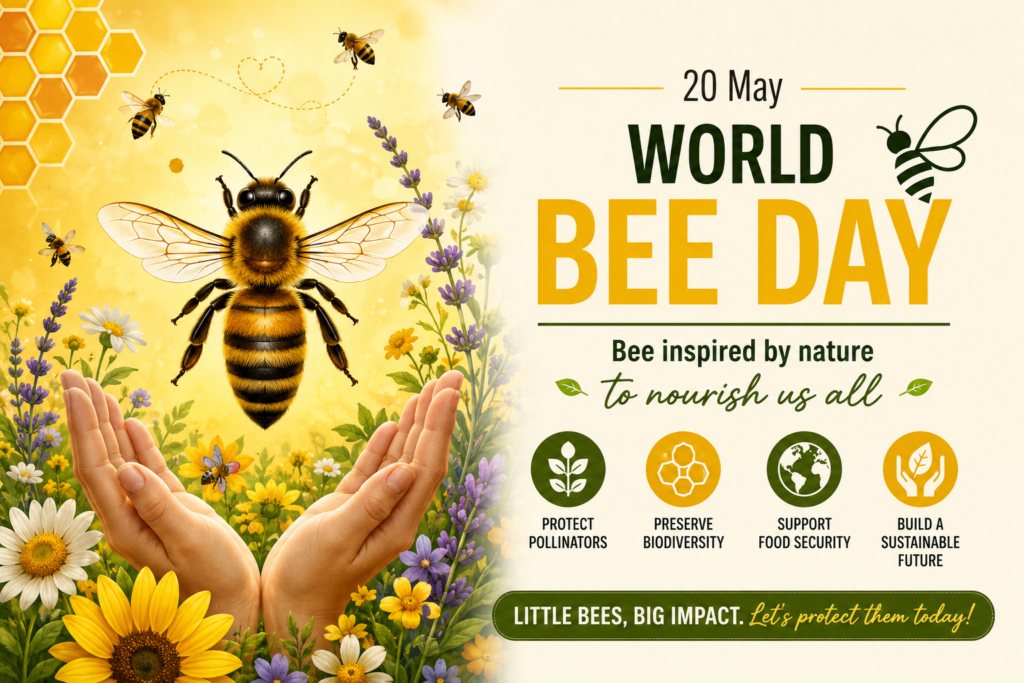
World Bee Day 2026 is being observed globally to raise awareness about the critical role bees and other pollinators play in protecting ecosystems, agriculture, biodiversity, and global food security. Celebrated every year on May 20, the international observance highlights the urgent need to protect bee populations from growing environmental threats such as climate change, habitat destruction, pesticide use, and pollution.
Bees are among the most important pollinators on Earth and are essential for the survival of many crops, flowering plants, and ecosystems. Scientists warn that declining bee populations could seriously affect food production and biodiversity worldwide.
As environmental sustainability becomes an increasingly urgent global priority, World Bee Day 2026 carries greater significance than ever before.
When Is World Bee Day 2026 Celebrated?
World Bee Day is celebrated annually on May 20.
The observance was established by the United Nations to recognize the importance of bees and other pollinators in maintaining ecological balance and supporting sustainable development.
The date honors Anton Janša, a pioneer of modern beekeeping from Slovenia, who was born on May 20.
Countries worldwide observe the day through:
- Awareness campaigns
- Environmental programs
- Educational workshops
- Tree plantation drives
- Sustainable farming discussions
- Pollinator conservation initiatives
World Bee Day 2026 Theme
The official theme for World Bee Day 2026 focuses on protecting pollinators for sustainable ecosystems, food security, and climate resilience.
The theme highlights how bees contribute not only to agriculture but also to biodiversity conservation and environmental sustainability.
This year’s discussions emphasize:
- Sustainable farming practices
- Pollinator-friendly ecosystems
- Climate adaptation
- Biodiversity protection
- Reducing harmful pesticide use
- Ecological conservation
The observance encourages governments, farmers, environmental groups, and citizens to support bee conservation efforts.
Why Bees Are Important
Bees play a vital role in pollination, which is essential for the reproduction of many plants and crops.
Pollination helps plants produce:
- Fruits
- Vegetables
- Seeds
- Nuts
- Flowers
Without pollinators like bees, many agricultural systems would struggle to survive.
According to environmental experts, a significant portion of global food crops depend directly or indirectly on pollination.
Bees therefore contribute enormously to:
- Food production
- Agricultural productivity
- Biodiversity
- Ecosystem stability
How Bees Support Global Food Security
Bees are directly linked to food security because they help pollinate crops consumed worldwide.
Important crops supported by pollination include:
- Apples
- Almonds
- Coffee
- Tomatoes
- Cucumbers
- Berries
- Mustard
- Sunflowers
Healthy bee populations improve crop yields, quality, and agricultural diversity.
Farmers and agricultural industries heavily rely on pollinators to maintain stable food production systems.
Declining Bee Populations: A Global Concern
Scientists and environmental organizations have raised concerns over the rapid decline of bee populations globally.
Major threats include:
Climate Change
Changing temperatures and unpredictable weather patterns affect bee habitats and flowering cycles.
Pesticide Use
Certain pesticides can harm bee health, navigation, and reproduction.
Habitat Loss
Urbanization, deforestation, and intensive farming reduce natural habitats for pollinators.
Pollution
Air and environmental pollution impact flowering plants and pollinator behavior.
Diseases and Parasites
Bee colonies are vulnerable to diseases, parasites, and fungal infections.
The decline of bees could have serious consequences for agriculture and ecosystems worldwide.
History of World Bee Day
World Bee Day was officially established by the United Nations in 2017 following a proposal led by Slovenia.
The observance was created to:
- Raise awareness about pollinators
- Promote bee conservation
- Support sustainable agriculture
- Encourage environmental protection
Since then, World Bee Day has become an important annual global environmental event celebrated by governments, schools, environmental groups, and farming communities.
Importance of Bees in Biodiversity
Bees are essential for maintaining biodiversity because they support the reproduction of countless plant species.
Healthy ecosystems depend on pollination for:
- Forest regeneration
- Wildflower growth
- Food chains
- Habitat stability
Pollinators contribute to the survival of birds, insects, and animals that depend on flowering plants and seeds.
Protecting bees therefore helps preserve broader ecological balance.
Economic Importance of Bees
Bees also contribute significantly to the global economy through agriculture and food production.
Pollination services support industries involving:
- Farming
- Horticulture
- Food processing
- Honey production
- Seed cultivation
The economic value of pollination globally is estimated to be extremely high due to its importance in crop production.
Bee decline could therefore create major agricultural and economic disruptions.
Sustainable Farming and Pollinator Protection
World Bee Day promotes sustainable agricultural practices that protect pollinators and ecosystems.
Recommended approaches include:
- Reducing harmful pesticide use
- Planting pollinator-friendly flowers
- Preserving natural habitats
- Supporting organic farming
- Promoting biodiversity in agriculture
Farmers are increasingly encouraged to adopt environmentally sustainable farming techniques that balance productivity with ecological protection.
Role of Urban Areas in Bee Conservation
Cities and urban communities can also support bee populations through simple environmental actions.
Urban initiatives may include:
- Rooftop gardens
- Community green spaces
- Flower planting drives
- Pollinator-friendly landscaping
Many cities worldwide are now creating “bee-friendly” urban environments to support biodiversity and ecological health.
Importance of Honey Bees
Honey bees are among the most recognized pollinators and are crucial for both ecosystems and agriculture.
Apart from pollination, honey bees produce:
- Honey
- Beeswax
- Royal jelly
- Propolis
Beekeeping also supports rural livelihoods and sustainable agricultural economies in many countries.
India and Bee Conservation
India has a strong tradition of agriculture and beekeeping.
Bee pollination plays a major role in supporting Indian crops such as:
- Mustard
- Fruits
- Vegetables
- Oilseeds
- Spices
The Indian government and agricultural institutions have increasingly promoted:
- Scientific beekeeping
- Honey production
- Pollinator awareness
- Sustainable farming practices
India also recognizes the role of bees in improving rural income and agricultural productivity.
Climate Change and Pollinator Survival
Climate change has become one of the biggest long-term threats to pollinators.
Rising temperatures and shifting seasons affect:
- Flower blooming cycles
- Nectar availability
- Migration patterns
- Pollinator reproduction
Environmental experts stress that protecting pollinators must become part of broader climate adaptation and biodiversity conservation strategies.
Educational Importance of World Bee Day
World Bee Day also serves an educational purpose by teaching people about environmental sustainability and ecological interdependence.
Schools, universities, and environmental groups organize programs to help students understand:
- Pollination processes
- Ecosystem balance
- Climate challenges
- Sustainable agriculture
Increasing environmental awareness among younger generations is considered essential for long-term conservation success.
Global Conservation Efforts
Many countries and environmental organizations are implementing pollinator protection strategies including:
- Habitat restoration
- Pesticide regulations
- Research programs
- Conservation campaigns
- Sustainable agriculture policies
International cooperation is becoming increasingly important because pollinator decline is a global environmental challenge.
Simple Ways People Can Help Bees
Individuals can support bee conservation through small actions such as:
- Planting flowering plants
- Avoiding excessive pesticide use
- Supporting organic farming
- Conserving green spaces
- Buying sustainably produced honey
Community participation plays an important role in strengthening environmental conservation efforts.
Future of Pollinator Conservation
Experts believe future environmental policies will increasingly focus on:
- Biodiversity protection
- Sustainable agriculture
- Ecosystem restoration
- Climate resilience
Protecting pollinators is expected to become a central part of global environmental planning and food security strategies.
Conclusion
World Bee Day 2026 highlights the enormous importance of bees and pollinators in sustaining ecosystems, agriculture, biodiversity, and human life.
As climate change, pollution, and habitat destruction continue threatening bee populations globally, the observance serves as an urgent reminder of the need for stronger conservation efforts and sustainable environmental practices.
Protecting bees is not only about preserving insects — it is about safeguarding food systems, ecosystems, economies, and the future health of the planet itself.