
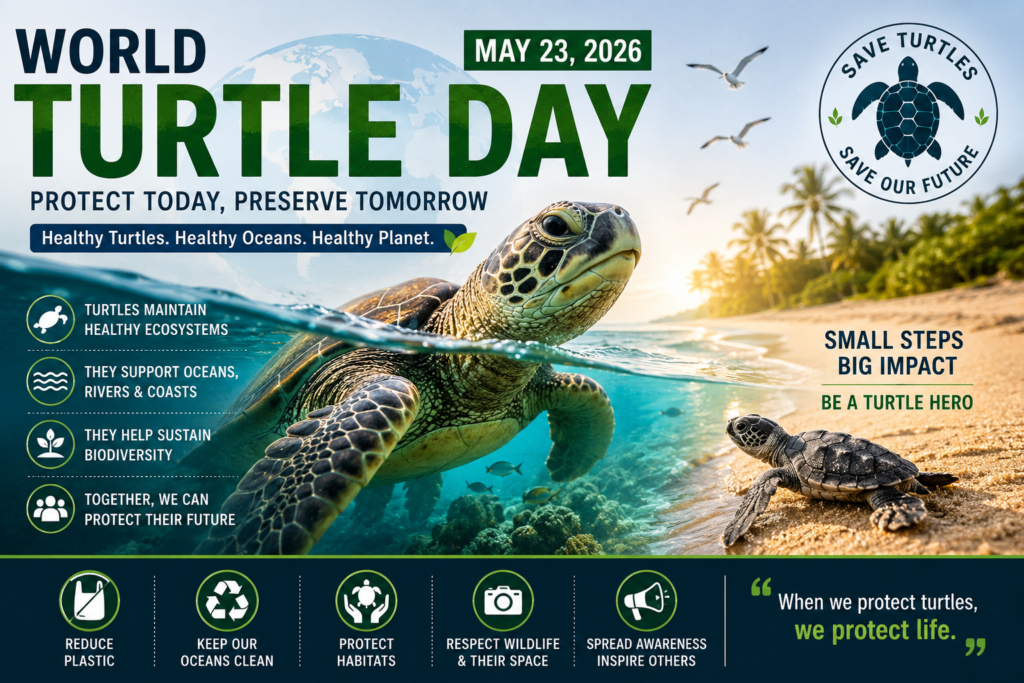
World Turtle Day 2026 is being observed globally to raise awareness about the importance of protecting turtles and tortoises, which are among the planet’s oldest and most ecologically significant reptiles. Celebrated every year on May 23, the day highlights the urgent need for conservation efforts as turtle populations worldwide face growing threats from habitat destruction, pollution, climate change, illegal wildlife trade, and marine plastic waste.
Turtles play a crucial role in maintaining healthy ecosystems including oceans, rivers, wetlands, grasslands, and coastal environments. Scientists and conservationists warn that declining turtle populations could negatively affect biodiversity, marine food chains, and ecological balance across multiple ecosystems.
As environmental sustainability becomes an increasingly important global priority, World Turtle Day 2026 carries strong significance for wildlife conservation and ecological awareness.
When Is World Turtle Day 2026 Celebrated?
World Turtle Day is celebrated annually on May 23.
The observance was established by the American Tortoise Rescue to encourage awareness, education, and conservation efforts focused on turtles and tortoises worldwide.
The day is marked through:
- Wildlife awareness campaigns
- Beach clean-up drives
- Educational programs
- Conservation activities
- Social media campaigns
- Marine ecosystem discussions
Environmental groups, schools, wildlife organizations, and governments participate in spreading awareness about turtle conservation.
Why Turtles Are Important for Ecosystems
Turtles are considered “keystone species” because they help maintain ecological balance in both marine and terrestrial ecosystems.
Different turtle species contribute to:
- Healthy coral reefs
- Seagrass ecosystem maintenance
- Nutrient cycling
- Wetland balance
- River ecosystem health
Their role in ecosystems helps support biodiversity and marine life stability.
Without turtles, many ecosystems could become ecologically imbalanced over time.
Importance of Sea Turtles in Marine Ecosystems
Sea turtles are especially important for ocean health.
Maintaining Seagrass Beds
Green sea turtles graze on seagrass, helping maintain healthy underwater ecosystems that support fish populations and marine biodiversity.
Supporting Coral Reef Health
Certain turtle species contribute to reef ecosystem balance by controlling sponge and jellyfish populations.
Nutrient Distribution
Turtles help transport nutrients between marine and coastal ecosystems through nesting activities.
Healthy turtle populations are therefore closely connected to healthy oceans.
Why Turtle Populations Are Declining
Turtles worldwide face multiple environmental threats.
Plastic Pollution
Marine turtles often mistake plastic waste for food, leading to injury or death.
Habitat Destruction
Urbanization, coastal development, and deforestation reduce nesting and feeding habitats.
Climate Change
Rising temperatures and sea-level rise affect nesting beaches and hatchling survival.
Illegal Wildlife Trade
Turtles are illegally hunted for meat, shells, eggs, and the exotic pet trade.
Fishing Net Entanglement
Many sea turtles die after becoming trapped in fishing gear and nets.
Conservationists warn that several turtle species are now endangered or critically threatened.
Climate Change and Turtle Survival
Climate change has become one of the biggest long-term threats to turtle populations.
Rising temperatures affect turtle reproduction because the sex of hatchlings is often temperature-dependent.
Climate impacts include:
- Warmer nesting beaches
- Coastal erosion
- Rising sea levels
- Ocean pollution
- Extreme weather events
Changes in ocean currents and marine ecosystems also affect turtle migration and food availability.
Importance of Turtle Conservation
Protecting turtles helps preserve broader biodiversity and ecosystem stability.
Conservation efforts focus on:
- Protecting nesting beaches
- Reducing marine pollution
- Preventing illegal trade
- Promoting sustainable fishing practices
- Restoring coastal ecosystems
Turtle conservation also supports marine tourism and environmental education.
Turtles and Biodiversity
Turtles contribute significantly to biodiversity because they interact with multiple ecosystems and species.
Healthy turtle populations support:
- Fish populations
- Coral reef systems
- Coastal vegetation
- Marine nutrient cycles
Biodiversity protection is essential for maintaining resilient ecosystems capable of adapting to environmental changes.
India and Turtle Conservation
India is home to several important turtle species including:
- Olive Ridley turtles
- Green sea turtles
- Hawksbill turtles
- Leatherback turtles
India’s eastern coastline, especially Odisha, is globally recognized for mass Olive Ridley turtle nesting events.
The Indian government and conservation organizations have implemented several turtle protection initiatives involving:
- Coastal conservation
- Fishing regulations
- Nesting site protection
- Wildlife monitoring programs
Olive Ridley Turtles and Odisha
Odisha hosts one of the world’s largest mass nesting events for Olive Ridley turtles known as arribada.
Thousands of turtles arrive simultaneously to lay eggs along the coast.
This natural phenomenon attracts global scientific and environmental attention.
Conservation programs in Odisha focus on:
- Beach protection
- Fishing restrictions during nesting seasons
- Awareness campaigns
- Marine ecosystem management
Role of Oceans in Global Environmental Health
Turtle conservation is closely linked to broader ocean conservation efforts.
Healthy oceans are essential for:
- Climate regulation
- Food security
- Marine biodiversity
- Global oxygen production
Protecting marine species like turtles helps strengthen overall ocean ecosystem resilience.
Plastic Pollution Crisis
Plastic pollution has become one of the biggest dangers for marine turtles.
Turtles often ingest:
- Plastic bags
- Fishing lines
- Microplastics
- Ocean debris
This can cause:
- Digestive blockages
- Starvation
- Injury
- Death
Reducing plastic waste is therefore considered critical for marine wildlife protection.
Educational Importance of World Turtle Day
World Turtle Day also promotes environmental education and wildlife awareness.
Schools and environmental organizations use the day to teach students about:
- Marine ecosystems
- Biodiversity conservation
- Wildlife protection
- Climate change impacts
- Sustainable living practices
Public awareness plays a major role in strengthening conservation efforts.
Eco-Tourism and Turtle Conservation
Turtle nesting sites often support eco-tourism industries that generate local economic benefits.
Responsible wildlife tourism can help:
- Support conservation funding
- Create local employment
- Promote environmental awareness
However, tourism activities must be carefully managed to avoid disturbing sensitive habitats and nesting areas.
Global Turtle Conservation Efforts
Countries and international organizations are increasingly cooperating on turtle conservation programs.
Global initiatives include:
- Marine protected areas
- Anti-poaching operations
- Beach restoration projects
- Sustainable fishing regulations
- Wildlife rescue programs
International collaboration is important because many turtle species migrate across multiple countries and oceans.
Importance of Wetland and Coastal Ecosystems
Many turtles depend on wetlands, rivers, mangroves, and coastal habitats for survival.
These ecosystems also provide benefits such as:
- Flood protection
- Carbon storage
- Fish breeding grounds
- Water purification
Protecting turtle habitats therefore supports broader environmental sustainability goals.
Challenges in Turtle Conservation
Despite growing awareness, turtle conservation remains difficult due to:
Coastal Urbanization
Rapid infrastructure development threatens nesting beaches and habitats.
Illegal Wildlife Trade
Demand for turtle products continues driving poaching activities.
Climate Risks
Environmental changes continue affecting breeding and migration patterns.
Marine Pollution
Ocean pollution remains a major long-term challenge.
Experts stress that stronger conservation policies and public participation are essential.
How People Can Help Protect Turtles
Individuals can support turtle conservation through simple actions including:
- Reducing plastic use
- Participating in beach cleanups
- Supporting wildlife conservation organizations
- Avoiding products made from turtle shells
- Promoting sustainable tourism
Small environmental actions collectively make a significant impact on wildlife protection.
Future of Turtle Conservation
Conservationists believe future turtle protection strategies will increasingly involve:
- AI-based wildlife monitoring
- Satellite tracking systems
- Marine conservation technology
- Climate adaptation planning
Technology and international cooperation are expected to play growing roles in protecting endangered species and ecosystems.
Conclusion
World Turtle Day 2026 highlights the critical importance of protecting turtles and preserving the ecosystems they help sustain.
From maintaining healthy oceans and coral reefs to supporting biodiversity and coastal ecosystems, turtles play an essential ecological role across the planet.
As pollution, climate change, and habitat destruction continue threatening turtle populations worldwide, the observance serves as a powerful reminder that protecting turtles also means protecting the long-term health of Earth’s ecosystems and biodiversity.