
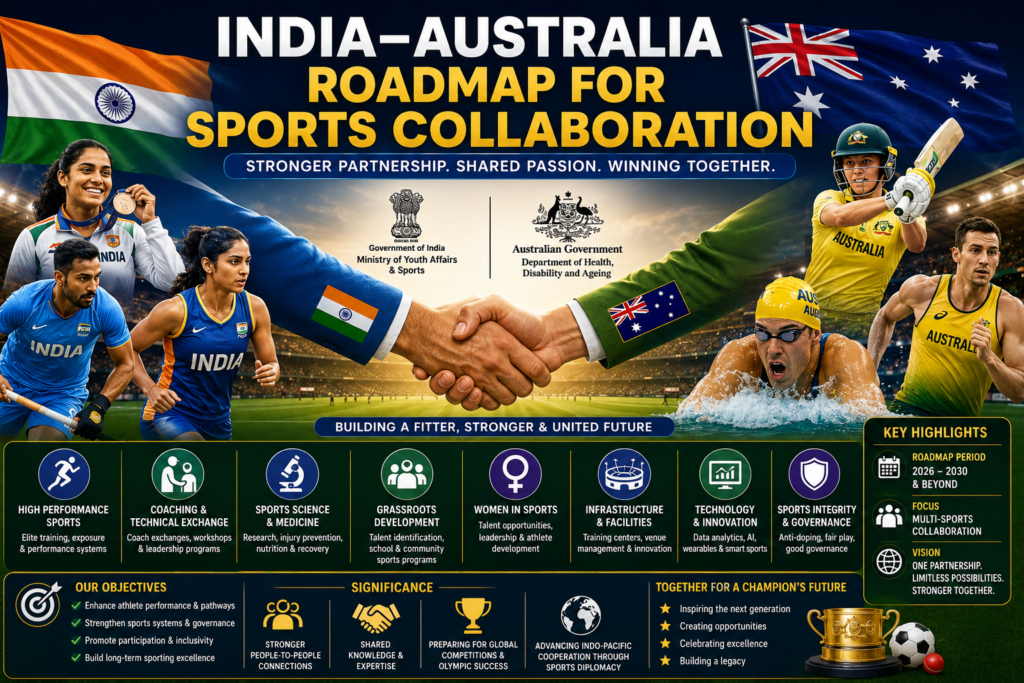
India and Australia have unveiled a comprehensive India–Australia Roadmap for Sports Collaboration, marking a significant step toward strengthening bilateral ties through sports diplomacy. The roadmap aims to deepen cooperation in elite sports, grassroots development, sports science, coaching, integrity, and the exchange of expertise, while preparing athletes and sports ecosystems in both countries for major international events.
The partnership reflects the growing strategic relationship between India and Australia and recognizes sport as a powerful tool for promoting people-to-people connections, youth engagement, and cultural exchange.
A New Chapter in India–Australia Sports Relations
The roadmap establishes a structured framework for long-term collaboration between the two nations. It seeks to combine Australia’s globally recognized sporting expertise with India’s rapidly expanding sports ecosystem.
The partnership will focus on:
- High-performance sports
- Athlete development
- Sports governance
- Coaching excellence
- Sports science and medicine
- Grassroots participation
- Women’s sports
- Sports technology
The initiative is expected to strengthen sporting ties through 2030 and beyond.
Key Highlights of the Roadmap
The collaboration covers several priority areas designed to enhance sports development in both countries.
High-Performance Sports
India and Australia will work together to improve elite athlete performance through:
- Advanced training methodologies
- High-performance centres
- Sports analytics
- Performance monitoring
- International exposure
Australian expertise in Olympic sports is expected to benefit Indian athletes preparing for global competitions.
Coaching and Technical Exchange
One of the roadmap’s major objectives is to promote knowledge sharing among coaches and technical experts.
The partnership includes:
- Coach exchange programmes
- Joint certification courses
- Technical workshops
- Sports leadership programmes
- Professional development initiatives
These efforts aim to improve coaching standards across multiple disciplines.
Sports Science and Sports Medicine
Modern sports increasingly depend on scientific support.
The roadmap encourages cooperation in:
- Injury prevention
- Athlete rehabilitation
- Nutrition
- Biomechanics
- Exercise physiology
- Mental conditioning
- Performance analytics
Sports science collaboration will help improve athlete performance while reducing injuries.
Grassroots Sports Development
Developing young sporting talent remains a major priority.
Both countries will collaborate on:
- School sports programmes
- Community participation
- Talent identification
- Youth competitions
- Grassroots coaching
The objective is to encourage wider participation and nurture future champions.
Women’s Sports
The roadmap places special emphasis on increasing opportunities for women in sports.
Areas of cooperation include:
- Women’s leadership in sports
- Athlete development
- Equal participation
- Coaching opportunities
- Sports administration
Both countries aim to promote greater gender equality across the sporting ecosystem.
Sports Infrastructure
Infrastructure development is another important pillar of the collaboration.
Potential areas include:
- Stadium management
- High-performance training facilities
- Sports academies
- Smart sports infrastructure
- Sustainable venue development
Australia’s experience in hosting major international sporting events is expected to provide valuable insights.
Major International Events
The partnership comes at a time when both nations are preparing for several major sporting events.
These include:
- Olympic Games
- Commonwealth sporting initiatives
- Cricket tournaments
- Hockey competitions
- Multi-sport championships
Collaboration will help athletes gain international exposure and improve competitive readiness.
Technology in Sports
Technology is becoming increasingly important in modern sports.
The roadmap supports cooperation in:
- Artificial Intelligence (AI)
- Video analytics
- Wearable technology
- Performance data analysis
- Digital coaching platforms
Innovation will play a key role in improving athlete development and competition preparation.
Sports Integrity
Both countries have agreed to strengthen cooperation in protecting the integrity of sports.
Focus areas include:
- Anti-doping measures
- Fair play initiatives
- Match integrity
- Good governance
- Ethical sporting practices
Maintaining transparency and credibility remains central to international sports.
Economic Opportunities
Sports collaboration is also expected to generate economic benefits.
Potential areas include:
- Sports tourism
- Sporting goods manufacturing
- Event management
- Broadcasting partnerships
- Sports technology startups
The growing sports industry presents opportunities for investment and innovation.
Cricket Continues to Strengthen Ties
Cricket remains one of the strongest sporting links between India and Australia.
The roadmap builds upon decades of sporting rivalry and cooperation by encouraging:
- Youth cricket exchanges
- Coaching programmes
- Women’s cricket development
- Grassroots competitions
The partnership extends well beyond cricket into a wide range of Olympic and emerging sports.
Benefits for India
India is expected to gain through:
- Access to Australian sporting expertise
- Improved athlete preparation
- Better coaching standards
- Stronger sports science capabilities
- Enhanced international competitiveness
These efforts support India’s ambition of becoming a leading sporting nation.
Benefits for Australia
Australia also stands to benefit through:
- Expanded engagement with one of the world’s largest sporting markets
- Increased collaboration in sports education
- Business opportunities in sports technology
- Stronger Indo-Pacific partnerships
- Enhanced cultural exchanges
The collaboration reinforces Australia’s commitment to regional cooperation.
Importance for the Indo-Pacific
The roadmap strengthens broader India–Australia strategic relations by promoting:
- People-to-people connections
- Youth engagement
- Cultural diplomacy
- Regional cooperation
- Shared values through sport
Sports continue to serve as an effective platform for strengthening international partnerships.
Looking Ahead
Implementation of the roadmap will involve regular exchanges between sports authorities, federations, coaches, and athletes.
Future priorities include:
- Joint training camps
- Research collaborations
- Sports innovation projects
- Capacity-building programmes
- Athlete exchange initiatives
The partnership is expected to evolve with new areas of cooperation as both countries prepare for future international sporting events.
Conclusion
The India–Australia Roadmap for Sports Collaboration marks a significant milestone in bilateral relations, extending cooperation beyond diplomacy and trade into one of the world’s most influential sectors—sport.
By combining Australia’s expertise in high-performance sports with India’s rapidly expanding sporting ecosystem, the roadmap has the potential to improve athlete development, strengthen sports governance, promote innovation, and inspire greater participation at every level. As both nations work toward shared sporting ambitions, the partnership is expected to create lasting benefits for athletes, institutions, and sports fans alike.