
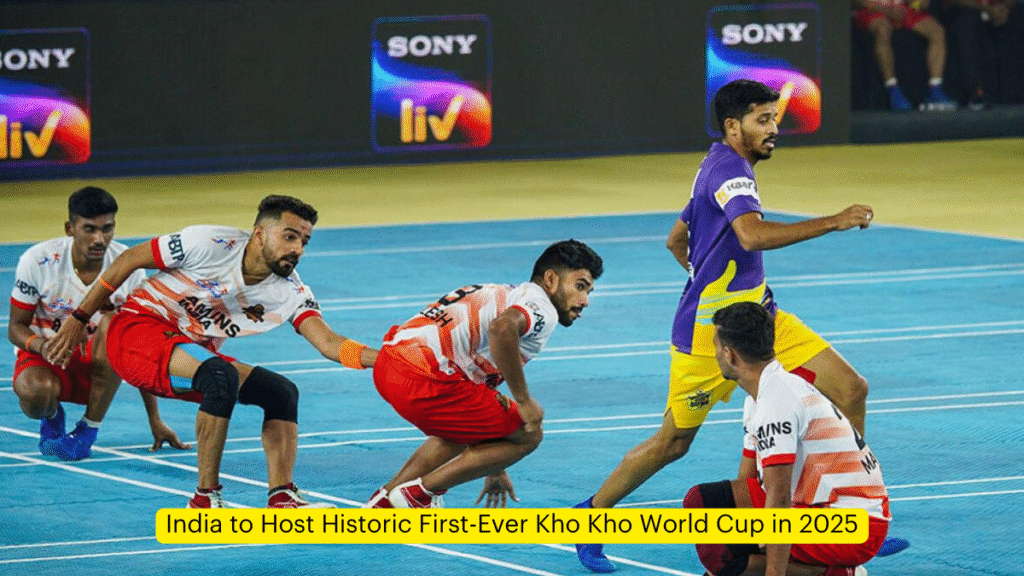
India, the birthplace of the traditional sport Kho Kho, is all set to host the first-ever Commonwealth Kho Kho Championship in March 2026 — a historic milestone for indigenous sports on the global stage. The announcement marks a defining moment in India’s efforts to internationalize its homegrown games, elevate athlete recognition, and expand Kho Kho’s reach across continents.
This championship will be organized under the umbrella of the Commonwealth Kho Kho Federation (CKKF), in partnership with the Kho Kho Federation of India (KKFI). With participation expected from over 20 Commonwealth nations, the event promises to bring unprecedented global visibility to a sport that has been part of India’s heritage for centuries.
⭐ A Landmark Moment for Indian Sports
The decision to host the inaugural championship in India holds deep symbolic and strategic value. As the country where Kho Kho originated, India has long been the global frontrunner in promoting, developing, and professionalizing the sport.
Hosting this prestigious event will:
- Place India at the center of Kho Kho’s international expansion
- Promote indigenous sports in line with India’s cultural diplomacy
- Strengthen the nation’s reputation as a global sporting hub
- Showcase India’s capability to host world-class sporting events
- Inspire a new generation of young athletes
The event also aligns with the government’s broader mission to uplift traditional Indian games through programs like Khelo India and the indigenous sports development initiatives under the Ministry of Youth Affairs and Sports.
⭐ Why March 2026 Matters for Kho Kho
March 2026 will be remembered as a pivotal moment in Kho Kho’s global journey. Several factors contribute to this being the ideal time:
1. Growing International Interest
Countries such as England, Scotland, South Africa, Sri Lanka, Bangladesh, Malaysia, Australia, and others have already begun training teams in preparation for the championship.
2. Professionalization of the Sport
With the success of Ultimate Kho Kho (UKK) — a franchise-based league in India — the sport has seen renewed enthusiasm, media attention, and athlete development at a professional level.
3. Structured Governing Bodies
The establishment of the CKKF and expansion of national Kho Kho associations across Commonwealth nations has given the sport strong administrative foundations.
4. Increasing Global Recognition
Kho Kho is now recognized by multiple international sports bodies, enabling the sport to explore its Olympic, Commonwealth Games, and Asian Games potential in the future.
⭐ What Makes Kho Kho Special? A Sport Rooted in Heritage
Kho Kho is one of the oldest tag-based games from India. Known for its speed, strategy, agility, and teamwork, the game demands:
- powerful reflexes
- tactical thinking
- endurance
- rapid coordination
Its fast-paced nature, combined with accessible gameplay, makes it ideal for global spectators.
People worldwide are drawn to Kho Kho because:
- it is exciting to watch
- matches finish quickly (fast format)
- it requires minimal equipment
- athletes demonstrate incredible fitness
- the rules are simple yet deeply strategic
⭐ Expected Participation: The Rise of Commonwealth Kho Kho
More than 20 Commonwealth nations are expected to participate. These include:
- India
- England
- Scotland
- Wales
- Australia
- South Africa
- Sri Lanka
- Malaysia
- Bangladesh
- Singapore
- Canada
- New Zealand
Several other countries are currently being scouted and trained through support programs by the Kho Kho Federation of India.
For many of these countries, Kho Kho has become a significant inclusion in school curriculums, university sports clubs, and community-level competitions — showing how far the sport has travelled from its Indian origins.
⭐ Venue & Organization – India’s Big Stage
India is finalising world-class indoor venues suitable for the championship. Possible host cities include:
- New Delhi
- Mumbai
- Pune
- Bengaluru
- Chennai
- Hyderabad
These cities have international-standard indoor stadiums, robust infrastructure, and prior experience hosting large-scale tournaments.
The event will include:
- Opening ceremony with cultural showcase
- Men’s and women’s championship categories
- International referee panel
- Live global broadcasting and streaming
- Technical workshops for participating nations
- Cultural exchange programs
⭐ Boost to Indian Athletes and Grassroots Development
Hosting the championship will have a long-term transformative impact on Kho Kho in India:
1. Athlete Recognition
Indian players will gain global exposure and the chance to compete with international teams.
2. Youth Engagement
More schools and colleges are expected to adopt Kho Kho programs, inspired by this international spotlight.
3. Financial and Institutional Support
Corporate sponsorships and government support for Kho Kho are expected to rise significantly.
4. Enhanced Training & Infrastructure
New training centres, academies, and coaching programs will likely emerge ahead of the event.
⭐ Kho Kho’s Global Journey: How India Is Spreading Its Indigenous Sport
India’s efforts in promoting Kho Kho internationally include:
- sending expert coaches to Commonwealth countries
- helping establish national-level Kho Kho federations
- conducting workshops, seminars, and demonstration matches
- hosting international friendlies and invitational tournaments
- showcasing Kho Kho in overseas sports expos
These initiatives have already led to:
- formation of national Kho Kho teams in Europe, Asia, and Africa
- increased participation among women athletes globally
- interest from broadcasters in covering the sport
The 2026 Commonwealth Championship is a culmination of years of groundwork.
⭐ Economic and Tourism Benefits for India
The championship is expected to bring:
1. Tourism Boost
International teams and spectators will generate revenue through travel, hospitality, and cultural tourism.
2. Sports Economy Growth
Local event-management companies, sports goods manufacturers, broadcasters, and sponsors will benefit.
3. Promotion of India’s Heritage
Kho Kho, deeply tied to Indian culture, will attract global attention and strengthen India’s soft power.
⭐ What the Championship Format May Look Like
Although the final structure will be announced closer to the event, it is expected to include:
- Group stage matches
- Knockout rounds
- Semi-finals
- Grand finals
Both men’s and women’s categories will be featured. Matches will follow the updated international Kho Kho rulebook used in professional leagues.
The rapid-paced professional format — with advanced rules, dive cameras, and enhanced visual appeal — is likely to be adopted for global audiences.
⭐ India’s Sporting Leadership Strengthened
Hosting this championship proves that India is not just a participant but a global leader in sports development. The country has already hosted:
- Cricket World Cups
- Commonwealth Games
- Asian Games (historic edition)
- Major badminton, boxing, wrestling championships
Adding the Commonwealth Kho Kho Championship to this list highlights India’s commitment to uplifting indigenous sports and ensuring they reach a global audience.
⭐ Conclusion: A New Era for Kho Kho Begins
The Commonwealth Kho Kho Championship 2026 is more than just a sports tournament — it is a celebration of India’s heritage, athletic talent, and global sporting vision.
With the world watching, India is ready to:
- showcase its traditional sport on the global stage
- inspire young athletes
- strengthen cultural ties
- promote indigenous games internationally
- make Kho Kho a globally recognized sport
March 2026 will mark a turning point — not only for Kho Kho but for India’s global sporting identity.