
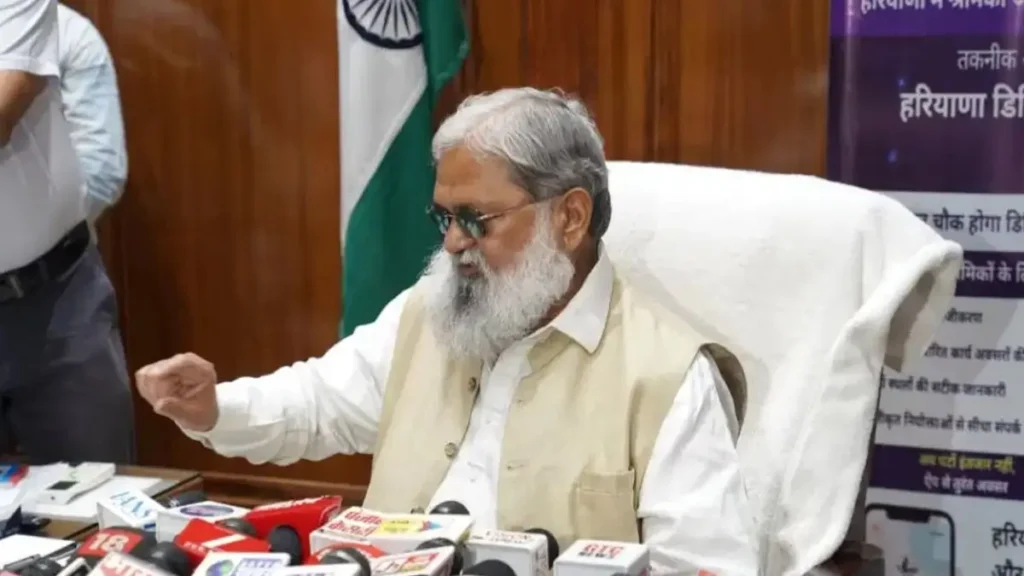
The app is designed to directly connect daily wage workers with employers through a digital platform, reducing dependency on informal roadside labour gathering points commonly known as labour chowks. Officials believe the initiative can improve transparency, worker safety, job accessibility, and employment opportunities while bringing greater organization to the unstructured labour sector.
The launch reflects India’s growing push toward digital governance, labour formalization, and technology-enabled public service delivery.
What Is the ShramMitra App?
The ShramMitra app is a digital labour marketplace created to connect employers and daily wage workers more efficiently.
The platform allows workers to register their:
- Skills
- Experience
- Location
- Availability
- Job preferences
Employers can then search and hire workers directly through the app for sectors including:
- Construction
- Plumbing
- Electrical work
- Carpentry
- Painting
- General labour services
The app aims to replace the traditional labour chowk model where workers gather physically in public areas waiting for employers to hire them.
Why Haryana Introduced the App
Traditional labour chowk systems often involve several challenges including:
- Lack of transparency
- Worker exploitation risks
- Uncertain wages
- Irregular employment
- Safety concerns
- Lack of formal records
The Haryana government launched the app to improve labour management and create a safer, more organized system for workers and employers alike.
The initiative is expected to help modernize the informal labour economy using digital technology.
How the App Works
The ShramMitra platform operates similarly to a digital job-matching system.
Worker Registration
Workers can register using their:
- Mobile numbers
- Aadhaar details
- Skill categories
- Work experience information
Employer Access
Employers can search for workers based on:
- Skill type
- Location
- Availability
- Ratings or experience
Real-Time Job Matching
The app aims to facilitate faster job allocation and direct communication between workers and employers.
Digital Records
The system may also help maintain employment and wage records more transparently.
Benefits for Daily Wage Workers
The app is expected to offer several advantages for labourers.
Improved Job Access
Workers may receive broader employment opportunities without needing to physically wait at labour chowks.
Better Safety
Reducing roadside labour gathering may improve worker safety and reduce exploitation risks.
Transparency in Wages
Digital systems can improve clarity regarding wages, job duration, and employer information.
Reduced Uncertainty
Workers may find jobs faster through organized digital matching systems.
Social Security Integration
Digital registration may eventually help integrate workers into government welfare and social protection programs.
Importance of Labour Sector Digitization
India’s informal labour sector remains one of the largest in the world.
Millions of workers are employed in unorganized sectors without:
- Formal contracts
- Social security benefits
- Employment documentation
- Digital records
Governments increasingly view digitization as essential for improving labour welfare, transparency, and policy implementation.
The ShramMitra initiative reflects this broader transformation.
Haryana’s Push Toward Digital Governance
Haryana has actively expanded digital governance initiatives across multiple sectors including:
- Citizen services
- Agriculture
- Healthcare
- Education
- Employment systems
The ShramMitra app aligns with the state’s broader efforts to modernize governance through technology and digital platforms.
Digital public infrastructure is increasingly becoming central to administrative reforms across India.
Impact on Employers
The platform may also simplify recruitment for contractors and businesses.
Potential advantages include:
- Faster worker availability
- Verified labour profiles
- Reduced hiring uncertainty
- Improved communication
- Better workforce organization
Small contractors and local businesses may especially benefit from easier access to skilled and semi-skilled workers.
Technology and Labour Market Transformation
Technology is increasingly transforming labour markets globally.
Digital labour platforms are becoming common across sectors involving:
- Gig work
- Freelancing
- Delivery services
- Temporary staffing
- Skilled labour services
The ShramMitra app represents an attempt to apply similar digital marketplace concepts to India’s informal labour economy.
Potential Integration with Welfare Schemes
Digital labour registration systems may eventually help governments better deliver welfare programs.
Registered workers could potentially gain access to:
- Insurance schemes
- Health benefits
- Skill development programs
- Pension support
- Financial inclusion initiatives
Formal worker databases improve the government’s ability to design targeted labour welfare policies.
Challenges Facing Informal Labour Markets
India’s informal labour sector continues facing several structural challenges.
Wage Insecurity
Daily wage workers often experience unstable income patterns.
Lack of Social Protection
Many workers remain outside formal social security systems.
Skill Recognition Issues
Informal workers frequently lack documented skill certification.
Exploitation Risks
Unorganized hiring systems sometimes expose workers to unfair conditions.
Digital platforms may help reduce some of these problems through better transparency and record management.
Importance for Urban Employment
Labour chowks are common in urban and semi-urban areas where construction and temporary work demand remain high.
Modernizing these systems could improve:
- Urban workforce management
- Construction sector efficiency
- Worker mobility
- Employment accessibility
As cities continue expanding, labour management systems are becoming increasingly important.
AI and Smart Labour Platforms
Future versions of such platforms may increasingly integrate advanced technologies including:
- AI-based job matching
- Skill analytics
- Location optimization
- Predictive labour demand systems
Technology-driven labour platforms could eventually improve workforce planning and productivity at a larger scale.
Worker Verification and Trust
Digital systems may also improve trust between workers and employers.
Features such as:
- Verified profiles
- Employment history
- Ratings and reviews
- Digital identity systems
can help improve accountability and reduce disputes.
Trust-building mechanisms are important for the long-term success of digital labour marketplaces.
Challenges in Implementation
Despite its potential, the app may face several challenges.
Digital Literacy
Many workers may require assistance using smartphone-based platforms.
Smartphone Access
Not all labourers may have reliable internet or smartphone access.
Adoption Resistance
Some workers and contractors may initially prefer traditional hiring methods.
Data Privacy Concerns
Managing worker information securely will remain important.
Authorities may need awareness campaigns and training programs to encourage widespread adoption.
India’s Broader Labour Reforms
The ShramMitra initiative reflects larger national trends toward labour sector modernization.
India has increasingly focused on:
- Labour code reforms
- Digital worker registration
- Social security expansion
- Skill development initiatives
- Gig economy regulation
Technology is expected to play an increasingly central role in future labour governance systems.
Public Reactions and Industry Response
Initial reactions to the app have been largely positive among policymakers and labour reform advocates.
Supporters believe the platform could:
- Improve worker dignity
- Increase efficiency
- Reduce exploitation
- Expand formalization
However, labour experts also emphasize the importance of ensuring accessibility for vulnerable and low-income workers.
Future of Digital Labour Platforms in India
The success of Haryana’s model could encourage similar initiatives in other states.
Future labour platforms may increasingly include:
- Multilingual support
- Skill certification systems
- Digital payments
- AI-based employment matching
- Integrated welfare access
India’s growing digital infrastructure creates opportunities for large-scale labour market modernization.
Conclusion
Haryana’s launch of the ShramMitra app marks a significant step toward digitizing and modernizing India’s traditional labour chowk system.
By connecting workers and employers through a technology-driven platform, the initiative aims to improve transparency, efficiency, safety, and employment accessibility within the informal labour sector.
If implemented successfully, the ShramMitra model could become an important example of how digital governance and labour technology can transform workforce management and improve livelihoods for millions of daily wage workers in India.